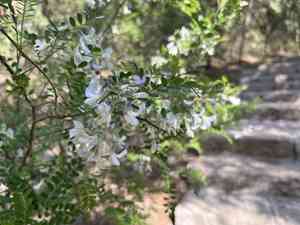
Sophora davidii (Sophora davidii)
Also known as: David's Sophora, Shrub Sophora
Sophora davidii, a deciduous shrub, is noted for its upright, arching branches and pinnate leaves. It produces abundant clusters of purple, pea-like flowers in spring, which are highly attractive to pollinators. Naturally found on rocky slopes and in scrublands, its deep root system ensures stability and resilience in tough conditions. This hardiness, coupled with its ornamental blooms, makes it an excellent option for temperate gardens.
In This Article
Attributes of Sophora davidii
Lifespan
Perennial
Plant Type
Shrub
Plant Height
1.8 m to 2.5 m
Spread
1.8 m to 2.5 m
Leaf Color
Green Gray Silver
Flower Size
2.5 cm
Flower Color
White Purple
Images of Sophora davidii
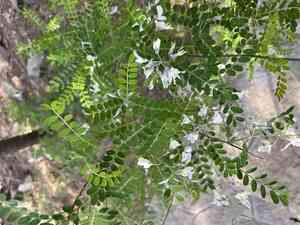
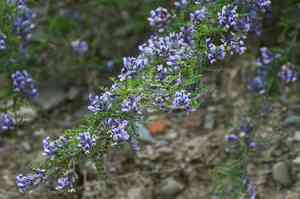
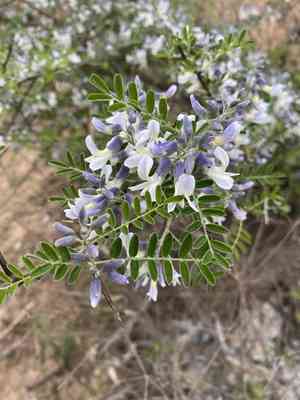
Quickly Identify Sophora davidii
1
Deciduous shrub with spiny branches, reaching 6-8 feet (1.8-2.4 meters) in height and width.
2
Fragrant, pale blue and white pea-like flowers in terminal racemes, each raceme 6 inches (15 cm) long.
3
Slender, woody brown seed pods, 3-4 inches (7.5-10 cm) long, containing 1-4 seeds.
4
Pinnate compound leaves with 11-19 elliptic, blue-green leaflets, each 3/8 inch (1 cm) long.
5
Woody stems with spiny texture, brownish color, and dense branching pattern, reaching 6 feet (1.8 meters) in length.
Scientific Classification of Sophora davidii
Phylum
Vascular plants
Class
Dicotyledons
Order
Fabales
Family
Legume
Genus
Necklacepods
Species
Sophora davidii
Planting and Growing of Sophora davidii
Care Difficulty
Moderate
Watering Schedule
Every 2 days
Sunlight Requirements
Full sun
Sunshine Duration
4-6 hours
Ideal Temperature
60-75℉
Soil Type
Potting Mix, Peat Mix
Soil pH
6.5-7.5
Fertilizer Type
Balanced
Pruning Season
Spring, Summer
Pruning Area
Branches, Leaves
Pruning Frequency
2 times a year
Repotting Season
Spring
Pot Type
Ceramic, Plastic
 How to Water Sophora davidii?
Sophora davidii typically requires about 500 milliliters of water each time you water it. A good rule of thumb is to water until the soil is moist, but not soggy. You should aim to maintain a balance where the top layer of soil dries out slightly between waterings.
What are the symptoms of an underwatered Sophora davidii?
›
What should I do if my Sophora davidii is not getting enough water?
›
What are the symptoms of an overwatered Sophora davidii?
›
How to save an overwatered Sophora davidii?
›
 What Are the Sunlight Requirements for Sophora davidii?
Sophora davidii prefers full sun to partial sun, thriving best with 6 to 8 hours of light daily. This ideal range fosters strong growth, vibrant foliage, and enhances the plant’s natural resilience to environmental stressors.
Getting Enough Sunlight
›
Maintaining Even Sun Exposure
›
Protecting from Harsh Light
›
 What Is the Ideal Temperature Range for Sophora davidii?
The ideal temperature range for growing Sophora davidii is between 60°F and 75°F. Within this range, the plant can effectively photosynthesize, absorb nutrients, and exhibit healthy growth patterns. Consistently maintaining this temperature ensures optimal conditions that support the plant's regular seasonal cycles and flowering capabilities.
 What Soil is Best for Sophora davidii?
Sophora davidii thrives in well-draining soils. Effective drainage prevents waterlogging, which can lead to root rot. This condition is crucial for maintaining healthy roots and promoting vigorous growth. Loam soils are preferred for their balanced nutrient content. This rich nutrient environment supports lush foliage and robust flowering, ensuring the plant's optimal health and productivity. The plant benefits from a soil texture that is neither too heavy nor too sandy. A balance ensures adequate aeration and moisture retention, supporting root health and plant vitality.
 How to Fertilize Sophora davidii?
Sophora davidii requires a balanced approach to fertilizer use. Typically, a balanced 10-10-10 NPK fertilizer is recommended, with a quantity of about 1 tablespoon per gallon of water for liquid applications. For solid fertilizer, a slow-release type should be applied sparingly, according to package instructions, which can vary. Over-application is not advisable, as this plant thrives in more natural, nutrient-poor conditions.
 How to Prune Sophora davidii?
Begin by sterilizing your pruning shears to prevent disease. Remove any dead or diseased branches at their base, and cut back any branches that are crossing or congesting the plant's interior. This will improve air circulation and sunlight penetration. Focus on shaping Sophora davidii by cutting back longer branches to maintain a balanced appearance. When thinning the plant, selectively remove some of the older, woodier stems to promote new growth and rejuvenation. Prune after the flowering period in late spring to avoid cutting off any blooms. You can also perform a light summer pruning to help shape the plant and remove any unwanted growth.
 How to Propagate Sophora davidii plant?
1
Fill seed trays with seed starting mix and sow the seeds on the surface. Lightly cover them with a thin layer of soil and water gently to avoid displacing the seeds.
2
Select a healthy, non-flowering stem from the parent plant. Use pruning shears to cut a 10-15 cm length just below a leaf node. Strip the leaves from the lower half of the cutting.
3
Dip the cut end of the cutting in rooting hormone and plant it in a pot filled with well-draining soil. Keep the soil moist and place the pot in a warm, bright location out of direct sunlight.
 How to Repot Sophora davidii plant?
1
Monitor the Sophora davidii for signs like roots growing through the drainage holes or stunted growth indicating root bound conditions. Repotting is optimal in early spring or during autumn, when the plant is not in active flowering.
2
Select a pot that is slightly larger than the current one, ideally 1-2 inches bigger in diameter. Ensure it has proper drainage holes to prevent root rot. A clay pot can offer breathability that helps in preventing waterlogging, which is beneficial for the plant's root health.
3
Opt for a well-draining sandy loam mixture, rich in organic matter, providing adequate aeration and nutrients. This type of soil prevents compaction and supports root expansion, mimicking the plant's natural growing conditions.
Toxicity
Ingestion
WARNING
The judgment on toxicity and danger is for reference only. We DO NOT GUARANTEE any accuracy of such judgment. Therefore, you SHALL NOT rely on such judgment. It is IMPORTANT TO SEEK PROFESSIONAL ADVICE in advance when necessary.
Learn More About Sophora davidii Diseases
Anthracnose
Bacterial Leaf Spot
Bacterial Wilt
Black Spot
Crown Gall
Cyst Nematode
Damping-off
Downy Mildew
Drought Stress
Fusarium Wilt
Gray Mold
Leaf Curl
Leaf Spot
Mosaic
Nutrient Deficiency
Nutrient Toxicity
Powdery Mildew
Root Rot
Root-knot Nematode
Rusts
Sooty Mold
Spider Mites
Temperature Stress
Thrips Damage
White Mold



