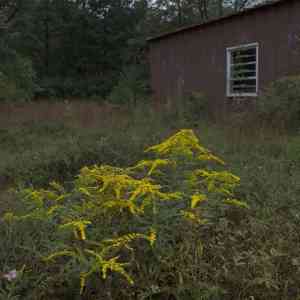
Wrinkleleaf goldenrod (Solidago rugosa)
Also known as: Roughleaf goldenrod
Black-eyed Susan (Rudbeckia hirta) is a flowering perennial related to the sunflower. It thrives in wet and well-balanced soils across the eastern and central regions of North America. Black-eyed Susan is commonly cultivated as an ornamental garden plant.
In This Article
Attributes of Wrinkleleaf goldenrod
Lifespan
Perennial
Plant Type
Herb
Plant Height
91 cm to 1.8 m
Spread
1 m
Leaf Color
Green
Flower Size
2.5 cm
Flower Color
Yellow Gold
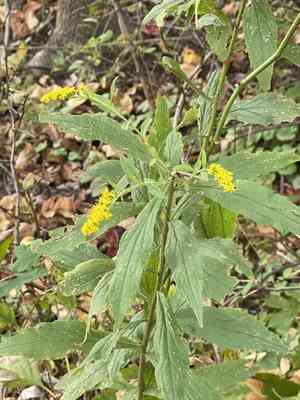
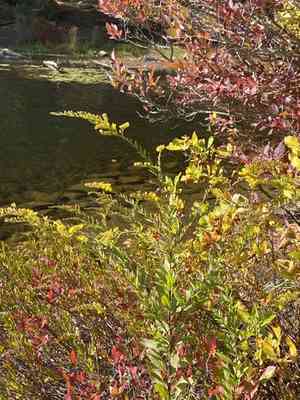
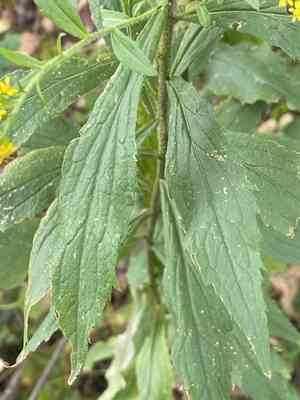
Images of Wrinkleleaf goldenrod
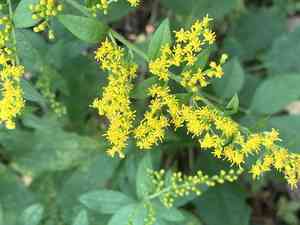
Quickly Identify Wrinkleleaf goldenrod
1
Robust clump reaching 2-5 feet (60-152 cm) in height.
2
Tiny bright yellow flowers with 4-8 narrow rays.
3
Bullet-shaped achene fruit with tuft of hairs for dispersal.
4
Medium to dark green ovate leaves with prominent veins.
5
Rough, hairy, unbranched stem ranging from 2 to 6 feet (60 to 180 cm).
Scientific Classification of Wrinkleleaf goldenrod
Phylum
Vascular plants
Class
Dicotyledons
Order
Asterales
Family
Daisy
Genus
Goldenrods
Species
Wrinkleleaf goldenrod
Planting and Growing of Wrinkleleaf goldenrod
Care Difficulty
Easy
Watering Schedule
Every 4 days
Sunlight Requirements
Full sun
Sunshine Duration
6-12 hours
Ideal Temperature
60-75℉
Soil Type
Potting Mix, Peat Mix
Soil pH
6.5-7.5
Fertilizer Type
Balanced
Pruning Season
Spring, Summer
Pruning Area
Branches, Leaves
Pruning Frequency
2 times a year
Repotting Season
Spring
Pot Type
Terracotta, Plastic
 How to Water Wrinkleleaf goldenrod?
Solidago rugosa, also known as wrinkle-leaf goldenrod, thrives with a moderate watering approach. It appreciates a deep watering until the soil is thoroughly soaked. You should be able to see some moisture in the pot drainage holes, indicating you've watered adequately. Be cautious not to drench it, as soggy soil can harm the roots.
What are the symptoms of an underwatered Wrinkleleaf goldenrod?
›
What should I do if my Wrinkleleaf goldenrod is not getting enough water?
›
What are the symptoms of an overwatered Wrinkleleaf goldenrod?
›
How to save an overwatered Wrinkleleaf goldenrod?
›
 What Are the Sunlight Requirements for Wrinkleleaf goldenrod?
Solidago rugosa ideally requires full sun to partial sun lighting, which supports healthy growth and flowering by supplying adequate energy for photosynthesis.
More About Sunlight Requirements Techniques→
What is the optimal light condition for Solidago rugosa?
›
How can you guarantee ideal lighting for Solidago rugosa?
›
What benefits does Solidago rugosa gain from ideal lighting?
›
 What Is the Ideal Temperature Range for Wrinkleleaf goldenrod?
Solidago rugosa thrives best in temperatures ranging from 60 to 75°F. This temperature range provides the plant with an optimal environment to ensure robust growth and flowering. Keeping the plant within this range supports its physiological processes and overall health.
 What Soil is Best for Wrinkleleaf goldenrod?
Solidago rugosa thrives in nutrient-rich soil that offers it the essential minerals needed for robust growth. This ensures that it maintains strong stems and vibrant flowers, contributing to its appeal in garden settings. Having well-draining soil is crucial for Solidago rugosa as it prevents waterlogging, which could lead to root rot. This allows the plant to absorb water efficiently without the risk of water stagnation, promoting healthy growth. While drainage is vital, the soil should still retain some moisture to keep the roots hydrated. This balance aids in sustaining the plant during dry spells, ensuring continuous flower production and overall plant vitality.
 How to Fertilize Wrinkleleaf goldenrod?
For Solidago rugosa, the amount of fertilizer depends greatly on soil conditions. Generally, a balanced liquid fertilizer diluted to half strength should be applied. For solid slow-release fertilizers, use about 1 to 2 pounds per 100 square feet of planting area. Remember, over-fertilizing can be as detrimental as under-fertilizing.
 How to Prune Wrinkleleaf goldenrod?
Start by removing any dead or damaged stems at the base. This clears up space for new growth and reduces the risk of pests and diseases that deadwood might harbor. If your Solidago rugosa is particularly dense, thin out some of the inner branches to improve air circulation and sunlight penetration, which is vital for the plant’s health. After the plant has finished blooming in autumn, cut back the flowering stems to just above the ground. This not only tidies up the plant but also helps redirect energy towards root and foliage development.
More About Pruning Techniques→
 How to Propagate Wrinkleleaf goldenrod plant?
1
Collect seeds from mature Solidago rugosa plants. Clean seeds to remove debris and consider stratifying them by placing them in a moist medium in the refrigerator for a few weeks to mimic natural conditions.
2
Choose a mature plant in spring or autumn. Divide the plant into sections, ensuring each has roots and shoots. Replant the divisions promptly to prevent root drying.
3
Plant seeds or divisions in well-prepared soil. Water them lightly and maintain consistent moisture while avoiding overwatering. Provide adequate sunlight to encourage growth.
 How to Repot Wrinkleleaf goldenrod plant?
1
Solidago rugosa signals the need for repotting when its roots start appearing through the drainage holes or when the plant's growth seems stunted. Repot during early spring or autumn to allow the plant to settle in milder conditions before peak growth periods.
2
Select a pot that is one to two inches larger in diameter than the current one. A pot with good drainage holes is essential to prevent waterlogging, which can damage the roots. The new pot should provide enough space for root expansion, ensuring healthy growth.
3
Choose a well-drained sandy-loam soil mix that allows for proper aeration and drainage. Such soil helps maintain moisture balance, preventing root rot while supplying essential nutrients for solid growth. A blend with organic matter can improve fertility.
Learn More About Wrinkleleaf goldenrod Diseases
Anthracnose
Bacterial Leaf Spot
Bacterial Wilt
Chemical Injury
Crown Gall
Cyst Nematode
Damping-off
Downy Mildew
Drought Stress
Fusarium Wilt
Gray Mold
Leaf Spot
Mosaic
Nutrient Deficiency
Nutrient Toxicity
Powdery Mildew
Root Rot
Root-knot Nematode
Rusts
Sooty Mold
Spider Mites
Temperature Stress
Thrips Damage
White Mold



