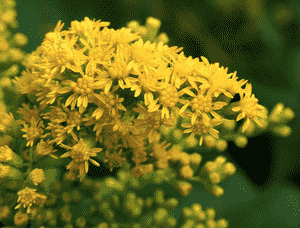
Giant goldenrod (Solidago gigantea)
Also known as: Early golden-rod, Late goldenrod
Giant goldenrod (Solidago gigantea) is a member of the sunflower family, commonly found in the central and eastern United States as well as Mexico. It thrives in various natural habitats and is also used in landscape cultivation across the U.S., growing best in moderately moist soils. Notably, it serves as the state flower for both Kentucky and Nebraska.
In This Article
Attributes of Giant goldenrod
Lifespan
Perennial
Plant Type
Herb
Plant Height
2 m
Spread
30 cm to 60 cm
Leaf Color
Green
Flower Size
2.5 cm
Flower Color
Yellow Gold
Images of Giant goldenrod
Quickly Identify Giant goldenrod
1
Solidago gigantea can be identified by its height, typically between 3 to 7 feet, its smooth stems, and its alternate, lance-shaped leaves. Its small yellow flowers are clustered on the upper parts of the plant.
Scientific Classification of Giant goldenrod
Phylum
Vascular plants
Class
Dicotyledons
Order
Asterales
Family
Daisy
Genus
Goldenrods
Species
Giant goldenrod
Planting and Growing of Giant goldenrod
Care Difficulty
Moderate
Watering Schedule
Every 2 days
Sunlight Requirements
Full sun
Sunshine Duration
6-10 hours
Ideal Temperature
60-77℉
Soil Type
Potting Mix, Peat Mix
Soil pH
5.5-7.5
Fertilizer Type
Balanced
Pruning Season
Spring, Summer
Pruning Area
Branches, Leaves
Pruning Frequency
2 times a year
Repotting Season
Spring
Pot Type
Plastic, Ceramic
 How to Water Giant goldenrod?
Solidago gigantea, commonly known as Giant Goldenrod, thrives with moderate watering. It's essential to water deeply, ensuring the soil is moist but not waterlogged. The water should penetrate around 6 inches into the soil to reach the root zone, promoting strong and healthy growth.
What are the symptoms of an underwatered Giant goldenrod?
›
What should I do if my Giant goldenrod is not getting enough water?
›
What are the symptoms of an overwatered Giant goldenrod?
›
How to save an overwatered Giant goldenrod?
›
 What Are the Sunlight Requirements for Giant goldenrod?
Providing Solidago gigantea with full sun or partial sun exposure supports healthy growth and vibrant blooming. The ideal range ensures robust plant health, sufficient energy for growth, and vibrant buds.
Optimal Environment
›
Balancing Sunlight with Shelter
›
Benefits of Ideal Sunlight
›
 What Is the Ideal Temperature Range for Giant goldenrod?
Solidago gigantea thrives best in temperatures ranging from 60°F to 77°F. This range provides an ideal environment for photosynthesis and growth. Ensuring the plant remains within these temperatures supports healthy development and disease resistance.
 What Soil is Best for Giant goldenrod?
Solidago gigantea thrives in well-drained soil that prevents root rot while ensuring sufficient moisture retention. This balances ample drainage with moisture retention, crucial for sustained health and growth. A nutrient-rich soil supports the vigorous growth of Solidago gigantea, providing essential nutrients like nitrogen, phosphorus, and potassium that fuel the plant's robust flowering and vegetative phases. Incorporating moderate organic matter enhances soil structure and fertility, promoting beneficial microbial activity that aids in nutrient uptake for Solidago gigantea, fostering its hearty and vibrant growth.
 How to Fertilize Giant goldenrod?
Solidago gigantea generally thrives with a moderate amount of fertilizer. Apply 1 tablespoon of liquid fertilizer in a diluted form every two weeks during the growing season. When adding slow-release pellets, use about 1/4 cup per plant annually, ensuring it's evenly spread around the base.
 How to Prune Giant goldenrod?
Begin by removing dead or damaged stems in early spring to make way for new growth. Trim the plant back to the ground level if frost damage is evident, but leave healthy shoots to encourage robust flowering. During the summer, prune solidago gigantea to maintain your desired shape and control its size. Focus on thinning out areas of dense growth to improve air circulation, which helps prevent mildew and other fungal diseases. In autumn, cut back faded flowers and stems to prevent self-seeding and prepare the plant for dormancy. Leave some seed heads if you want to support local wildlife, as these can provide food over winter. Before winter sets in, trim any remaining stems to the ground to protect the plant from frost and encourage fresh growth in spring. Mulch around the base for added insulation against harsh weather.
 How to Propagate Giant goldenrod plant?
1
Collect seeds from mature Solidago gigantea flowers in autumn. Clean and dry them, then store them in a cool, dry place till spring. This ensures they are dormant before germination.
2
In spring, dig up mature plants and carefully divide the root clumps. Ensure each division has a portion of roots and stems before replanting them in suitable soil.
3
In early summer, cut 4-6 inch sections of young, healthy stems. Remove the lower leaves and dip the cut end in rooting hormone before planting it in a moist potting mix.
 How to Repot Giant goldenrod plant?
1
Solidago gigantea typically requires repotting when you notice roots coiling at the surface or growing out of the drainage holes. Additionally, if you observe a decline in growth or the plant seems unable to retain moisture, repotting might be necessary. Early spring or mid-summer, when the plant is not actively flowering, are ideal times for repotting.
2
Select a pot that is one size larger than the current one, ensuring it has adequate drainage holes. A slightly bigger pot gives the roots space to expand, improving nutrient uptake. Ensure it's made of breathable material like clay to prevent root rot and maintain optimal soil aeration.
3
Opt for a rich, well-draining soil mix, such as a combination of loam with added organic matter like compost. This ensures robust support, adequate nutrients, and prevents waterlogging. Good soil quality fosters strong root establishment and healthy plant growth, crucial for Solidago gigantea's vibrant foliage.
Learn More About Giant goldenrod Diseases
Anthracnose
Bacterial Leaf Spot
Bacterial Wilt
Crown Gall
Cyst Nematode
Damping-off
Downy Mildew
Drought Stress
Fusarium Wilt
Gray Mold
Leaf Spot
Mosaic
Nutrient Deficiency
Nutrient Toxicity
Powdery Mildew
Root Rot
Root-knot Nematode
Rusts
Sooty Mold
Spider Mites
Temperature Stress
Thrips Damage
White Mold



