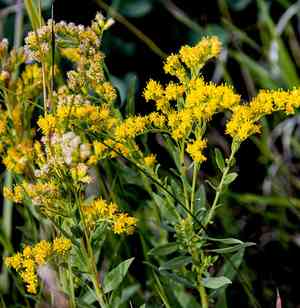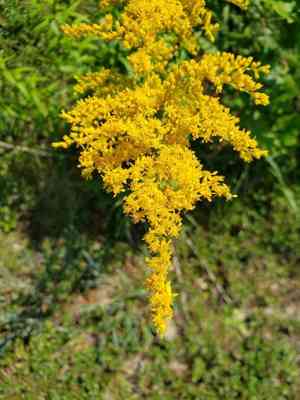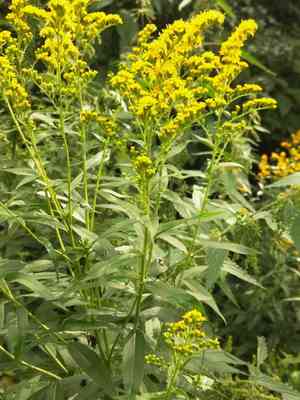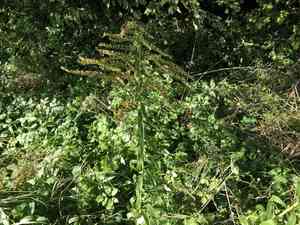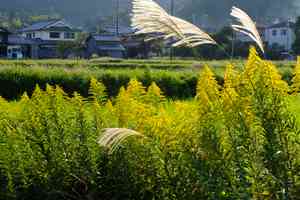
Canada goldenrod(Solidago canadensis)

Canada goldenrod (Solidago canadensis)

Also known as: Creek goldenrod

Solidago canadensis, commonly known as Canada goldenrod, is a perennial herb native to North America. It thrives in diverse habitats and often forms large colonies. In regions like Europe and East Asia, it is regarded as an invasive species.

Attributes of Canada goldenrod

Lifespan
Perennial
Plant Type
Herb
Plant Height
1.5 m to 3 m
Spread
1 m
Leaf Color
Green
Flower Size
2.5 cm
Flower Color
Yellow Gold

PlantJoy - Identify plants with a snap

Identify and diagnose plants, get toxicity alerts, and explore safety guides for all types of fungi.

Try for Free

Images of Canada goldenrod

Canada goldenrod(Solidago canadensis)

Quickly Identify Canada goldenrod

1
Lanceolate leaves, 4-6 inches (10-15 cm) long, 1 inch (2.5 cm) wide, with sharp teeth.
2
Vibrant yellow flowers in dense clusters, panicles up to 12 inches (30 cm) long.
3
Brown oblong seeds with white feathery hairs for wind dispersal.
4
Green to reddish stem, erect up to 6 feet (180 cm) tall, densely hairy.
5
Branching clusters of 100-1300 small flowers with ray petals and disc flowers.

Scientific Classification of Canada goldenrod

Phylum
Vascular plants
Class
Dicotyledons
Order
Asterales
Family
Daisy
Genus
Goldenrods
Species
Canada goldenrod

Planting and Growing of Canada goldenrod

Care Difficulty
Easy
Watering Schedule
Every 4 days
Sunlight Requirements
Full sun
Sunshine Duration
6-10 hours
Ideal Temperature
60-75℉
Soil Type
Potting Mix, Peat Mix
Soil pH
6.5-7.5
Fertilizer Type
Balanced
Pruning Season
Spring, Summer
Pruning Area
Branches, Leaves
Pruning Frequency
2 times a year
Repotting Season
Spring
Pot Type
Plastic, Ceramic

water icon How to Water Canada goldenrod?

When watering Solidago canadensis, aim for about 250 milliliters of water per session. You should ensure the topsoil is moist but not waterlogged. It's crucial to allow the soil to dry slightly between waterings, which ensures the roots receive enough oxygen and the plant maintains its vigor.
What are the symptoms of an underwatered Canada goldenrod?
What should I do if my Canada goldenrod is not getting enough water?
What are the symptoms of an overwatered Canada goldenrod?
How to save an overwatered Canada goldenrod?
More About Watering Techniques

sunlight icon What Are the Sunlight Requirements for Canada goldenrod?

Sunlight Requirements: Full sun, Partial sun
Duration of light: 6-8 hours daily
Solidago canadensis prefers full to partial sun exposure. Ideal lighting maximizes its growth and flowering potential, ensuring lush, prolific blooms and healthy foliage.
What is the best lighting for Solidago canadensis?
How can Solidago canadensis get its ideal lighting conditions?
Why should Solidago canadensis have its ideal lighting conditions?
More About Sunlight Requirements Techniques

temperature icon What Is the Ideal Temperature Range for Canada goldenrod?

Ideal Temperature: 60 ~ 75℉
The ideal temperature range for Solidago canadensis is between 60°F and 75°F. These conditions mimic the plant's native growing environment and support optimal growth, leading to vigorous blooming. Maintaining temperatures within this range encourages efficient photosynthesis and healthy metabolism.

soil icon What Soil is Best for Canada goldenrod?

Soil type: Sandy soil, Loam, Clay soil
Soil PH: 6.5 ~ 7.5
Solidago canadensis thrives in nutrient-rich soil that provides essential minerals necessary for robust growth. Amending the soil with organic matter improves its structure and nutrient content, ensuring the plant's health and vigor. Proper drainage is crucial for Solidago canadensis as it prevents root rot and other moisture-related issues. Sandy or loamy soils typically offer good drainage, allowing excess water to escape efficiently while retaining the necessary moisture for the plant. While the plant needs well-draining soil, it also benefits from soil that can retain moisture. This balance ensures the roots stay hydrated during dryer periods without becoming waterlogged, supporting sustained growth and floral development. More About Soil

fertilize icon How to Fertilize Canada goldenrod?

Fertilizer type: Balanced
For Solidago canadensis, apply liquid fertilizer at half the strength recommended for other flowering plants. Use about 1 tablespoon per gallon of water. Slow-release fertilizers should be measured according to the package instructions, typically using a tablespoon per square foot. More About Fertilizing Techniques

prune icon How to Prune Canada goldenrod?

Pruning Time: Spring, Summer, Autumn
Wear gloves and use clean, sharp pruning shears when working with Solidago canadensis. This minimizes the risk of injury and infection both for you and the plant. Disinfect tools before and after use to prevent disease transmission. Timing your pruning right is key to achieving the best growth. Late spring and early summer are ideal times for heavy pruning to shape the plant, while in autumn, focus on deadheading and thinning to prepare the plant for winter. Solidago canadensis can be aggressive in its growth. Regular pruning can help manage its spread, particularly in mixed garden settings. Monitor its growth closely at the root level as it can spread underground via rhizomes. Trim both above and below ground where necessary. More About Pruning Techniques

propagate icon How to Propagate Canada goldenrod plant?

Propagate Time: Spring, Early summer, Early autumn
1
As the flowers fade, collect seeds from the seed heads. Make sure to do this before the seeds naturally disperse. Dry the seeds in a cool, dry place before storing them for sowing in spring.
2
In early spring or autumn, dig up a mature plant clump. Use a sharp spade or knife to divide the clump into smaller sections, ensuring each section has roots attached. Replant these sections, keeping them well-watered until established.
3
Prepare a seed tray or small pots with well-draining soil. Sow the seeds on the surface and cover with a thin layer of soil. Keep the soil moist and place the tray in a warm, sunny location to encourage germination.
More About Propagating Techniques

repot icon How to Repot Canada goldenrod plant?

Repotting frequency: Every 2-3 years
1
You should consider repotting Solidago canadensis when the roots start to circle around the base of the pot, indicating it's root-bound. Another sign is if the plant's growth appears stunted despite proper care. The best time to repot is during the autumn, before the plant enters dormancy, to reduce stress on the roots.
2
Select a pot that's only slightly larger than the current one. A pot that's 2-3 inches wider in diameter ensures adequate room for growth without overwhelming the plant. Choosing the right pot size benefits the plant by preventing waterlogging and allowing proper root expansion.
3
Opt for a loamy, well-draining soil mix that's slightly acidic to neutral. This type of soil ensures proper drainage, preventing root rot, while maintaining the necessary moisture and nutrient balance, essential for promoting vigorous growth in Solidago canadensis.

PlantJoy - Identify plants with a snap

Find the best spots for them to optimize their health, simply using your phone.

Try for Free

Toxicity of Canada goldenrod

Is Canada goldenrod toxic to humans?

Canada goldenrod has the potential to induce a mild allergic reaction upon physical contact with the plant. Such reactions are not very common, and the symptoms experienced can differ from person to person. Symptoms may include sneezing or itchy, watery eyes. Ingesting canada goldenrod may produce a diuretic effect, leading to increased fluid loss, and has the potential to interact with specific medications. The consumption of this plant typically occurs in tea form, so it's important to carefully check your ingredients if you're on medication or have high blood pressure.

Identify toxic plants for your safety

Learn which plants are harmful to you and your pets, and make informed choices for a safer home!

Try for Free
WARNING
The judgment on toxicity and danger is for reference only. We DO NOT GUARANTEE any accuracy of such judgment. Therefore, you SHALL NOT rely on such judgment. It is IMPORTANT TO SEEK PROFESSIONAL ADVICE in advance when necessary.
More About Toxic Techniques