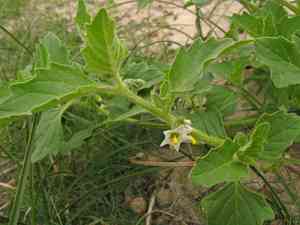
Hoe nightshade (Solanum physalifolium)
Also known as: Hairy nightshade
Solanum physalifolium, an annual herbaceous plant with a taproot, typically grows between 10 and 90 centimeters tall. The stem lacks leaves at its base, while the leaves along the stem are ovoid to deltoid, measuring 2 to 8 centimeters in length and 1.5 to 5 centimeters in width. Leaf margins can vary, appearing toothed, smooth, or wavy.
In This Article
Attributes of Hoe nightshade
Lifespan
Annual
Plant Type
Herb
Plant Height
30 cm to 91 cm
Spread
Not typically measured as it is a herbaceous plant
Leaf Color
Green
Flower Size
0.5 to 1 cm
Flower Color
White
Quickly Identify Hoe nightshade
1
Look for hairy leaves and stems, small white flowers with yellow centers, and round green berries.
Scientific Classification of Hoe nightshade
Phylum
Vascular plants
Class
Dicotyledons
Order
Solanales
Family
Nightshade
Genus
Nightshades
Species
Hoe nightshade
Planting and Growing of Hoe nightshade
Care Difficulty
Easy
Watering Schedule
Every 4 days
Sunlight Requirements
Partial sun
Sunshine Duration
6-12 hours
Ideal Temperature
65-75℉
Soil Type
Potting Mix, Peat Mix
Soil pH
6.5-7.5
Fertilizer Type
Balanced
Pruning Season
Spring, Summer
Pruning Area
Branches, Leaves
Pruning Frequency
2 times a year
Repotting Season
Spring
Pot Type
Plastic, Ceramic
 How to Water Hoe nightshade?
Solanum physalifolium prefers to grow in well-drained soil that is kept consistently moist, yet not waterlogged. Water the plant sufficiently until the top few inches of soil feel moist to the touch but avoid saturating the soil entirely. Approximately 250 ml of water per session usually suffices.
What are the symptoms of an underwatered Hoe nightshade?
›
What should I do if my Hoe nightshade is not getting enough water?
›
What are the symptoms of an overwatered Hoe nightshade?
›
How to save an overwatered Hoe nightshade?
›
 What Are the Sunlight Requirements for Hoe nightshade?
This plant thrives in partial to full sun exposure, ideally 4 to 6 hours daily. Proper light encourages strong, vibrant foliage and consistent flowering, enhancing the plant's aesthetics and health.
More About Sunlight Requirements Techniques→
What is the best time of day for sunlight exposure?
›
How can I ensure my plant gets adequate sunlight?
›
What happens if it receives too much sunlight?
›
 What Is the Ideal Temperature Range for Hoe nightshade?
Solanum physalifolium thrives best within a temperature range of 65°F to 75°F. This range allows the plant to maintain optimal metabolic activities, supporting healthy growth and development. Maintaining consistent temperatures within this range will ensure that the plant is active, with efficient photosynthesis and nutrient uptake.
 What Soil is Best for Hoe nightshade?
Solanum physalifolium thrives in soils enriched with organic matter. Incorporating compost or well-rotted manure can significantly enhance soil fertility, promoting vigorous plant growth and robust fruit production. This plant prefers well-drained soil that prevents root rot. Sandy loam and loam soils are ideal options as they assist in maintaining a balance between moisture retention and drainage, critical for healthy root systems. A soil that retains adequate moisture without being waterlogged is ideal. This balance ensures that plants receive sufficient water without drowning, contributing to sustained energy for growth and fruiting.
 How to Fertilize Hoe nightshade?
For Solanum physalifolium, it's essential to be cautious with fertilization. Generally, a balanced liquid fertilizer should be applied at half the recommended strength to avoid nutrient burn. For slow-release granules, use approximately 1-2 tablespoons per plant, ensuring not to overdo it since excess can harm the plant.
 How to Prune Hoe nightshade?
Start by removing any damaged or diseased branches first. Use clean, sharp cutters to make precise cuts at a 45-degree angle, leaving no stubs that can become disease entry points. Trim back any overgrown branches to maintain the desired shape and size of your plant. Focus on the new growth areas and snip them back to promote a fuller appearance. Pruning encourages new growth and flowering. Trim about a third of the plant, focusing on older, woodier stems to stimulate robust growth and vibrant blooms.
More About Pruning Techniques→
 How to Propagate Hoe nightshade plant?
1
Collect seeds from mature Solanum physalifolium fruits when they have fully ripened. Dry the seeds thoroughly to prevent mold issues during storage. Store them in a cool, dark place until you are ready for sowing.
2
Select healthy stems from the parent plant. Use sharp pruning shears to cut 4 to 6-inch sections with several nodes. Remove the lower leaves and dip the cut end in rooting hormone to enhance root development.
3
Sow seeds in a seed tray filled with quality potting mix. Alternatively, plant cuttings in a suitable growing medium. Maintain high humidity and ensure that temperature is consistently warm. Monitor for signs of root growth or germination.
 How to Repot Hoe nightshade plant?
1
Solanum physalifolium should be repotted when you notice roots emerging from the drainage holes, the soil volume seems reduced after watering, or growth appears stunted. These signs indicate the plant requires more space for roots to develop and access to fresh nutrients.
2
Select a pot that is one size larger than the current one, with generous drainage holes. This allows the roots to expand while ensuring excess water doesn’t pool at the bottom, preventing root rot. Opting for a breathable material like terracotta can also help with air circulation around the roots.
3
Choose a soil mix that is well-draining yet rich in nutrients. Incorporating organic matter such as compost helps retain moisture while providing essential nutrients. Additionally, adding perlite or sand can improve aeration and drainage, mimicking the plant’s natural environment.
Toxicity
Ingestion
WARNING
The judgment on toxicity and danger is for reference only. We DO NOT GUARANTEE any accuracy of such judgment. Therefore, you SHALL NOT rely on such judgment. It is IMPORTANT TO SEEK PROFESSIONAL ADVICE in advance when necessary.
Learn More About Hoe nightshade Diseases
Anthracnose
Bacterial Leaf Spot
Bacterial Soft Rot
Bacterial Wilt
Chemical Injury
Crown Gall
Cyst Nematode
Damping-off
Downy Mildew
Drought Stress
Fusarium Wilt
Gray Mold
Late Blight
Leaf Curl
Leaf Spot
Mosaic
Nutrient Deficiency
Nutrient Toxicity
Powdery Mildew
Root Rot
Root-knot Nematode
Sooty Mold
Spider Mites
Temperature Stress
Thrips Damage
White Mold



