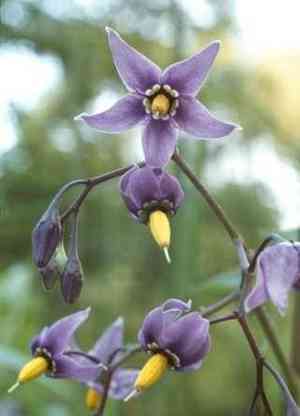
Bittersweet(Solanum dulcamara)

Bittersweet (Solanum dulcamara)

Also known as: Poisonberry, Woody nightshade

The plant known as bittersweet (Solanum dulcamara) is a semi-woody vine that thrives in forests, marshes, shrublands, and hedgerows. It contains toxic alkaloids throughout, particularly in its vivid red berries, making it highly poisonous to both humans and animals. Despite its dangerous nature, it was historically used as a protective talisman against witchcraft.

Attributes of Bittersweet

Lifespan
Perennial
Plant Type
Herb
Plant Height
61 cm to 2.5 m
Spread
2.5 m
Leaf Color
Green
Flower Size
2.5 cm
Flower Color
Purple Yellow

PlantJoy - Identify plants with a snap

Identify and diagnose plants, get toxicity alerts, and explore safety guides for all types of fungi.

Try for Free

Images of Bittersweet

Bittersweet(Solanum dulcamara)

Quickly Identify Bittersweet

1
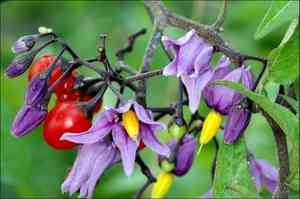
Purple young stems maturing to greenish-brown without tendrils.
2
Dark green ovate leaves with basal lobes emitting unpleasant odor when crushed.
3
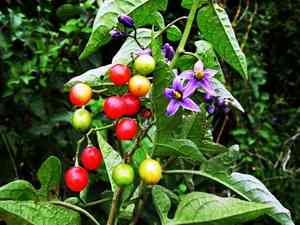
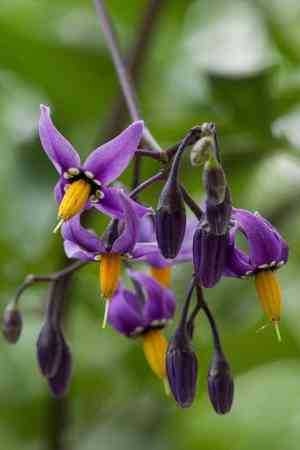
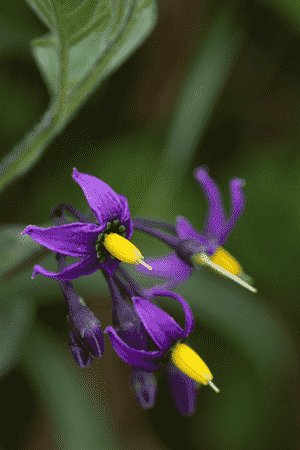
Star-shaped clusters of purple flowers with backward-curving petals and yellow stamen columns.
4
Small green berries maturing to shiny red, each housing tiny yellow seeds.
5
Trunk with wiry, thin bark bearing subtle lenticels for gas exchange.

Scientific Classification of Bittersweet

Phylum
Vascular plants
Class
Dicotyledons
Order
Solanales
Family
Nightshade
Genus
Nightshades
Species
Bittersweet

Planting and Growing of Bittersweet

Care Difficulty
Easy
Watering Schedule
Every 8 days
Sunlight Requirements
Partial sun
Sunshine Duration
4-6 hours
Ideal Temperature
60-75℉
Soil Type
Potting Mix, Peat Mix
Soil pH
6.5-7.5
Fertilizer Type
Balanced
Pruning Season
Spring, Summer
Pruning Area
Branches, Leaves
Pruning Frequency
2 times a year
Repotting Season
Spring
Pot Type
Plastic, Ceramic

water icon How to Water Bittersweet?

When watering Solanum dulcamara, ensure the soil is thoroughly moistened but avoid leaving it waterlogged. The idea is to water until you see excess moisture beginning to drain from the bottom of the pot, indicating the roots have enough moisture without being submerged.
What are the symptoms of an underwatered Bittersweet?
What should I do if my Bittersweet is not getting enough water?
What are the symptoms of an overwatered Bittersweet?
How to save an overwatered Bittersweet?

sunlight icon What Are the Sunlight Requirements for Bittersweet?

Sunlight Requirements: Partial sun
Duration of light: 4 to 6 hours
Solanum dulcamara ideally thrives in partial sun. Providing 4 to 6 hours of natural, filtered light promotes vigorous growth, enhances leaf vibrancy, and supports healthy flowering behavior.
How much light does Solanum dulcamara need?
Why is partial sunlight essential?
How to achieve the perfect light balance?

temperature icon What Is the Ideal Temperature Range for Bittersweet?

Ideal Temperature: 60 ~ 75℉
Solanum dulcamara ideally thrives in a temperature range of 60°F to 75°F. This range provides optimal conditions for physiological processes and growth, ensuring that the plant remains healthy and productive.

soil icon What Soil is Best for Bittersweet?

Soil type: Loam, Clay soil, Sandy loam
Soil PH: 6.5 ~ 7.5
Solanum dulcamara thrives in well-drained soil that prevents waterlogging. It ensures the plant roots have access to oxygen, promoting healthy growth and avoiding rot. This plant benefits from soil with moderate fertility levels. Adequate nutrients support its growth and flowering cycles, providing resilience against pests and diseases. Solanum dulcamara prefers soil that retains moisture but does not become soggy. Proper moisture levels help maintain the plant's turgor pressure and prevent dehydration.

fertilize icon How to Fertilize Bittersweet?

Fertilizer type: Balanced
Solanum dulcamara typically requires moderate amounts of fertilizer. When using liquid fertilizer, a balanced 10-10-10 NPK ratio diluted to half-strength is generally effective. Apply it liberally until excess begins to drain from the pot, ensuring that the soil is evenly soaked without being waterlogged.

prune icon How to Prune Bittersweet?

Pruning Time: Spring, Summer, Autumn
Solanum dulcamara的整体生长形态,这样可以帮助您了解哪些部分需要修剪,以保持其形态优雅和结构优化。

propagate icon How to Propagate Bittersweet plant?

Propagate Time: Spring, Early spring, Summer
1
Harvest seeds from ripe berries of the Solanum dulcamara plant. Clean them thoroughly to remove any pulp and allow them to dry before storing for future use or immediate planting.
2
Select healthy stems from the plant and cut them to a length of approximately 10-15 cm. Remove the lower leaves and dip the cut end in rooting hormone to encourage faster root development.
3
For seeds, sow them in seed trays filled with a well-draining soil mix. For cuttings, insert them into pots filled with potting mix, ensuring they remain upright and stable.

repot icon How to Repot Bittersweet plant?

Repotting frequency: Every 2-3 years
1
Solanum dulcamara shows it needs repotting when its roots start to emerge from the drainage holes or circle around the soil. If the plant seems to have stunted growth or it dries out too quickly after watering, it’s time to consider repotting. Look for these signs especially during the transition to the growing season for best results.
2
When choosing a pot for repotting Solanum dulcamara, aim for one about 2 inches larger in diameter than the current pot. This ensures adequate room for root expansion while preventing water stagnation. Opting for pots with good drainage holes helps prevent root rot and encourages healthy growth.
3
Select well-draining potting soil that can retain moisture yet not become waterlogged. A mix containing perlite or coarse sand along with organic material like peat moss is ideal. This combination supports root health and provides necessary nutrients while preventing the roots from sitting in water.

PlantJoy - Identify plants with a snap

Find the best spots for them to optimize their health, simply using your phone.

Try for Free

Toxicity of Bittersweet

Is Bittersweet toxic to humans?

Bittersweet can lead to toxicity through both skin contact and the consumption of any plant parts, which include the leaves, fruits, flowers, and stems. Ingesting bittersweet may be lethal and induce serious symptoms such as nausea, weakness, elevated body temperature, vomiting, decreased heart rate, and nerve system paralysis. Handling the plant may also result in skin irritation and an itchy, red rash. Poisoning is most frequently a result of unintentional contact or consumption.

Is Bittersweet toxic to cat?

Commonly encountered in natural forest habitats, bittersweet (Solanum dulcamara) poses a moderate to severe toxicity risk to cats; any suspected ingestion should be treated as a medical emergency. Every part of the plant is harmful. Signs of bittersweet consumption include diarrhea, vomiting, excessive salivation, dilated pupils, and decreased appetite. In more uncommon instances, the cat may experience a slowed heart rate, breathing difficulties, numbness, tremors, loss of coordination, paralysis, or potentially fatal outcomes.

Is Bittersweet toxic to dog?

This plant poses a significant threat to dogs; if you suspect that your dog has consumed even a small quantity of bittersweet, it is crucial to seek immediate assistance. Every part of the plant is poisonous, but the leaves and unripe green berries are the most frequently responsible for poisoning incidents. Symptoms of bittersweet poisoning can vary widely, with the most prevalent being excessive drooling, vomiting, diarrhea, difficulty breathing, and fatigue. In severe cases, symptoms may escalate to include tremors, seizures, paralysis, or even fatal outcomes.

Identify toxic plants for your safety

Learn which plants are harmful to you and your pets, and make informed choices for a safer home!

Try for Free
WARNING
The judgment on toxicity and danger is for reference only. We DO NOT GUARANTEE any accuracy of such judgment. Therefore, you SHALL NOT rely on such judgment. It is IMPORTANT TO SEEK PROFESSIONAL ADVICE in advance when necessary.
More About Toxic Techniques