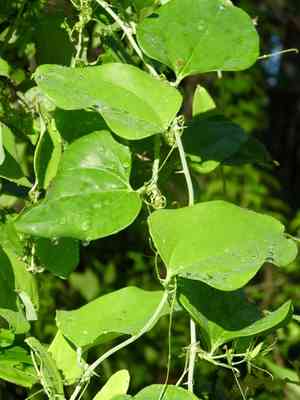
Cat greenbrier (Smilax glauca)
Also known as: Whiteleaf greenbrier, Glaucous-leaved greenbrier
The Cat Greenbrier (Smilax glauca) is a native woodland vine found in the central and eastern United States. Its root structure gives it a notable resistance to fire.
In This Article
Attributes of Cat greenbrier
Lifespan
Perennial
Plant Type
Vine, Herb
Plant Height
2.5 m to 3.5 m
Spread
N/A
Leaf Color
Green White Variegated Red
Flower Size
2.5 cm
Flower Color
Yellow Green Gold
Images of Cat greenbrier
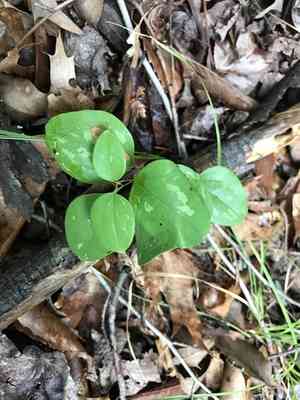
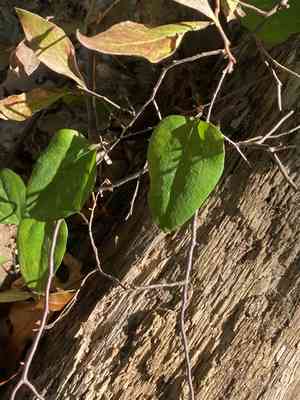
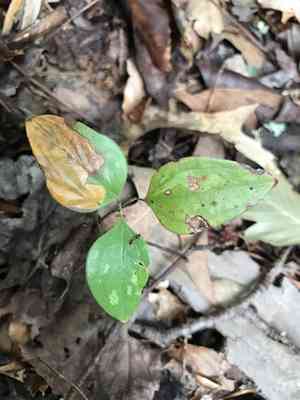
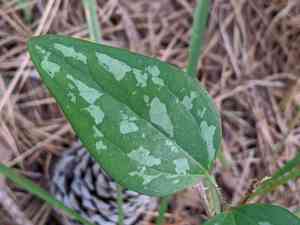
Quickly Identify Cat greenbrier
1
Blue-green tinted leaves with tendrils for climbing.
2
Small greenish-yellow flowers with 6 tepals and stamens.
3
Dark bluish-black berries in clustered groups.
4
2-4 inch oblong leaves with distinct vein patterns.
5
Slender green stem with weak prickles for climbing.
Scientific Classification of Cat greenbrier
Phylum
Vascular plants
Class
Monocotyledons
Order
Liliales
Family
Greenbrier
Genus
Prickly-ivy
Species
Cat greenbrier
Planting and Growing of Cat greenbrier
Care Difficulty
Easy
Watering Schedule
Every 4 days
Sunlight Requirements
Partial sun
Sunshine Duration
6-10 hours
Ideal Temperature
59-77℉
Soil Type
Potting Mix, Peat Mix
Soil pH
5.5-7.5
Fertilizer Type
Balanced
Pruning Season
Spring, Summer
Pruning Area
Branches, Leaves
Pruning Frequency
2 times a year
Repotting Season
Spring
Pot Type
Plastic, Ceramic
 How to Water Cat greenbrier?
For Smilax glauca, it is essential to water deeply until the soil is evenly moist but not soggy. Typically, providing approximately 500 ml per session should suffice, keeping the roots hydrated without drowning them.
What are the symptoms of an underwatered Cat greenbrier?
›
What should I do if my Cat greenbrier is not getting enough water?
›
What are the symptoms of an overwatered Cat greenbrier?
›
How to save an overwatered Cat greenbrier?
›
 What Are the Sunlight Requirements for Cat greenbrier?
Smilax glauca ideally prefers partial to full sunlight exposure. This lighting level allows for healthy photosynthesis, robust foliage development, and overall improved resistance to diseases, contributing greatly to its aesthetic appeal.
How much sunlight is ideal?
›
What are the solutions for inadequate light?
›
What benefits come from optimal lighting?
›
 What Is the Ideal Temperature Range for Cat greenbrier?
The ideal temperature range for Smilax glauca is between 59°F and 77°F. This range supports optimal growth and photosynthesis while minimizing environmental stress on the plant. Staying within this range helps ensure the plant’s health and vigor.
 What Soil is Best for Cat greenbrier?
Smilax glauca thrives in well-drained soils, as this ensures that its roots do not become waterlogged which can lead to root rot. This soil condition helps the plant to sustain healthy root growth and uptake of essential nutrients. Although Smilax glauca is adaptable, a nutrient-rich soil can significantly enhance its growth and foliage quality. Providing a medium that is rich in organic matter ensures a steady supply of nutrients, supporting lush and robust plant growth. Maintaining moderate moisture levels in the soil is crucial for Smilax glauca. This balance prevents the roots from drying out or becoming too saturated, promoting consistent growth and reducing stress on the plant.
 How to Fertilize Cat greenbrier?
For Smilax glauca, the fertilizer amount should be carefully monitored. When using liquid fertilizers, dilute them to half-strength to prevent any potential damage to the roots. Slow-release fertilizers should be applied moderately; sprinkling a small handful around the base should suffice.
 How to Prune Cat greenbrier?
Start by assessing the plant for any dead, diseased, or damaged stems. These should be removed first to promote healthier growth. Smilax glauca can spread aggressively, so cut back any excessively long or unruly vines. Focus on areas where the plant may be outcompeting others or becoming too dense. Once dead and excessive growth is managed, shape the plant according to your garden design. This involves trimming for symmetry and size, ensuring it fits harmoniously within your landscape. Finally, make sure to dispose of the clippings properly. Because of the thorns, it's advisable to bundle them securely or use a designated green waste bin to avoid harming anyone.
 How to Propagate Cat greenbrier plant?
1
Collect seeds from mature Smilax glauca berries in late autumn. Clean the seeds thoroughly to remove pulp residues, which can harbor pathogens.
2
Choose a healthy Smilax glauca stem and cut about 12 inches long. Ensure the cut is clean and slightly above a node to encourage root growth.
3
In spring, carefully dig up the plant and split its roots into several sections, each with at least one bud, to promote new plant growth.
 How to Repot Cat greenbrier plant?
1
Observe the roots; if they begin to circle the pot or poke through the drainage holes, it's time to repot. Additionally, stunted growth and rapid drying of the soil are key indicators that repotting is necessary.
2
Select a pot that's 1-2 inches larger in diameter than the current one. This allows adequate space for root expansion and prevents waterlogging, reducing the risk of root rot and promoting healthy plant growth.
3
Opt for a well-draining potting mix, ideally one containing perlite or sand. This ensures efficient water drainage and air circulation around the roots, essential for preventing root rot and maintaining robust plant health.
Learn More About Cat greenbrier Diseases
Anthracnose
Bacterial Leaf Spot
Black Spot
Chemical Injury
Crown Gall
Damping-off
Downy Mildew
Drought Stress
Fusarium Wilt
Gray Mold
Leaf Curl
Leaf Spot
Mosaic
Nutrient Deficiency
Nutrient Toxicity
Powdery Mildew
Root Rot
Root-knot Nematode
Rusts
Sooty Mold
Spider Mites
Temperature Stress
Thrips Damage
White Mold



