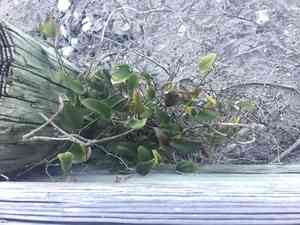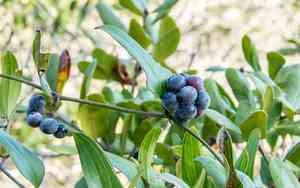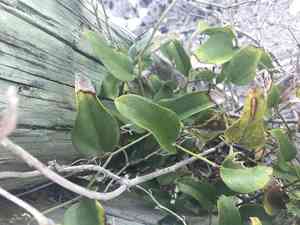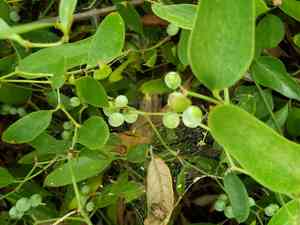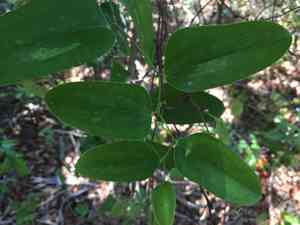
Earleaf Greenbrier(Smilax auriculata)

Earleaf Greenbrier (Smilax auriculata)

Also known as: Dune Greenbrier

Earleaf Greenbrier (Smilax auriculata) is a robust evergreen vine native to the southeastern United States. It features leathery, oval leaves with distinctive ear-shaped lobes and produces small, greenish-yellow flowers in clusters from spring through summer. These blooms are followed by dark berries that are attractive to wildlife.

This vine flourishes in well-drained, sandy soils and can adapt to both full sun and partial shade. Known for its vigorous growth, Earleaf Greenbrier can quickly form dense thickets. Its green stems are often armed with sharp thorns, making it somewhat challenging to manage, especially as its roots are difficult to fully remove once established.

Attributes of Earleaf Greenbrier

Lifespan
Perennial
Plant Type
Vine, Shrub
Plant Height
1.8 m to 8 m
Spread
N/A - Vine
Leaf Color
Green
Flower Size
2.5 cm
Flower Color
White Green

ForwardPlant - Identify plants with a snap

Identify and diagnose plants, get toxicity alerts, and explore safety guides for all types of fungi.

Try for Free

Images of Earleaf Greenbrier

Earleaf Greenbrier(Smilax auriculata)

Quickly Identify Earleaf Greenbrier

1
Identifiable by its distinctive ear-shaped leaf base, green stems with occasional prickles, and tendrils that help it climb.

Scientific Classification of Earleaf Greenbrier

Phylum
Vascular plants
Class
Monocotyledons
Order
Liliales
Family
Greenbrier
Genus
Prickly-ivy
Species
Earleaf Greenbrier

Planting and Growing of Earleaf Greenbrier

Care Difficulty
Moderate
Watering Schedule
Every 4 days
Sunlight Requirements
Full sun
Sunshine Duration
4-8 hours
Ideal Temperature
65-77℉
Soil Type
Potting Mix, Peat Mix
Soil pH
6.5-7.5
Fertilizer Type
Balanced
Pruning Season
Spring, Summer
Pruning Area
Branches, Leaves
Pruning Frequency
2 times a year
Repotting Season
Spring
Pot Type
Plastic, Ceramic

water icon How to Water Earleaf Greenbrier?

For Smilax auriculata, ensure the soil is thoroughly soaked without standing water, typically requiring about 500ml per session. This allows the roots to absorb moisture efficiently, preventing both root rot and dehydration.
What are the symptoms of an underwatered Earleaf Greenbrier?
What should I do if my Earleaf Greenbrier is not getting enough water?
What are the symptoms of an overwatered Earleaf Greenbrier?
How to save an overwatered Earleaf Greenbrier?

sunlight icon What Are the Sunlight Requirements for Earleaf Greenbrier?

Sunlight Requirements: Full sun, Partial sun
Duration of light: 4 to 8 hours
Smilax auriculata thrives in a range of light conditions, from full sun to partial sun. Ensuring adequate light exposure helps promote vigorous growth, vibrant leaf coloration, and robust plant health, supporting its physiological functions.
Ideal Soil for Optimal Light Absorption
Positioning for Maximum Sunlight Exposure
Balancing Indoor and Outdoor Light Conditions

temperature icon What Is the Ideal Temperature Range for Earleaf Greenbrier?

Ideal Temperature: 65 ~ 77℉
Smilax auriculata thrives best within a moderate temperature range of 65°F to 77°F. This range provides the right conditions for photosynthesis, growth, and overall health of the plant. Maintaining this range ensures optimal metabolic processes and reduces stress.

soil icon What Soil is Best for Earleaf Greenbrier?

Soil type: Sandy loam, Loam
Soil PH: 6.5 ~ 7.5
Smilax auriculata prefers well-drained soil to prevent root rot and other water-related diseases. This ensures healthy root development and encourages growth. A nutrient-rich medium is essential for Smilax auriculata as it provides the necessary minerals and nutrients. This results in vibrant leaves and robust growth. Soil with good moisture retention helps maintain hydration levels, allowing Smilax auriculata to thrive even in periods of limited rainfall.

fertilize icon How to Fertilize Earleaf Greenbrier?

Fertilizer type: Balanced
When fertilizing Smilax auriculata, use a balanced fertilizer such as a 10-10-10 or 20-20-20. For liquid fertilizers, apply approximately 1 tablespoon per gallon of water. For slow-release fertilizers, sprinkle evenly about 1 to 2 tablespoons around the base of the plant.

prune icon How to Prune Earleaf Greenbrier?

Pruning Time: Spring, Summer, Autumn, Winter
Start your pruning session by removing any dead, damaged, or diseased stems. This helps the plant direct its energy towards healthy growth and prevents the spread of diseases. Cut these stems back to the base or to a healthy junction. To maintain a desirable shape, regularly prune back any overgrown or wayward branches. Cut just above a leaf node to encourage new growth that follows the plant's natural form, creating a balanced and compact shape. Smilax auriculata can spread quickly and become invasive. Keep its growth in check by cutting back new shoots and excessive vines to prevent it from overtaking other plants or structures in your garden. Regularly inspect the plant for unexpected growth patterns or new needs that might arise due to changes in environment or plant health. Adjust your pruning strategy as necessary to ensure the plant continues to thrive.

propagate icon How to Propagate Earleaf Greenbrier plant?

Propagate Time: Spring,Early summer
1
To start with seed propagation, soak the seeds in water for 24 hours to soften the seed coat. This helps in accelerating germination by allowing water to penetrate more easily.
2
For cutting propagation, select young, healthy stems and use garden shears to cut them just below a node. Each cutting should be about 4-6 inches long.
3
For dividing, carefully separate the plant's root ball into sections, ensuring each section has both roots and stems. Replant these sections in well-prepared soil.

repot icon How to Repot Earleaf Greenbrier plant?

Repotting frequency: Every 2-3 years
1
Repotting Smilax auriculata is best when you observe slow growth or roots growing through drainage holes. It's crucial to act when the plant looks root-bound or the soil no longer retains moisture effectively. Choosing the right moment ensures minimal stress to the plant.
2
Select a pot that is 1-2 inches larger in diameter than the current one. This allows ample space for new root growth, enhancing the plant's stability and nutrient absorption. A pot with drainage holes also prevents waterlogging, crucial for this species.
3
Opt for a well-draining sandy mix that's slightly acidic to neutral. Such soil ensures adequate aeration while retaining necessary moisture. It supports healthy root development by preventing compaction and allowing for proper oxygen circulation.

ForwardPlant - Identify plants with a snap

Find the best spots for them to optimize their health, simply using your phone.

Try for Free