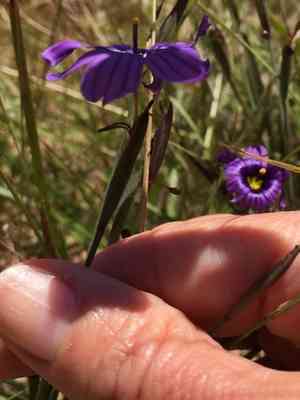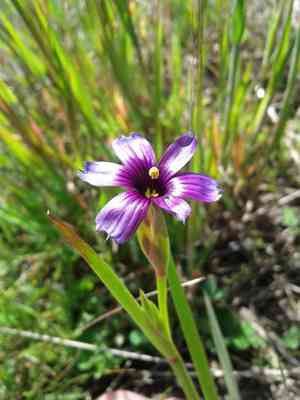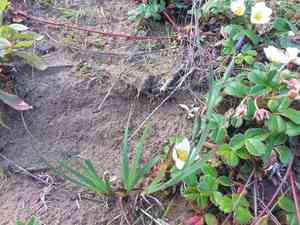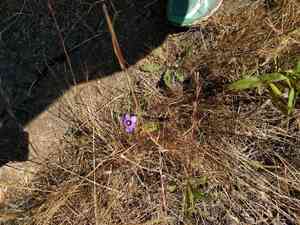
Western blue-eyed grass(Sisyrinchium bellum)

Western blue-eyed grass (Sisyrinchium bellum)

Also known as: Rocky Point Blue Eyed Grass

Western blue-eyed grass (Sisyrinchium bellum) is a perennial native to California, known for its ability to self-seed and propagate via rhizomes. It features charming, small blue to purple flowers that bloom in the spring. This plant's drought tolerance during the summer months makes it an excellent, low-maintenance option for planting along border edges and tree lines. Its compact size and attractive foliage also contribute to its suitability for these areas.

Attributes of Western blue-eyed grass

Lifespan
Perennial
Plant Type
Herb
Plant Height
10 cm to 41 cm
Spread
10 cm
Leaf Color
Green Blue
Flower Size
2.5 cm
Flower Color
Blue White Purple

ForwardPlant - Identify plants with a snap

Identify and diagnose plants, get toxicity alerts, and explore safety guides for all types of fungi.

Try for Free

Images of Western blue-eyed grass

Western blue-eyed grass(Sisyrinchium bellum)

Quickly Identify Western blue-eyed grass

1
Narrow, bluish-green, grass-like leaves
2
Metallic purple-blue, six-petaled flowers with yellow centers
3
Dark brown fruit releasing abundant seeds
4
Clump-forming perennial reaching 6 to 12 inches (15 to 30 cm) in height
5
Umbrella-like clusters of vibrant flowers on branched stalks

Scientific Classification of Western blue-eyed grass

Phylum
Vascular plants
Class
Monocotyledons
Order
Asparagales
Family
Iris
Genus
Blue-eyed grasses
Species
Western blue-eyed grass

Planting and Growing of Western blue-eyed grass

Care Difficulty
Easy
Watering Schedule
Every 5 days
Sunlight Requirements
Full sun
Sunshine Duration
4-8 hours
Ideal Temperature
65-75℉
Soil Type
Potting Mix, Peat Mix
Soil pH
6.5-7.5
Fertilizer Type
Balanced
Pruning Season
Spring, Summer
Pruning Area
Branches, Leaves
Pruning Frequency
2 times a year
Repotting Season
Spring
Pot Type
Plastic, Terracotta

water icon How to Water Western blue-eyed grass?

The watering amount for Sisyrinchium bellum should be enough to moisten the soil evenly without waterlogging. Ideally, each watering should provide about 250 milliliters, ensuring the soil is moist 2-3 inches deep. This encourages healthy root growth and mimics its natural habitat conditions.
What are the symptoms of an underwatered Western blue-eyed grass?
What should I do if my Western blue-eyed grass is not getting enough water?
What are the symptoms of an overwatered Western blue-eyed grass?
How to save an overwatered Western blue-eyed grass?

sunlight icon What Are the Sunlight Requirements for Western blue-eyed grass?

Sunlight Requirements: Full sun, Partial sun
Duration of light: 4 to 8 hours daily
Sisyrinchium bellum thrives in full sun to partial sun. This ideal lighting ensures strong growth, vibrant blooms, and overall plant vitality, optimizing photosynthesis and nutrient absorption processes.
How much sunlight does Sisyrinchium bellum need daily?
What are the solutions to achieve ideal lighting?
What benefits does the ideal sunlight have?
More About Sunlight Requirements Techniques

temperature icon What Is the Ideal Temperature Range for Western blue-eyed grass?

Ideal Temperature: 65 ~ 75℉
The ideal temperature range for cultivating Sisyrinchium bellum is between 65 to 75°F. This range supports optimal physiological processes, ensuring robust growth and vibrant flowers. Maintaining this temperature range helps the plant in achieving its full genetic potential and displaying its characteristic beauty.

soil icon What Soil is Best for Western blue-eyed grass?

Soil type: Loam, Sandy loam
Soil PH: 6.5 ~ 7.5
Sisyrinchium bellum thrives in well-drained soil to prevent root rot. Ensuring good drainage increases aeration around the roots, promoting healthier growth and reducing the risk of water-related diseases. While this plant prefers moderately moist conditions, it is also somewhat drought-tolerant. Consistent soil moisture enhances its blooming potential, bringing out its stunning blue flowers. This species requires minimal fertilization, adapting well to low-nutrient soils. This makes it suitable for native plant gardens and reduces the need for artificial fertilizers, promoting environmental sustainability.

fertilize icon How to Fertilize Western blue-eyed grass?

Fertilizer type: Balanced
When fertilizing Sisyrinchium bellum, use a balanced 10-10-10 liquid fertilizer, applying at half the recommended strength to avoid over-fertilization. For solid fertilizers, apply a slow-release granular type lightly, about one tablespoon per square foot, ensuring even coverage and water thoroughly afterward.

prune icon How to Prune Western blue-eyed grass?

Pruning Time: Spring, Summer
Start by inspecting the plant to identify any dead or damaged leaves and stems. Using clean, sharp pruning scissors, carefully remove these parts by cutting them at the base. For overgrown sections, trim back to the desired shape, ensuring your cuts are just above a leaf node to encourage new growth. Prune the plant to maintain a balanced shape and remove any diseased or weakened growth to prevent spreading. More About Pruning Techniques

propagate icon How to Propagate Western blue-eyed grass plant?

Propagate Time: Spring, Late spring
1
Start seeds indoors in seed trays filled with a well-draining soil mix. Ensure the seeds are covered lightly and kept moist in a warm environment until germination occurs.
2
Once the seedlings have two to three true leaves, transplant them into individual pots or a prepared garden bed, ensuring they have ample space to grow.
3
Carefully lift mature plants with a spade and divide the root clumps. Ensure each division has healthy roots and shoots before replanting them.
More About Propagating Techniques

repot icon How to Repot Western blue-eyed grass plant?

Repotting frequency: Every 2-3 years
1
Sisyrinchium bellum, commonly known as Blue-eyed Grass, should be repotted when its roots begin to crowd the pot or when drainage becomes compromised. Signs such as slowing growth, yellowing leaves, or water sitting on the surface indicate it's time. This typically happens every couple of years, aligning well with its active growing phase.
2
Selecting the right pot is crucial. Opt for one that is one size larger than the current pot, ensuring it has drainage holes to prevent waterlogging. Material-wise, terracotta is preferable for its breathability, promoting aeration and preventing root rot. A well-chosen pot supports the plant's health and growth.
3
The soil for repotting Sisyrinchium bellum should be a well-draining potting mix. A mixture consisting of peat, perlite, and sand is ideal. This composition keeps the soil light and airy, allowing excess water to drain efficiently while retaining necessary moisture, creating an optimal growing environment for this species.

ForwardPlant - Identify plants with a snap

Find the best spots for them to optimize their health, simply using your phone.

Try for Free

Toxicity of Western blue-eyed grass

Is Western blue-eyed grass toxic to humans?

Western blue-eyed grass presents a mild risk of toxicity to humans if ingested. The entire plant is regarded as toxic, and unintentional consumption may result in unpleasant effects. Symptoms of poisoning can manifest as gastrointestinal distress, including nausea, vomiting, and diarrhea. Additionally, some individuals might suffer from skin irritation or experience an allergic reaction upon contact with the plant. It is essential for individuals, particularly those with inquisitive children or pets, to be mindful of these potential dangers and to safeguard against accidental ingestion of western blue-eyed grass.

Is Western blue-eyed grass toxic to cat?

Western blue-eyed grass presents a mild toxic threat to cats. If a cat inadvertently eats any portion of this plant, as it is entirely toxic, they may show signs of physical discomfort. While the specific toxic agents are not identified, consumption can still result in significant health challenges for these animals. To protect their well-being, it is vital for cat owners to closely observe their pets and make certain they cannot access western blue-eyed grass. Should ingestion occur, prompt veterinary care is crucial to manage the condition of the cat efficiently and avert more serious health issues.

Is Western blue-eyed grass toxic to dog?

Western blue-eyed grass carries a low level of toxicity risk for dogs. It is possible for canines to unintentionally consume various parts of this plant, posing a risk of poisoning. The entire plant is deemed toxic, and ingestion can lead to concerning symptoms that dog owners must be aware of. If a dog ingests any portion of western blue-eyed grass, they may show signs such as gastrointestinal distress or other mild adverse reactions. It is essential for pet owners to keep a vigilant eye on their pets and restrict their access to western blue-eyed grass. If a dog exhibits any odd behavior or symptoms after possible consumption, it is vital to seek prompt veterinary attention to safeguard the health of the animal.

Identify toxic plants for your safety

Learn which plants are harmful to you and your pets, and make informed choices for a safer home!

Try for Free
WARNING
The judgment on toxicity and danger is for reference only. We DO NOT GUARANTEE any accuracy of such judgment. Therefore, you SHALL NOT rely on such judgment. It is IMPORTANT TO SEEK PROFESSIONAL ADVICE in advance when necessary.
More About Toxic Techniques