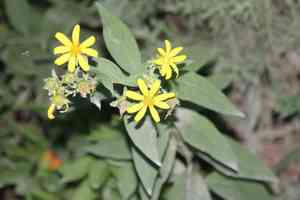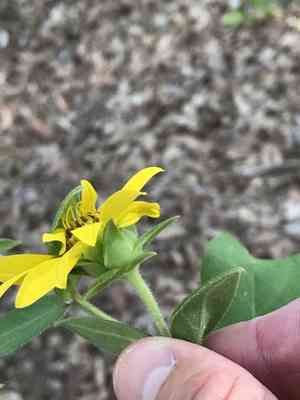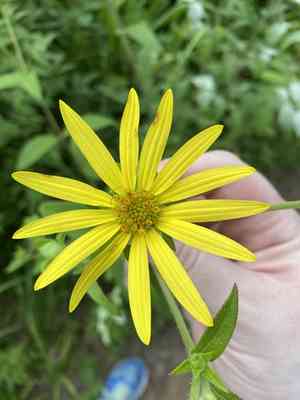
Starry rosinweed(Silphium asteriscus)

Starry rosinweed (Silphium asteriscus)

Also known as: Starry Rosinweed, Starry Sunflower, Prairie Star

Starry rosinweed (Silphium asteriscus) exhibits several distinctive features and adaptations that enable it to flourish in prairie environments:

1. **Distinctive Flowers and Stems**: The plant is recognized for its star-shaped yellow blossoms and robust, upright stems, which typically bloom in late summer.
2. **Leaf Arrangement**: It features heart-shaped leaves with toothed edges, arranged in a basal rosette.
3. **Deep Root System**: The extensive root system penetrates deeply into the soil, allowing the plant to access water and nutrients from lower soil layers, providing drought resistance.
4. **Soil and Water Adaptation**: It thrives in dry, well-drained soils common to prairie habitats.

These traits make starry rosinweed well-suited to the challenging conditions of prairie ecosystems.

Attributes of Starry rosinweed

Lifespan
Perennial
Plant Type
Herb
Plant Height
61 cm to 1.5 m
Spread
45 cm to 90 cm
Leaf Color
Green
Flower Size
2-3 inches
Flower Color
Bright yellow

ForwardPlant - Identify plants with a snap

Identify and diagnose plants, get toxicity alerts, and explore safety guides for all types of fungi.

Try for Free

Images of Starry rosinweed

Starry rosinweed(Silphium asteriscus)

Quickly Identify Starry rosinweed

1
Robust stature reaching 3 feet (91 cm) tall as a herbaceous perennial.
2
Lemon-yellow flower heads, 1.5 inches (4 cm) in diameter, resembling silver dollars.
3
Bright yellow flowers, 2-3 inches (5-7.5 cm) wide, with vibrant, daisy-like petals.
4
Dry, one-seeded achene fruit, brown and ridged, 0.1 inches (2-3 mm) long.
5
Papery involucre enclosing fruit, providing a distinctive texture.

Scientific Classification of Starry rosinweed

Phylum
Vascular plants
Class
Dicotyledons
Order
Asterales
Family
Daisy
Genus
Rosinweeds
Species
Starry rosinweed

Planting and Growing of Starry rosinweed

Care Difficulty
Easy
Watering Schedule
Every 3 days
Sunlight Requirements
Full sun
Sunshine Duration
6-10 hours
Ideal Temperature
65-80℉
Soil Type
Potting Mix, Peat Mix
Soil pH
6.5-7.5
Fertilizer Type
Balanced
Pruning Season
Spring, Summer
Pruning Area
Branches, Leaves
Pruning Frequency
2 times a year
Repotting Season
Spring
Pot Type
Plastic, Ceramic

water icon How to Water Starry rosinweed?

Silphium asteriscus requires moderate watering, where you should aim to provide approximately 250 milliliters per watering session. The soil should be slightly moist, but not soggy. Be attentive to drainage and ensure water reaches the roots without pooling on the surface.
What are the symptoms of an underwatered Starry rosinweed? ›
What should I do if my Starry rosinweed is not getting enough water? ›
What are the symptoms of an overwatered Starry rosinweed? ›
How to save an overwatered Starry rosinweed? ›

sunlight icon What Are the Sunlight Requirements for Starry rosinweed?

Sunlight Requirements: Full sun, Partial sun
Duration of light: 6 to 8 hours
Silphium asteriscus ideally requires full sun or partial sun conditions. This ensures optimal photosynthesis efficiency, promoting robust growth, vibrant foliage, and prolific flowering.
What type of sunlight does Silphium asteriscus prefer? ›
How can I ensure ideal lighting for Silphium asteriscus? ›
What are the benefits of providing ideal lighting? ›

temperature icon What Is the Ideal Temperature Range for Starry rosinweed?

Ideal Temperature: 65 ~ 80℉
The ideal temperature range for Silphium asteriscus is between 65°F to 80°F. Within this range, the plant can perform photosynthesis effectively and maintain optimal growth. Ensuring these temperatures during the active growing season aids in developing healthy foliage and a robust flowering process.

soil icon What Soil is Best for Starry rosinweed?

Soil type: Sandy loam, Loam
Soil PH: 6.5 ~ 7.5
Silphium asteriscus thrives best in soils that are well-draining to prevent root rot. Good drainage helps maintain optimal moisture levels, ensuring robust root development and healthy plant growth. A nutrient-rich soil is essential, promoting vigorous growth and vibrant flowering. It supports the plant by providing necessary macro and micronutrients, enhancing its resistance to pests and diseases. Inclusion of moderate organic matter improves soil structure and water retention without causing excessive dampness, benefiting Silphium asteriscus by providing a balanced environment for its roots.

fertilize icon How to Fertilize Starry rosinweed?

Fertilizer type: Balanced
For Silphium asteriscus, application of fertilizer should be done cautiously to avoid over-fertilization. A general recommendation is to apply a balanced liquid fertilizer at half the strength every two weeks during the growing season. For slow-release fertilizers, use 1/2 to 1 pound per 100 square feet at the beginning of the growing season. This ensures healthy growth without overwhelming the plant.

prune icon How to Prune Starry rosinweed?

Pruning Time: Spring, Summer, Autumn
Carefully trim off any dead or damaged stems at a 45-degree angle, just above a leaf node. This encourages new, healthy growth and ensures that the plant remains attractive and vibrant throughout the growing seasons. If Silphium asteriscus becomes too tall or ungainly, reduce its height by about one-third. This helps maintain the plant's structural integrity and prevents it from becoming top-heavy or flopping over. More About Pruning Techniques→

propagate icon How to Propagate Starry rosinweed plant?

Propagate Time: Spring, Early summer
1
Choose healthy and mature seeds for propagation. Avoid seeds that appear shriveled or damaged. For best results, use seeds from the most recent growing season to ensure a high germination rate.
2
Select a healthy parent plant and cut a 4-6 inch segment of stem. Ensure the cutting is taken just below a node, and remove the leaves from the lower half to prevent rotting when planted.
3
For division propagation, gently dig up the plant and shake off excess soil. Carefully separate the root ball into sections, ensuring each has roots attached. Replant the divisions promptly into prepared soil.
More About Propagating Techniques→

repot icon How to Repot Starry rosinweed plant?

Repotting frequency: Every 2-3 years
1
Look for signs such as roots emerging from drainage holes or stunted growth indicating the plant is root-bound. Spring or summer is ideal as the plant is in active growth, making it resilient to the stress of repotting.
2
Select a pot that is 1-2 inches larger in diameter than the current one, with ample drainage holes. This size ensures enough space for growth without overwhelming the plant, preventing root rot and ensuring better nutrient absorption.
3
Opt for a sandy loam soil that offers excellent drainage while retaining enough moisture to nourish the plant. A balanced mix prevents waterlogging and supports sustained growth, mimicking natural conditions.

ForwardPlant - Identify plants with a snap

Find the best spots for them to optimize their health, simply using your phone.

Try for Free