Sea-purslanes (Sesuvium) (Sesuvium)
Also known as: Sea Purslane, Shoreline Purslane
Sea-purslane (Sesuvium portulacastrum) is commonly found in tropical and subtropical coastal areas, including regions in North, Central, and South America, as well as parts of Africa, especially South Africa. It typically grows in sandy soils along beaches and coastlines, thriving in saline or alkaline environments. This plant is known for its ability to serve as effective ground cover in warm, coastal settings.
In This Article
Attributes of Sea-purslanes (Sesuvium)
Lifespan
Perennial
Plant Height
30-60 cm
Spread
30-60 cm
Leaf Color
Green, often with red tinges
Flower Size
1-2 cm
Flower Color
Pink, purple
Images of Sea-purslanes (Sesuvium)
Quickly Identify Sea-purslanes (Sesuvium)
1
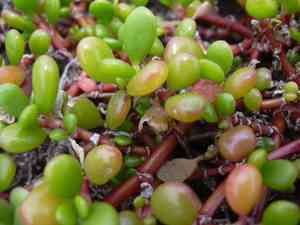
Sesuvium species can be identified by their succulent leaves that are usually linear to lanceolate, fleshy, and often appear reddish. Their small, star-shaped flowers are typically pink or purple.
Scientific Classification of Sea-purslanes (Sesuvium)
Phylum
Tracheophyta
Class
Magnoliopsida
Order
Caryophyllales
Family
Aizoaceae
Genus
Sesuvium
Planting and Growing of Sea-purslanes (Sesuvium)
Care Difficulty
Easy
Watering Schedule
Every 2 days
Sunlight Requirements
Full sun
Sunshine Duration
4-8 hours
Ideal Temperature
68-82℉
Soil Type
Potting Mix, Peat Mix
Soil pH
6.5-7.5
Fertilizer Type
Balanced
Pruning Season
Spring, Summer
Pruning Area
Branches, Leaves
Pruning Frequency
2 times a year
Repotting Season
Spring
Pot Type
Plastic, Ceramic
 How to Water Sea-purslanes (Sesuvium)?
For the Sesuvium plant, a watering session should thoroughly moisten the soil but not leave it saturated. Approximately 200 ml of water per session ensures the plant stays hydrated without excess moisture, which helps prevent root rot and promotes healthy growth.
What are the symptoms of an underwatered Sea-purslanes (Sesuvium)?
›
What should I do if my Sea-purslanes (Sesuvium) is not getting enough water?
›
What are the symptoms of an overwatered Sea-purslanes (Sesuvium)?
›
How to save an overwatered Sea-purslanes (Sesuvium)?
›
 What Are the Sunlight Requirements for Sea-purslanes (Sesuvium)?
Sesuvium prefers full to partial sun exposure for optimal growth. Ideal lighting conditions enhance photosynthesis, improve flowering, and bolster overall plant health and resilience.
How much sunlight is needed?
›
Solution to achieve ideal sunlight conditions?
›
Benefits of ideal lighting conditions?
›
 What Is the Ideal Temperature Range for Sea-purslanes (Sesuvium)?
Sesuvium plants thrive best when maintained within temperatures ranging between 68°F to 82°F. This range supports optimal metabolic processes, enabling healthy growth and vibrant foliage. Maintaining such stable conditions helps in reducing stress factors that can impede plant development.
 What Soil is Best for Sea-purslanes (Sesuvium)?
Sesuvium thrives in well-drained soil which prevents waterlogging. This condition is crucial because it helps the plant avoid root rot and promotes healthy root development. Unlike many plants, Sesuvium can tolerate nutrient-poor conditions. This adaptability allows it to grow in environments where other plants might struggle to survive. Sesuvium has a high tolerance for saline conditions, making it suitable for coastal areas. This characteristic enables it to thrive in environments with high salt content without suffering from salt stress.
 How to Fertilize Sea-purslanes (Sesuvium)?
For Sesuvium, it's crucial to apply a balanced fertilizer at half the recommended strength. Too much fertilizer can lead to salt build-up and harm the plant's roots, so milder doses are safer.
 How to Prune Sea-purslanes (Sesuvium)?
Begin by closely examining the sesuvium plant for any dead or dying stems as well as any that appear damaged. These can easily be distinguished by their discolored or brittle appearance. Gently remove these parts with a sharp pair of scissors to promote new growth. Carefully trim the excessively growing stems to maintain the plant's shape and encourage bushiness. Make your cuts just above a node or a set of leaves, which will help the sesuvium produce new and healthy growth more effectively. To ensure the sesuvium maintains an appealing shape, work around the plant, pruning any stems that disrupt its symmetry. Regularly stepping back to assess the plant’s overall form can aid in achieving the desired shape. After completing the pruning, provide the plant with a gentle watering and monitor its exposure to sunlight. Avoid overwatering or excessive sun exposure immediately following pruning to minimize stress on the plant.
 How to Propagate Sea-purslanes (Sesuvium) plant?
1
Sow Sesuvium seeds in a well-drained, sandy soil mix. Keep the soil moist but not waterlogged. Seeds should be placed just below the soil surface as they require light for germination. Optimal temperature for germination is around 20-25°C.
2
For cutting propagation, select healthy, non-flowering stems. Cut a 10-15 cm section just below a node. Remove the lower leaves and dip the cut end in rooting hormone before placing it in a moist, sandy soil mix.
3
Division is best done during the growing season. Carefully remove the plant from its pot or ground and gently separate the roots. Ensure each division has several shoots and healthy roots before replanting.
 How to Repot Sea-purslanes (Sesuvium) plant?
1
Sesuvium requires repotting when you see roots protruding from the drainage holes or when growth becomes sluggish. A good indicator is when the plant starts to dry out more quickly than usual, suggesting it needs more room to grow.
2
Select a pot that's slightly larger than the current one with excellent drainage holes. This prevents waterlogging and ensures that the roots have enough space to expand comfortably, promoting healthier growth and preventing root rot.
3
Use a well-draining, sandy soil mix that's similar to its natural habitat. This type of soil prevents compaction and allows the roots to receive adequate air, reducing the risk of root rot and ensuring healthy plant development.

