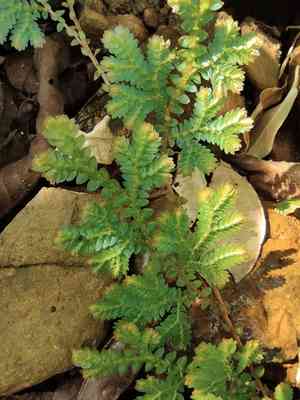
Peacock moss (Selaginella uncinata)
Also known as: Blue spikemoss, Peacock fern, Love-in-a-tangle
Peacock Moss, also known as Peacock Spike Moss and scientifically as Selaginella uncinata, is not a true moss but is more closely related to ferns. This plant is popular as a ground cover in southern states and can also thrive as a container plant.
In This Article
Attributes of Peacock moss
Lifespan
Perennial
Plant Type
Herb
Plant Height
30 cm
Spread
50 cm
Leaf Color
Green Blue
Flower Size
Non-flowering
Flower Color
Purple Blue
Images of Peacock moss

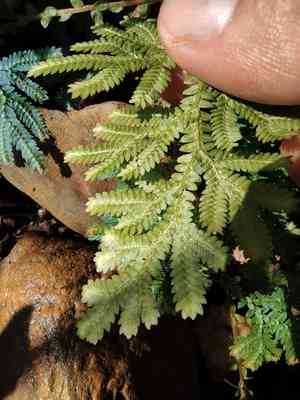

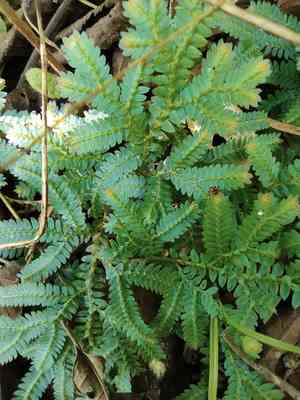
Quickly Identify Peacock moss
1
Iridescent blue foliage
2
Scale-like leaves with metallic sheen
3
Low-growing habit up to 2 inches (5 cm)
4
Dense carpet-like appearance
5
Moss-like qualities in its growth pattern
Scientific Classification of Peacock moss
Phylum
Vascular plants
Class
Club mosses
Order
Spikemosses
Family
Spike-moss
Genus
Spikemosses
Species
Peacock moss
Planting and Growing of Peacock moss
Care Difficulty
Easy
Watering Schedule
Every 3 days
Sunlight Requirements
Partial sun
Sunshine Duration
6-10 hours
Ideal Temperature
65-75℉
Soil Type
Potting Mix, Peat Mix
Soil pH
6.5-7.5
Fertilizer Type
Balanced
Pruning Season
Spring, Summer
Pruning Area
Branches, Leaves
Pruning Frequency
Once a year
Repotting Season
Spring
Pot Type
Plastic, Ceramic
 How to Water Peacock moss?
For Selaginella uncinata, the watering quantity should be just enough to make the soil moist but not soggy. It's best to water until the excess begins to drain out from the bottom of the pot. This ensures that all the roots get sufficient hydration without the risk of waterlogging.
What are the symptoms of an underwatered Peacock moss?
›
What should I do if my Peacock moss is not getting enough water?
›
What are the symptoms of an overwatered Peacock moss?
›
How to save an overwatered Peacock moss?
›
 What Are the Sunlight Requirements for Peacock moss?
Partial sun and full shade are optimal. These light levels support healthy metabolic processes and keep the foliage vibrant, providing the necessary energy for robust growth without risking leaf burn.
More About Sunlight Requirements Techniques→
What is the ideal lighting setup?
›
How to achieve the ideal lighting?
›
Benefits of ideal lighting conditions?
›
 What Is the Ideal Temperature Range for Peacock moss?
The ideal temperature range for Selaginella uncinata to thrive is between 65°F and 75°F. Within this range, the plant can perform its physiological processes effectively, promoting healthy growth and a vivid appearance. Temperatures within this bracket ensure that the plant is neither stressed by cold nor by heat, maintaining its resilience and vitality.
 What Soil is Best for Peacock moss?
Selaginella uncinata thrives in a soil that retains moisture well, ensuring consistent hydration. This keeps the plant lush and prevents wilting, enhancing its vivid foliage and overall vitality. While moisture is crucial, the soil must also drain efficiently to prevent waterlogging. Proper drainage avoids root rot, a common issue in waterlogged conditions, thereby maintaining the plant's health. The soil should be rich in organic matter, providing essential nutrients for growth. This nutrient richness leads to robust plant development and vibrant leaf coloration.
 How to Fertilize Peacock moss?
For Selaginella uncinata, an appropriate amount of fertilizer will be about one-quarter to half strength of the manufacturer's recommended dose. This is to prevent over-fertilization which can harm the plant's delicate root system.
 How to Prune Peacock moss?
Start by carefully examining the plant for any dead or yellowing leaves. These parts should be removed first to prevent the spread of diseases and improve the aesthetic appeal of Selaginella uncinata. Gently snip them close to the base of the stem. Focus on selectively pruning stray or overly long stems to maintain the desired shape of Selaginella uncinata. By doing so, you encourage denser growth and maintain the plant's compact and lush appearance. Trim back to just above a leaf node to stimulate new growth.
More About Pruning Techniques→
 How to Propagate Peacock moss plant?
1
Choose a mature Selaginella uncinata with healthy growth. Ensure there are no signs of disease or pests, as this will affect the success of the propagation.
2
Cut 4-6 inch long pieces from the young healthy stems using sterile pruning shears. Remove the lower leaves to expose nodes where rooting will occur.
3
Dip the cut end of each cutting into rooting hormone and plant them in a humid substrate, such as a mix of peat and perlite. Ensure the cuttings are supported and receive indirect sunlight.
 How to Repot Peacock moss plant?
1
Selaginella uncinata signals the need for repotting when roots start circling the pot, or water runs through too quickly, indicating it's rootbound. Spring and summer are the ideal seasons to accomplish this, as the plant enters its active growing phase and adjusts more readily to new pot conditions.
2
Opt for a pot that is 2 inches larger in diameter than the current one, with ample drainage holes. This not only accommodates future root growth but also ensures excess water can escape, preventing soggy soil and root rot, thereby contributing to the long-term health of the plant.
3
Select a soil mix that is airy yet moisture-retentive, like a blend with peat moss, vermiculite, and perlite. This combination keeps the roots hydrated without waterlogging, providing a stable environment enriched with nutrients to support vigorous growth.



