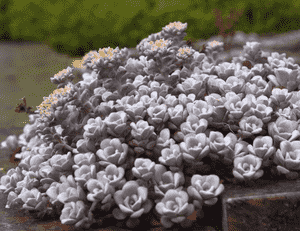
Broadleaf stonecrop (Sedum spathulifolium)
Also known as: Pacific stonecrop
Broadleaf stonecrop (Sedum spathulifolium) is a hardy succulent indigenous to the western regions of North America. It thrives in rocky terrains and mountainous areas, adapting well to sunny or partially shaded spots. This plant is favored for use as an ornamental ground cover due to its resilience and aesthetic appeal. It grows best in well-drained soil and requires minimal watering, especially during the winter. Additionally, it plays a vital role in the life cycle of the San Bruno elfin butterfly.
In This Article
Attributes of Broadleaf stonecrop
Lifespan
Perennial
Plant Type
Succulent, Herb
Plant Height
10 cm to 15 cm
Spread
20 cm to 30 cm
Leaf Color
Green Silver Gray Red Purple Bronze
Flower Size
4.5 mm to 9 mm
Flower Color
Yellow
Images of Broadleaf stonecrop
Quickly Identify Broadleaf stonecrop
1
Identifying Sedum spathulifolium involves looking for its characteristic spoon-shaped leaves, which can range in color from green to red or purple. It is a low-growing, mat-forming perennial that produces small, star-shaped yellow flowers.
Scientific Classification of Broadleaf stonecrop
Phylum
Vascular plants
Class
Dicotyledons
Order
Saxifragales
Family
Stonecrop
Genus
Stonecrops
Species
Broadleaf stonecrop
Planting and Growing of Broadleaf stonecrop
Care Difficulty
Easy
Watering Schedule
Every 2 days
Sunlight Requirements
Full sun
Sunshine Duration
4-8 hours
Ideal Temperature
65-75℉
Soil Type
Potting Mix, Peat Mix
Soil pH
6.5-7.5
Fertilizer Type
Balanced
Pruning Season
Spring, Summer
Pruning Area
Branches, Leaves
Pruning Frequency
2 times a year
Repotting Season
Spring
Pot Type
Plastic, Ceramic
 How to Water Broadleaf stonecrop?
When watering Sedum spathulifolium, it is important to ensure the soil is thoroughly moistened yet allowed to dry out between waterings. Typically, about 250 milliliters per session suffices. The soil should feel damp but not soggy, imitating the plant's natural environment, which is accustomed to infrequent but effective hydration.
More About Watering Techniques→
What are the symptoms of an underwatered Broadleaf stonecrop?
›
What should I do if my Broadleaf stonecrop is not getting enough water?
›
What are the symptoms of an overwatered Broadleaf stonecrop?
›
How to save an overwatered Broadleaf stonecrop?
›
 What Are the Sunlight Requirements for Broadleaf stonecrop?
Sedum spathulifolium prefers a light range from partial to full sun. Ideal light enhances its lush appearance, invigorates growth, and makes it more resistant to pest invasions.
More About Sunlight Requirements Techniques→
How much sunlight does Sedum spathulifolium need?
›
What are the solutions for providing ideal lighting?
›
What are the benefits of ideal lighting for Sedum spathulifolium?
›
 What Is the Ideal Temperature Range for Broadleaf stonecrop?
The Sedum spathulifolium, commonly known as broadleaf stonecrop, thrives best in an ideal temperature range between 65°F and 75°F. Maintaining these temperatures ensures optimal growth and allows the plant's cellular processes to function efficiently. Consistent temperatures in this range promote healthy leaf coloration and robust development.
 What Soil is Best for Broadleaf stonecrop?
Sedum spathulifolium requires well-drained soil to prevent waterlogging, which can lead to root rot. This condition allows the roots to breathe and access necessary nutrients, promoting healthy growth and vibrant foliage. The plant thrives in nutrients-rich soil, providing it with essential elements for optimum growth. Ensure the soil contains organic matter, promoting robust blooming and improving the plant's overall resilience. Sedum spathulifolium prefers soil with a pH range of 6.5 to 7.5. This pH level supports nutrient uptake and microbial activity, leading to improved plant health and increased resistance to pests and diseases.
More About Soil→
 How to Fertilize Broadleaf stonecrop?
For Sedum spathulifolium, use a balanced fertilizer diluted to half the recommended strength. Generally, using 1/4 teaspoon per gallon of water is sufficient during the growing season. Avoid heavy feeding, as this plant thrives better with less fertilizer.
 How to Prune Broadleaf stonecrop?
Begin by examining the plant for any dead or damaged leaves. These should be the first to be removed to allow the plant to focus energy on healthy tissue. Cut back leggy or elongated stems to promote a fuller plant appearance. Make cuts just above a leaf node to encourage branching and bushy growth. Gently shape the plant by trimming around the edges. This ensures a neat appearance and prevents it from spreading excessively outside its designated area in the garden or container. To stimulate more blooms, remove spent flowers promptly. This will redirect the plant’s energy towards producing new buds and maintaining vibrant foliage.
 How to Propagate Broadleaf stonecrop plant?
1
Sow seeds in a well-draining mix, lightly cover them with soil, and mist with water to maintain moisture. Keep the tray in a warm location with indirect sunlight for germination.
2
Select a healthy stem and use pruners to cut a 3-5 inch segment. Remove lower leaves to expose nodes, which will facilitate rooting when placed in soil.
3
Carefully dig up a mature Sedum spathulifolium plant, separating the root clumps. Each division should have a healthy root system, ready for replanting in its new location.
 How to Repot Broadleaf stonecrop plant?
1
Sedum spathulifolium should be repotted when you notice roots protruding from the drainage holes, or if growth seems stunted. The best time for repotting is during early spring or summer when the plant is actively growing, providing the energy needed to adapt to a new pot.
2
Select a pot that is slightly larger than the current one, with adequate drainage holes. A shallow, wide container is ideal as it mimics the plant's natural habitat and prevents waterlogging, which is crucial to avoid root rot.
3
Opt for a well-draining cactus mix that can effectively mimic the plant’s natural sandy and rocky habitat. Such soil ensures that water doesn't accumulate, reducing the risk of fungal infections and promoting healthy root development.



