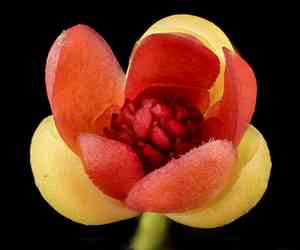
Bay star vine (Schisandra glabra)
Also known as: Wild sarsaparilla
The plant is monoecious, featuring separate male (staminate) and female (pistillate) flowers on the same individual. The sepals are white, while the petals are pink or red in color. The berries are red, round to elliptical, and can grow up to 1.5 cm in length. This plant typically grows in wooded bluffs, hillsides, and ravines at elevations below 500 meters.
In This Article
Attributes of Bay star vine
Lifespan
Perennial
Plant Type
Vine
Plant Height
Up to 15 feet (4.6 meters)
Spread
Not applicable for climbing vines
Leaf Color
Green Blue
Flower Size
About 0.5 inches (1.3 cm)
Flower Color
Yellow Green Red Orange Gold
Images of Bay star vine
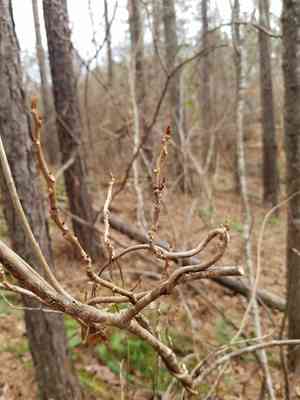
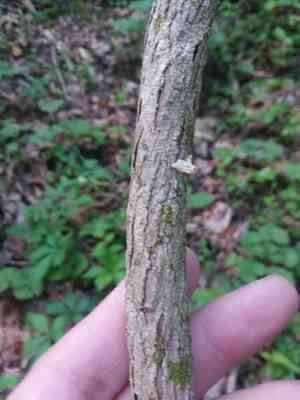
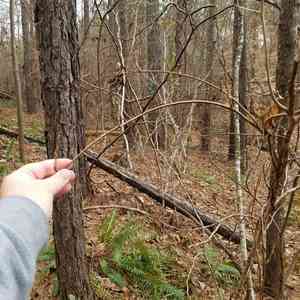
Quickly Identify Bay star vine
1
Vibrant orange flowers with 5 dark orange and 5 yellow-green tepals, blooming late spring.
2
Elliptical-ovate to heart-shaped leaves, 1-6 inches long, prominent reticulated veins, turning yellow in fall.
3
Bright red berries with red-brown seeds, ripe in July-August, glossy surface texture.
4
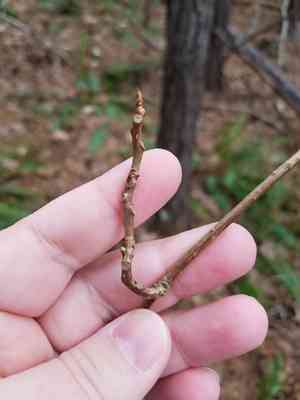
Smooth pale brown stem maturing to dark brown, tan hues, 0.5-1 inch diameter.
5
Flaking dark gray-brown bark resembling aged parchment, layered texture, less than 6 mm thickness.
Scientific Classification of Bay star vine
Phylum
Vascular plants
Class
Dicotyledons
Order
Austrobaileyales
Family
Schisandra
Genus
Magnolia vine
Species
Bay star vine
Planting and Growing of Bay star vine
Care Difficulty
Moderate
Watering Schedule
Every 2 days
Sunlight Requirements
Partial sun
Sunshine Duration
6-12 hours
Ideal Temperature
59-79℉
Soil Type
Potting Mix, Peat Mix
Soil pH
6.5-7.5
Fertilizer Type
Balanced
Pruning Season
Spring, Summer
Pruning Area
Branches, Leaves
Pruning Frequency
2 times a year
Repotting Season
Spring
Pot Type
Ceramic, Plastic
 How to Water Bay star vine?
Schisandra glabra, or bay starvine, thrives on moderate watering. Use about 250 milliliters each time. This amount keeps the soil moist but not waterlogged, ensuring the roots remain healthy without risk of rot.
What are the symptoms of an underwatered Bay star vine?
›
What should I do if my Bay star vine is not getting enough water?
›
What are the symptoms of an overwatered Bay star vine?
›
How to save an overwatered Bay star vine?
›
 What Are the Sunlight Requirements for Bay star vine?
Partial sunlight for Schisandra glabra ensures balance, promoting healthy growth and steady flowering without risking leaf damage from excessive sun. This balance enhances the plant's resilience and productivity.
What is the ideal amount of sunlight for Schisandra glabra?
›
How can I create optimal lighting indoors?
›
What benefits occur when Schisandra glabra gets ideal sunlight?
›
 What Is the Ideal Temperature Range for Bay star vine?
The ideal temperature range for growing Schisandra glabra lies between 59°F and 79°F. This range provides optimal conditions for its growth, ensuring proper photosynthesis, nutrient uptake, and development. Maintaining this temperature minimizes the risk of stress and disease, allowing the plant to thrive.
 What Soil is Best for Bay star vine?
Schisandra glabra thrives in well-drained soil as it ensures that water does not stagnate around the roots, preventing root rot and promoting healthy root development that is crucial for optimal plant growth. This plant benefits from a nutrient-rich soil composition that supports lush foliage and robust berry production. Providing organic matter such as compost can significantly enhance the soil’s nutrient profile. Moisture retention is key for Schisandra glabra, as consistently moist soil without being waterlogged helps in maintaining its turgidity and health, especially during dry spells.
 How to Fertilize Bay star vine?
For Schisandra glabra, it's important to use a balanced fertilizer. For liquid fertilizer, use a half-strength solution, approximately one tablespoon per gallon of water. For slow-release fertilizers, follow instructions on the packaging for a light application around the base of the plant.
 How to Prune Bay star vine?
Start by examining the plant for any dead or damaged branches. Use clean, sharp pruning shears to make precise cuts just above a node, allowing for new growth to spurt from that point. Remove any tangled vines or those that obstruct pathways. Ensure to cut at an angle to help the plant heal faster and reduce the risk of disease. Regularly disinfect your tools between cuts to prevent the spread of pathogens. After pruning, water the plant thoroughly to help it recover. Consider applying a balanced fertilizer to support new growth. Monitor the plant for any signs of stress, such as wilting or discoloration, and adjust care as needed. Ensure the plant is not exposed to extreme temperatures following pruning as this can slow recovery.
 How to Propagate Bay star vine plant?
1
First, prepare the seed starter trays by filling them with a well-draining seed-starting mix. Ensure the soil is lightly moistened to promote seed germination. Place seeds at a depth of about half an inch, maintaining consistent moisture until germination occurs.
2
Select a healthy, mature stem from the parent plant around 6 inches long. Use sterilized pruning shears to make a clean cut. Remove any lower leaves from the cutting to focus energy on root development when planted.
3
Dip the cut end of the stem into rooting hormone to encourage root growth. Plant the cutting in a small pot filled with a sterile potting mix, and water gently. Cover with a plastic bag to retain humidity, ensuring the cutting stays moist but not waterlogged.
 How to Repot Bay star vine plant?
1
Schisandra glabra needs repotting when you notice roots emerging from the drainage holes, which indicates the plant is outgrowing its current pot. Alternatively, sluggish growth despite proper care can also be a signal that it is time to refresh the soil and give the roots more space.
2
Select a pot that is about 2 inches larger in diameter than the current one. Ensure it has ample drainage holes to prevent waterlogging, which can harm the roots. A terracotta pot is ideal as it allows for better air circulation through its porous surface, aiding in root health.
3
Opt for a well-drained acidic mix to mimic the native environment of Schisandra glabra. Using a mix of peat, perlite, and pine bark will help retain adequate moisture while preventing water accumulation, providing a balanced structure for root development.
Learn More About Bay star vine Diseases
Anthracnose
Bacterial Leaf Spot
Bacterial Soft Rot
Crown Gall
Cyst Nematode
Damping-off
Downy Mildew
Drought Stress
Fusarium Wilt
Gray Mold
Leaf Curl
Leaf Spot
Mosaic
Nutrient Deficiency
Nutrient Toxicity
Powdery Mildew
Root Rot
Root-knot Nematode
Rusts
Sooty Mold
Spider Mites
Temperature Stress
Thrips Damage
White Mold
Chemical Injury



