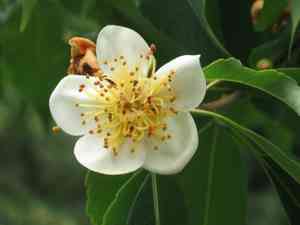
Chinese guger tree (Schima superba)
Also known as: Chinese guger-tree, Needlewood
The Chinese guger tree (Schima superba) is renowned for its glossy leaves and appealing white flowers. While it can reach great heights in its natural habitat, it is often cultivated to a smaller, more manageable size for gardens. This tree is notably effective in reforesting degraded shrublands, as it thrives in synergy with nearby shrubs.
In This Article
Attributes of Chinese guger tree
Lifespan
Perennial
Plant Type
Tree
Plant Height
25 m
Spread
1.5 m to 3 m
Leaf Color
Green
Flower Size
1 cm to 1.5 cm
Flower Color
White Yellow
Images of Chinese guger tree
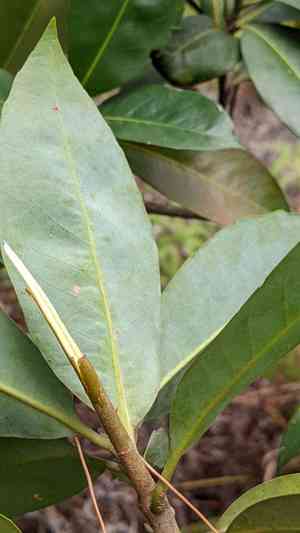
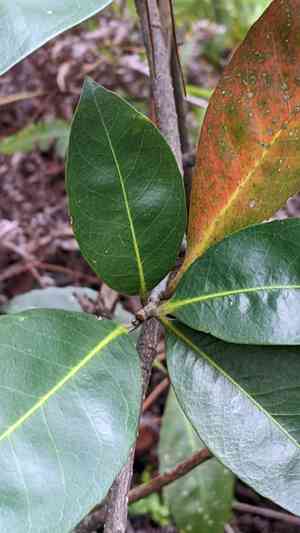
Quickly Identify Chinese guger tree
1
Majestic stature reaching over 100 feet (30 meters) tall.
2
Distinctive glossy, dark green leaves measuring 5-7 inches (12.7-17.8 cm) long.
3
Lush foliage contributing to robust appearance.
4
Resembles camellia leaves with prominent parallel veins.
5
Fine serrated leaf edges for easy identification.
Scientific Classification of Chinese guger tree
Phylum
Vascular plants
Class
Dicotyledons
Order
Heathers and allies
Family
Tea
Genus
Schima
Species
Chinese guger tree
Planting and Growing of Chinese guger tree
Care Difficulty
Easy
Watering Schedule
Every 3 days
Sunlight Requirements
Full sun
Sunshine Duration
4-8 hours
Ideal Temperature
59-77℉
Soil Type
Potting Mix, Peat Mix
Soil pH
4.5-6.5
Fertilizer Type
Balanced
Pruning Season
Spring, Summer
Pruning Area
Branches, Leaves
Pruning Frequency
2 times a year
Repotting Season
Spring
Pot Type
Plastic, Ceramic
 How to Water Chinese guger tree?
Schima superba, commonly known as Chinese guger tree, requires a moderate watering regime. When watering, ensure the soil is evenly moist, but not waterlogged. Around 500 milliliters should suffice, ensuring the water reaches the root zone without leaving standing water.
What are the symptoms of an underwatered Chinese guger tree?
›
What should I do if my Chinese guger tree is not getting enough water?
›
What are the symptoms of an overwatered Chinese guger tree?
›
How to save an overwatered Chinese guger tree?
›
 What Are the Sunlight Requirements for Chinese guger tree?
Schima superba does best with partial to full sun exposure. This level of light helps in promoting healthy photosynthesis and supports robust growth, ensuring vibrant foliage and a strong plant structure.
More About Sunlight Requirements Techniques→
Best Time for Sunlight Exposure
›
Positioning the Plant Outdoors
›
Protective Measures against Intense Sunlight
›
 What Is the Ideal Temperature Range for Chinese guger tree?
Schima superba thrives best in a temperature range of 59°F to 77°F. Maintaining this range ensures that the plant performs optimal physiological processes such as photosynthesis, nutrient uptake, and growth. This range is conducive to both foliage development and root establishment, allowing the plant to sustain a healthy life cycle.
 What Soil is Best for Chinese guger tree?
Schima superba thrives in soils with excellent drainage capacity. Well-draining soil prevents water stagnation around the roots, reducing the risk of root rot and promoting healthy root development. Well-structured, loamy soil is perfect for achieving this balance, ensuring the plant can uptake nutrients efficiently. This plant prefers soils with moderate fertility that provide the essential nutrients without overwhelming the plant. While a nutrient-rich environment is beneficial, avoid excessively fertile soils that could encourage leggy growth, compromising the plant's stability and health. Although good drainage is essential, Schima superba also appreciates soil that retains sufficient moisture. Maintaining some soil moisture ensures steady water supply between watering sessions, critical for consistent growth and resilience against drought conditions.
 How to Fertilize Chinese guger tree?
When fertilizing Schima superba, it is important to use a balanced fertilizer with an N-P-K ratio of 10-10-10. For liquid fertilizers, use approximately 100 ml per square meter for smaller plants, scaling up modestly for larger ones. Solid fertilizers can be used in granular form, distributing evenly over the soil surface at a rate of about 50 grams per square meter.
 How to Prune Chinese guger tree?
Begin by examining your plant for any dead, diseased, or damaged branches. These should be pruned first to prevent any potential spread of disease and to encourage the emergence of healthy new growth. Once you have removed any unhealthy branches, focus on shaping the plant. Use sharp pruning shears to cut back branches that disrupt the desired shape or that cross over one another, which can cause wounds and facilitate disease. Inspect the canopy for overly dense sections. Thin these areas to improve air circulation and sunlight penetration, helping to foster a more balanced growth pattern throughout the plant.
More About Pruning Techniques→
 How to Propagate Chinese guger tree plant?
1
Begin by selecting a well-draining potting mix that supports healthy root development and growth. Sterilize the soil if necessary to eliminate potential pathogens and pests. Mixing in some perlite or sand can enhance drainage, creating a conducive environment for seed germination or rooting cuttings.
2
For seed propagation, evenly sow the seeds on the moist soil surface and lightly cover them with soil or vermiculite. For cuttings, choose healthy, disease-free branches, and make clean cuts just below a node. Dip cut ends in rooting hormone to stimulate root growth before planting into the prepared soil.
3
Maintain soil moisture consistently but avoid waterlogging, as excessive water can cause root rot or stunted growth. Ensure that the seeds or cuttings are placed in well-lit areas, preferably with indirect sunlight, to promote vigorous growth while preventing leaf scorching.
 How to Repot Chinese guger tree plant?
1
Repot Schima superba when you notice slowed growth or roots growing out of drainage holes. These signs indicate that the plant needs more space and nutrients, typically requiring repotting every two to three years.
2
Select a pot that's slightly larger than the current one with good drainage. A pot too large retains excess water and can harm the roots, while a snug fit ensures good root growth and nutrient absorption.
3
Opt for a well-draining acidic soil mix. This type of soil helps prevent waterlogging, which is crucial for Schima superba's root health, and provides the right pH balance for optimal growth.



