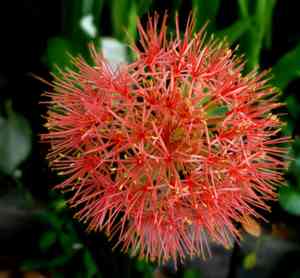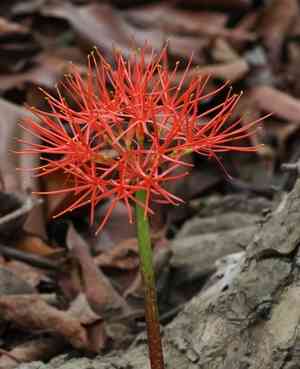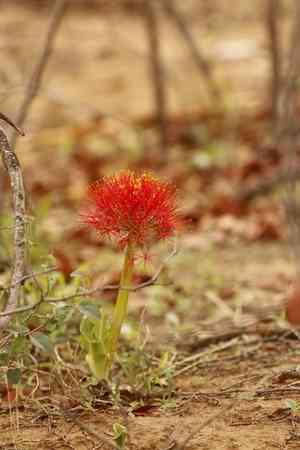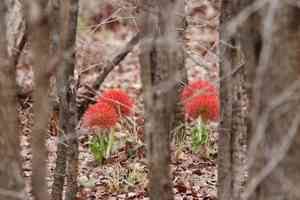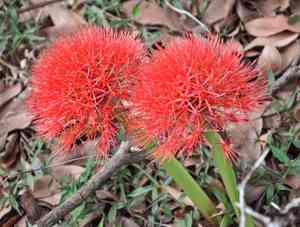
African blood lily(Scadoxus multiflorus)

African blood lily (Scadoxus multiflorus)

Also known as: Common fireball, Powderpuff lily, Poison root, Katherine-wheel, Fireball lily

Scadoxus multiflorus, a plant species native to Africa, is commonly referred to as the blood lily. It is also known by several other names including fireball lily, ball lily, monsoon lily, and powderpuff lily.

Attributes of African blood lily

Lifespan
Perennial
Plant Type
Herb
Plant Height
50 cm to 1 m
Spread
10 cm to 50 cm
Leaf Color
Green
Flower Size
10 cm to 25 cm
Flower Color
Red

PlantJoy - Identify plants with a snap

Identify and diagnose plants, get toxicity alerts, and explore safety guides for all types of fungi.

Try for Free

Images of African blood lily

African blood lily(Scadoxus multiflorus)

Quickly Identify African blood lily

1
Spherical flower head, softball-sized (3.5 inches / 9 cm), with dense red florets and yellow stamens.
2
Vivid orange-red berries in globular clusters, non-edible but ornamental, distinct glossy texture and color.
3
Large, broad-lance to oval green leaves, up to 18 inches (45 cm) long, with distinct spotting and veining.
4
Thick, fleshy, unbranched stem, 1-2 feet (30-60 cm) tall, supporting vibrant flower head.
5
Flowers in terminal umbel, 4-10 inches (10-25 cm) across, with dense red florets and yellow stamens.

Scientific Classification of African blood lily

Phylum
Vascular plants
Class
Monocotyledons
Order
Asparagus and allies
Family
Amaryllis
Genus
Blood lilies
Species
African blood lily

Planting and Growing of African blood lily

Care Difficulty
Easy
Watering Schedule
Every 2 days
Sunlight Requirements
Partial sun
Sunshine Duration
4-8 hours
Ideal Temperature
65-77℉
Soil Type
Potting Mix, Peat Mix
Soil pH
6-7.5
Fertilizer Type
Balanced
Pruning Season
Spring, Summer
Pruning Area
Branches, Leaves
Pruning Frequency
2 times a year
Repotting Season
Spring
Pot Type
Plastic, Ceramic

water icon How to Water African blood lily?

When watering Scadoxus multiflorus, it is essential to ensure the soil is evenly moist but not waterlogged. This means approximately 200 mL of water per session, ensuring the water is absorbed well without pooling at the bottom. It's critical to water until the top few inches of soil are damp, imitating the natural rainfall it would receive in the wild.
What are the symptoms of an underwatered African blood lily?
What should I do if my African blood lily is not getting enough water?
What are the symptoms of an overwatered African blood lily?
How to save an overwatered African blood lily?
More About Watering Techniques

sunlight icon What Are the Sunlight Requirements for African blood lily?

Sunlight Requirements: Partial sun
Duration of light: 2 to 4 hours
Partial sun is ideal for Scadoxus multiflorus. This range provides enough sunlight to promote flowering while shielding it from too much exposure. Proper light balance supports robust growth and blooming.
What is the optimal lighting for Scadoxus multiflorus?
How do you ensure the plant gets enough light?
What benefits does ideal lighting provide?
More About Sunlight Requirements Techniques

temperature icon What Is the Ideal Temperature Range for African blood lily?

Ideal Temperature: 65 ~ 77℉
The ideal temperature range for Scadoxus multiflorus is between 65°F and 77°F. This range allows the plant to thrive, promoting healthy growth and optimal flowering. Maintaining this range ensures that the plant remains in its comfort zone, receiving neither too little nor too much warmth.

soil icon What Soil is Best for African blood lily?

Soil type: Loam, Sandy loam
Soil PH: 6 ~ 7.5
Scadoxus multiflorus prefers well-draining soil to prevent waterlogging which could lead to root rot. Loamy and sandy loam soils are ideal because they allow excess water to flow away easily, ensuring the plant receives enough moisture without saturating the roots. This plant thrives in soils rich in organic matter. Incorporating well-rotted compost or organic potting mix into the soil can enhance its fertility, promoting healthy growth and vibrant flowering in Scadoxus multiflorus. Scadoxus multiflorus is comfortable in soils with a pH ranging from 6.0 to 7.5. Staying within this pH balance helps ensure optimal nutrient availability and uptake, which is crucial for this plant's health and blooming. More About Soil

fertilize icon How to Fertilize African blood lily?

Fertilizer type: Balanced
When fertilizing Scadoxus multiflorus, ensure that you use a balanced, water-soluble fertilizer diluted to half the strength recommended by the manufacturer. This plant does not require heavy feeding, so moderation is key. Over-fertilization can lead to nutrient burn and stunted growth. More About Fertilizing Techniques

prune icon How to Prune African blood lily?

Pruning Time: Summer
Start by identifying any wilting, yellowing, or dead leaves and stems. These parts should be pruned first as they are no longer contributing to the plant's health and might harbor pests or diseases. Carefully trim back dead or overly long stems just above a healthy node, allowing for room for new growth. Avoid cutting into the bulbous part of the plant as this can damage the plant's capability for nutrient storage and water uptake. More About Pruning Techniques

propagate icon How to Propagate African blood lily plant?

Propagate Time: Spring, Early spring, Late spring
1
Start by collecting seeds from a mature Scadoxus multiflorus plant. Clean the seeds thoroughly to remove any pulp. Allow them to air dry completely before planting. This helps to prevent fungal infections and promote successful germination.
2
Fill the seed trays with a well-draining potting mix. Plant the seeds about 1 cm deep and cover them lightly with soil. Water gently so as not to displace the seeds. Place the trays in a warm, sunny location to encourage germination.
3
For division propagation, carefully dig up the mature plant from the soil. Use the sharp knife to divide the bulbs, ensuring each bulb section has roots attached. Replant the divided bulbs promptly in a suitable location.
More About Propagating Techniques

repot icon How to Repot African blood lily plant?

Repotting frequency: Every 2-3 years
1
Repotting should be considered when the Scadoxus multiflorus shows signs of restricted growth, or when roots start emerging from the pot's drainage holes. These signals indicate that the plant might be root-bound and in need of additional space to thrive.
2
Select a pot that is one size larger than the current one and ensures good drainage. A pot that's too large can retain excess moisture, leading to root rot, while a pot with good drainage helps keep the soil aerated and healthy.
3
Opt for a well-draining potting mix, ideally one that mimics the plant's natural habitat. Such a soil mix fosters proper air circulation around the roots, reduces moisture retention, and prevents fungal infections, promoting robust growth.

PlantJoy - Identify plants with a snap

Find the best spots for them to optimize their health, simply using your phone.

Try for Free

Toxicity of African blood lily

Is African blood lily toxic to humans?

The African blood lily, akin to all species within the *Scadoxus* genus, possesses toxic alkaloids such as Lycorine. These harmful compounds predominantly accumulate in the leaves, flowers, and bulbs of the plant. Ingestion of small quantities can lead to gastrointestinal disturbances including nausea, increased salivation, vomiting, and diarrhea. Consuming greater amounts may result in severe convulsions, life-threatening colic or dysentery-like symptoms, and even sudden death. It is essential to keep these plants out of reach of children and individuals with cognitive impairments.

Is African blood lily toxic to cat?

The African blood lily represents a significant health hazard to cats, exhibiting particularly high toxicity levels in its leaves and tuber. When a cat consumes these portions of the plant, the adverse effects manifest swiftly, resulting in rapid symptoms that indicate physical distress, such as gastrointestinal disturbances and neurological complications. These manifestations highlight the critical nature of poisoning and necessitate urgent medical intervention. Given the gravity of this danger, it is essential to restrict access to the African blood lily and to promptly pursue veterinary care if a cat encounters the plant.

Is African blood lily toxic to dog?

The African blood lily presents a significant toxicity hazard to dogs. If dogs consume any portions of this plant, particularly its leaves or tuber, they risk poisoning. This ingestion may result in a range of symptoms such as vomiting, diarrhea, lethargy, abdominal discomfort, and possibly more severe reactions depending on the quantity ingested. Due to the high toxicity associated with the African blood lily, it is essential for dog owners to ensure that their pets are kept away from all parts of this plant. In cases where a dog is believed to have ingested the African blood lily, prompt veterinary care is vital for effectively managing the poisoning.

Identify toxic plants for your safety

Learn which plants are harmful to you and your pets, and make informed choices for a safer home!

Try for Free
WARNING
The judgment on toxicity and danger is for reference only. We DO NOT GUARANTEE any accuracy of such judgment. Therefore, you SHALL NOT rely on such judgment. It is IMPORTANT TO SEEK PROFESSIONAL ADVICE in advance when necessary.
More About Toxic Techniques