
Strawberry saxifrage (Saxifraga stolonifera)
Also known as: Mother of thousands, Roving sailor, Strawberry begonia, Wandering jew
Strawberry saxifrage (Saxifraga stolonifera) can thrive at elevations up to 4,500 meters due to its low-growing nature, which helps it withstand strong winds. It is a popular choice for ground cover because its rounded leaves, which take on a golden hue in sunlight and remain green in the shade, create an attractive appearance. Additionally, its stolons produce numerous small plantlets that easily root and spread, forming a dense, weed-suppressing mat.
In This Article
Attributes of Strawberry saxifrage
Lifespan
Perennial
Plant Type
Herb
Plant Height
8 cm to 45 cm
Spread
30 cm to 60 cm
Leaf Color
Green Silver White Gray Red Variegated
Flower Size
2.5 cm to 8 cm
Flower Color
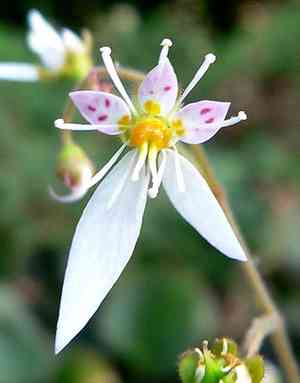
White
Images of Strawberry saxifrage
Quickly Identify Strawberry saxifrage
1
Heart-shaped leaves with vibrant green top and rich red underside.
2
One-inch white flowers with spotting on asymmetrical petals.
3
Stoloniferous growth forming spreading mat with thread-like runners.
4
Leaves measure 2-4 inches in diameter, gray-green with silvery veins.
5
Leaves on 8-inch stalks, purplish-maroon underside, spread up to 24 inches.
Scientific Classification of Strawberry saxifrage
Phylum
Vascular plants
Class
Dicotyledons
Order
Saxifrages, stonecrops and allies
Family
Saxifrage
Genus
Saxifrages
Species
Strawberry saxifrage
Planting and Growing of Strawberry saxifrage
Care Difficulty
Easy
Watering Schedule
Every 8 days
Sunlight Requirements
Partial sun
Sunshine Duration
4-6 hours
Ideal Temperature
60-75℉
Soil Type
Potting Mix, Peat Mix
Soil pH
6.5-7.5
Fertilizer Type
Balanced
Pruning Season
Spring, Summer
Pruning Area
Branches, Leaves
Pruning Frequency
2 times a year
Repotting Season
Spring
Pot Type
Plastic, Ceramic
 How to Water Strawberry saxifrage?
When watering Saxifraga stolonifera, aim to thoroughly moisten the soil until water begins to drain from the bottom of the pot. This typically requires about 250 milliliters per watering session, ensuring the soil remains slightly moist but not waterlogged.
More About Watering Techniques→
What are the symptoms of an underwatered Strawberry saxifrage?
›
What should I do if my Strawberry saxifrage is not getting enough water?
›
What are the symptoms of an overwatered Strawberry saxifrage?
›
How to save an overwatered Strawberry saxifrage?
›
 What Are the Sunlight Requirements for Strawberry saxifrage?
Partial sun to full shade is preferred, allowing Saxifraga stolonifera to thrive without the risk of direct sun damage. Suitable lighting ensures vibrant foliage and robust growth while reducing stress and susceptibility to pests.
More About Sunlight Requirements Techniques→
How much light does Saxifraga stolonifera need?
›
What is the best positioning for Saxifraga stolonifera?
›
Why is proper lighting important for Saxifraga stolonifera?
›
 What Is the Ideal Temperature Range for Strawberry saxifrage?
The ideal temperature range for Saxifraga stolonifera is between 60°F and 75°F. This range promotes optimal growth and health for the plant, ensuring that it can thrive and display its characteristic foliage and flowering. Maintaining consistent temperatures within this range supports the plant's metabolic functions and enhances its ability to absorb nutrients efficiently.
 What Soil is Best for Strawberry saxifrage?
Saxifraga stolonifera thrives in well-draining soil, reducing the risk of root rot. This helps maintain the plant's health and vigor as it prevents waterlogging, which can suffocate the roots. The soil should retain moisture without being waterlogged. This balances hydration for the plant, ensuring it gets enough water while still allowing for air circulation around the roots. A good amount of organic matter is crucial for providing nutrients and improving soil texture. This enhances the plant's growth by ensuring a steady nutrient supply and optimal root development.
More About Soil→
 How to Fertilize Strawberry saxifrage?
For Saxifraga stolonifera, using a balanced liquid fertilizer diluted to half strength is ideal. During the growing season, apply about 10 ml per liter of water. This ensures the plant receives necessary nutrients without the risk of over-fertilization.
More About Fertilizing Techniques→
 How to Prune Strawberry saxifrage?
Begin by using clean, sharp scissors or pruning shears to trim away any dead or yellowing leaves. Identify the runners, which are long, trailing stems, and cut them back to the base to encourage new growth and prevent the plant from becoming leggy. Always make cuts at a slight angle to minimize water collection and potential disease. Prune the plant's runners back to the main rosette to encourage fuller foliage. Ensure you leave a leaf or two on the runner to aid in photosynthesis and maintain the plant’s vigor. This will result in a denser, more lush appearance over time and help control spread.
More About Pruning Techniques→
 How to Propagate Strawberry saxifrage plant?
1
Select healthy plant stems and cut sections that are 4 to 6 inches long. Remove the lower leaves to leave a bare stem for insertion into the soil. Dip the cut end in rooting hormone to encourage root growth.
2
Choose a mature plant with several stems. Carefully remove it from the pot and divide the roots into sections with stems attached, ensuring each division has a rooted stem for replanting.
3
Prepare well-draining soil in small pots. Insert the cut end of prepared cuttings 1 to 2 inches into the soil. Ensure the soil is moist but not waterlogged and place the pots in a warm, indirect light area.
 How to Repot Strawberry saxifrage plant?
1
Saxifraga stolonifera needs repotting when its roots visibly entangle around the base or begin pushing through the drainage holes. Another signal is reduced growth or wilting despite proper watering. These signs indicate that the plant has outgrown its current container and needs more space and fresh nutrients.
2
Opt for a pot that is just one size larger than the current one to prevent overwatering. Ensure it has adequate drainage holes to allow excess moisture to escape, thus preventing root rot. A slightly wider pot also aids proper root spread, supporting healthier growth.
3
Use a well-drained loamy mix to provide the right balance of moisture retention and drainage. A peat-based mix with added perlite or sand ensures that the roots can breathe and reduces the risk of suffocation and waterlogging, promoting vigorous plant health.
Learn More About Strawberry saxifrage Diseases
Anthracnose
Bacterial Leaf Spot
Bacterial Soft Rot
Chemical Injury
Damping-off
Downy Mildew
Drought Stress
Fusarium Wilt
Gray Mold
Leaf Spot
Mosaic
Nutrient Deficiency
Nutrient Toxicity
Powdery Mildew
Root Rot
Root-knot Nematode
Rusts
Sooty Mold
Spider Mites
Temperature Stress
Thrips Damage
White Mold



