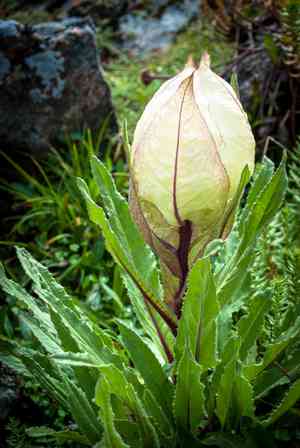
Brahma kamal (Saussurea obvallata)
Also known as: Brahma Kamal, Night Blooming Cereus, Queen of the Night
The Brahma Kamal is a perennial plant native to the high-altitude regions of the Himalayas, flourishing in the harsh, cold, and rocky terrain. It features a unique crown of purple-pink bracts that resemble petals, encasing its flower heads. These bracts are bell-shaped and covered with dense hairs, providing crucial protection to the tiny, dome-shaped clusters of flowers against the extreme climatic conditions found in its alpine habitat.
In This Article
Attributes of Brahma kamal
Lifespan
Perennial
Plant Type
Herb
Plant Height
15-45 cm
Spread
Not typically measured as a crown; it grows as a single herbaceous plant
Leaf Color
Dark Green
Flower Size
10-15 cm
Flower Color
White
Images of Brahma kamal
Quickly Identify Brahma kamal
1
Identified by large, white, night-blooming flowers, broad and woolly dark green leaves, and often found in high-altitude regions.
Scientific Classification of Brahma kamal
Phylum
Vascular plants
Class
Dicotyledons
Order
Asters bellflowers fanflowers and allies
Family
Daisy
Genus
Saw-worts
Species
Brahma kamal
Planting and Growing of Brahma kamal
Care Difficulty
Hard
Watering Schedule
Every 3 days
Sunlight Requirements
Partial sun
Sunshine Duration
6-10 hours
Ideal Temperature
60-68℉
Soil Type
Potting Mix, Peat Mix
Soil pH
6.5-7.5
Fertilizer Type
Balanced
Pruning Season
Spring, Summer
Pruning Area
Branches, Leaves
Pruning Frequency
2 times a year
Repotting Season
Spring
Pot Type
Terracotta, Plastic
 How to Water Brahma kamal?
Saussurea obvallata, commonly known as the Brahma Kamal, requires a moderate amount of water. Aim to provide around 250 milliliters per watering session. Ensure the soil is moist but not waterlogged. It's essential to let the top layer of soil dry out slightly before the next watering to avoid root rot.
What are the symptoms of an underwatered Brahma kamal?
›
What should I do if my Brahma kamal is not getting enough water?
›
What are the symptoms of an overwatered Brahma kamal?
›
How to save an overwatered Brahma kamal?
›
 What Are the Sunlight Requirements for Brahma kamal?
Saussurea obvallata ideally requires partial sun. Balancing light ensures robust growth and flowering, crucial for its overall vigor and adaptation to its natural Himalayan habitat.
What are the ideal lighting conditions for Saussurea obvallata?
›
How can I ensure Saussurea obvallata receives the right amount of light?
›
What benefits does Saussurea obvallata gain from ideal light conditions?
›
 What Is the Ideal Temperature Range for Brahma kamal?
The ideal temperature range for Saussurea obvallata is between 60°F and 68°F. These conditions mimic the plant's natural habitat found in the Himalayas. Such temperatures ensure optimal growth, flowering, and overall health of the plant. Maintaining this range will help in preventing potential diseases and stress.
 What Soil is Best for Brahma kamal?
Saussurea obvallata thrives in soil that drains well. Good drainage prevents waterlogging, which can lead to root rot. This supports healthy root development, ensuring the plant has access to necessary nutrients and water. Rich, fertile soil benefits the growth of Saussurea obvallata by providing the essential nutrients needed for its overall development. A nutrient-rich medium supports robust flowering and foliar growth. Soil with ample aeration promotes strong root growth by allowing air exchange within the root zone. This helps in maintaining a healthier plant, as oxygen is crucial for root respiration and nutrient uptake.
 How to Fertilize Brahma kamal?
The fertilization amount for Saussurea obvallata should be moderate. When using liquid fertilizers, dilute them to half the recommended strength. Apply liquid fertilizers at a rate of about 250 ml per plant to avoid nutrient burn and to ensure steady growth. For solid fertilizers, ensure you use sparingly, following specific instructions to maintain proper growth.
 How to Prune Brahma kamal?
Start by removing dead or damaged leaves, which may harbor diseases or pests. Use sterilized pruning shears to avoid transmitting infections. Trim the plant to shape it aesthetically, carefully angling your cuts just above a leaf node to encourage bushier growth. For older plants, perform rejuvenative pruning by cutting back excessively long stems to invigorate new growth. This should be done sparingly and always leave some healthy foliage to ensure the plant can still photosynthesize and remain robust.
More About Pruning Techniques→
 How to Propagate Brahma kamal plant?
1
Collect seeds from mature Saussurea obvallata flowers once they have fully dried on the plant. Ensure the seeds are fully mature by checking that they are hard and dry to touch. Store them in a cool, dark place until you are ready to plant.
2
Prepare a well-draining, sterile soil mixture to prevent the growth of mold or fungus. A mixture of equal parts sand, peat, and perlite can create an ideal environment for seed germination and young plant growth.
3
Select a healthy Saussurea obvallata stem that is free of disease. Use sterilized scissors to cut a 4-6 inch section just below a node. Removing the lower leaves will help focus the plant’s energy on root development.
 How to Repot Brahma kamal plant?
1
Saussurea obvallata should be repotted when you notice roots crowding out of the drainage holes or the soil appears compacted and waterlogged. These are clear signals that the plant has outgrown its current home and is ready for a new pot. Repotting in spring or summer gives the plant the best chance to grow well in its fresh environment.
2
Select a pot that is one size larger than the current one. The pot should have ample drainage holes to prevent waterlogging. A slightly larger pot allows room for root growth while reducing the risk of root rot, fostering healthier plant growth overall.
3
Opt for a well-draining potting mix to keep the roots healthy and aerated. This type of soil helps prevent root rot by ensuring excess water can escape easily, providing the roots with oxygen and encouraging strong growth for your Saussurea obvallata.
Learn More About Brahma kamal Diseases
Anthracnose
Bacterial Leaf Spot
Bacterial Soft Rot
Bacterial Wilt
Crown Gall
Cyst Nematode
Damping-off
Downy Mildew
Drought Stress
Fusarium Wilt
Gray Mold
Leaf Spot
Mosaic
Nutrient Deficiency
Nutrient Toxicity
Powdery Mildew
Root Rot
Root-knot Nematode
Rusts
Sooty Mold
Spider Mites
Temperature Stress
Thrips Damage
White Mold



