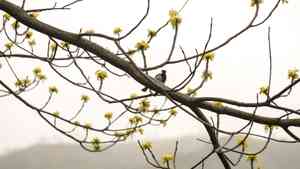
Chinese sassafras (Sassafras tzumu)
Also known as: Chinese Sassafras, Sassafras
Sassafras tzumu is a deciduous tree that can grow up to 35 meters tall. Its wood, initially yellow-green, becomes gray or brown as it matures and features longitudinal fissures. The tree exhibits sympodial branching. The leaves are alternately arranged and gray-green in color. They can be ovate or obovate, measuring between 9 to 18 cm in length and 6 to 10 cm in width. The leaves are supported by slender, reddish petioles that are 2 to 7 cm long.
In This Article
Attributes of Chinese sassafras
Lifespan
Perennial
Plant Type
Tree
Plant Height
8-15 meters (26-49 feet)
Spread
5-7 meters (16-23 feet)
Leaf Color
Green Blue
Flower Size
Small, about 3-5 mm across
Flower Color
Yellow
Images of Chinese sassafras


Quickly Identify Chinese sassafras
1
The leaves of Sassafras tzumu are distinguishable by their variable shapes, often appearing as three-lobed, mitten-shaped, or entire without lobes. Additionally, the aromatic scent when leaves are crushed is a key identifier.
Scientific Classification of Chinese sassafras
Phylum
Vascular plants
Class
Dicotyledons
Order
Laurels, spicebushes and allies
Family
Laurel
Genus
Sassafras
Species
Chinese sassafras
Planting and Growing of Chinese sassafras
Care Difficulty
Moderate
Watering Schedule
Every 2 days
Sunlight Requirements
Partial sun
Sunshine Duration
4-8 hours
Ideal Temperature
59-77℉
Soil Type
Potting Mix, Peat Mix
Soil pH
6.5-7.5
Fertilizer Type
Balanced
Pruning Season
Spring, Summer
Pruning Area
Branches, Leaves
Pruning Frequency
Once a year
Repotting Season
Spring
Pot Type
Plastic, Ceramic
 How to Water Chinese sassafras?
Sassafras tzumu thrives with a subtle balance in moisture, being neither dry nor over-saturated. Aim to water such that the soil is evenly moist but not drenched. This means approximately 500 ml per watering session should suffice, ensuring it reaches the roots but does not pool excessively at the base.
What are the symptoms of an underwatered Chinese sassafras?
›
What should I do if my Chinese sassafras is not getting enough water?
›
What are the symptoms of an overwatered Chinese sassafras?
›
How to save an overwatered Chinese sassafras?
›
 What Are the Sunlight Requirements for Chinese sassafras?
Sassafras tzumu thrives in partial to full sun environments where it benefits from 6 to 8 hours of sunlight daily. Proper lighting ensures strong growth, healthy leaf coloration, and increased resilience to environmental stresses like pests or variations in temperature.
What is the best location for Sassafras tzumu?
›
How can I ensure optimal sun exposure for Sassafras tzumu?
›
What are the benefits of ideal sunlight for Sassafras tzumu?
›
 What Is the Ideal Temperature Range for Chinese sassafras?
The ideal temperature range for Sassafras tzumu is between 59°F and 77°F. This range ensures optimal growth conditions, promoting healthy leaf development and strong root systems. Sassafras tzumu thrives in mild to warm environments where the soil remains adequately moist and the plant can conduct photosynthesis efficiently. Keeping the plant within this range minimizes metabolic stress and supports balanced growth.
 What Soil is Best for Chinese sassafras?
Sassafras tzumu thrives in well-drained soil, ensuring that excess water doesn't accumulate around the roots. This prevents root rot and promotes healthy plant growth, making it ideal for optimal nutrient uptake. A soil rich in organic matter supports Sassafras tzumu by providing essential nutrients and improving soil structure. This enhances aeration and root penetration, facilitating robust growth. Sassafras tzumu requires soil that can retain moderate moisture. This ensures that the plant has consistent access to water, crucial during dry periods, without being waterlogged.
 How to Fertilize Chinese sassafras?
Sassafras tzumu requires moderate fertilization. For liquid fertilizers, apply a balanced mix containing nitrogen, phosphorus, and potassium at a concentration of 1/4 strength once every two weeks. For slow-release fertilizers, distribute about 100 grams per square meter evenly around the base of the plant three times a year.
 How to Prune Chinese sassafras?
It's important to prune Sassafras tzumu during the dormant season, ideally in late winter to early spring, before new growth appears. This timing reduces stress on the tree and allows for vigorous new growth in the growing season. Regularly check the base of the tree for suckers, which can sap energy from the main trunk. Water sprouts that appear on the branches should also be removed to focus energy on desired growth.
 How to Propagate Chinese sassafras plant?
1
Collect mature seeds from Sassafras tzumu in autumn. Clean them and undergo stratification, storing them in a moist medium at a low temperature for several months to break dormancy.
2
In late spring, cut healthy stems from the parent plant about 4 to 6 inches long. Ensure each cutting has several nodes and remove any leaves from the lower half.
3
Choose healthy scion and rootstock plants in early autumn. Use the whip-and-tongue or cleft grafting method to join them, ensuring a snug fit for successful cambial contact.
 How to Repot Chinese sassafras plant?
1
Repotting Sassafras tzumu should be considered when you see signs of stunted growth, roots circling the container base, or water draining too quickly through the soil. These indicators suggest that the root system has outgrown its current pot.
2
Select a pot that is 1-2 inches larger in diameter than the current one. A pot with drainage holes is essential to prevent waterlogging, which can lead to root rot. The added space allows room for root expansion, promoting healthier plant growth.
3
Opt for a well-draining loam mix that retains moisture yet doesn't stay soggy. This soil type ensures that roots get adequate air circulation while preventing the risk of fungal infections from excessive moisture.



