Santolina (Santolina) (Santolina)
Also known as: Lavender Cotton, Holy Herb
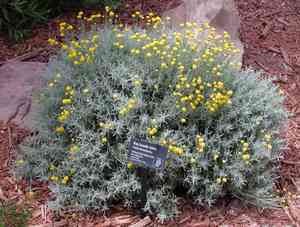
Santolina, part of the chamomile section in the sunflower family, is favored for rock gardens and hedges due to its resilience and aesthetic appeal. Its dense, aromatic foliage comes in both pale, gray-green and green varieties, complemented by bright yellow flowers. These hardy shrubs thrive in poor soil, making them an excellent choice for low-maintenance landscaping.
In This Article
Attributes of Santolina (Santolina)
Lifespan
Perennial
Plant Height
50 cm
Spread
1 m
Leaf Color
Silvery-gray
Flower Size
1–2 cm (0.4–0.8 inches)
Flower Color
Yellow
Images of Santolina (Santolina)
Quickly Identify Santolina (Santolina)
1
Santolina can be identified by its silvery-gray, finely divided leaves that are highly aromatic when crushed. The plant produces small, button-shaped yellow flowers that sit atop slender stems.
Scientific Classification of Santolina (Santolina)
Phylum
Magnoliophyta
Class
Magnoliopsida
Order
Asterales
Family
Asteraceae
Genus
Santolina
Planting and Growing of Santolina (Santolina)
Care Difficulty
Easy
Watering Schedule
Every 2 days
Sunlight Requirements
Full sun
Sunshine Duration
6-10 hours
Ideal Temperature
60-75℉
Soil Type
Potting Mix, Peat Mix
Soil pH
6.5-7.5
Fertilizer Type
Balanced
Pruning Season
Spring, Summer
Pruning Area
Branches, Leaves
Pruning Frequency
2 times a year
Repotting Season
Spring
Pot Type
Plastic, Ceramic
 How to Water Santolina (Santolina)?
For Santolina, it's crucial to water moderately. Ideal watering ensures the soil is moist but not saturated. Aim for the soil to dry out between waterings, as overly wet soil can lead to root rot. A good rule of thumb is to provide about 250 ml until water begins to slowly drain from the bottom of the pot.
What are the symptoms of an underwatered Santolina (Santolina)?
›
What should I do if my Santolina (Santolina) is not getting enough water?
›
What are the symptoms of an overwatered Santolina (Santolina)?
›
How to save an overwatered Santolina (Santolina)?
›
 What Are the Sunlight Requirements for Santolina (Santolina)?
Santolina ideally enjoys full sun exposure, where it flourishes with 6 to 8 hours daily. This range ensures photosynthesis proceeds optimally, enhancing growth, health, and blooming capacity while fortifying the plant against environmental stresses.
What is the best sunlight exposure for Santolina?
›
How can I ensure Santolina gets ideal light?
›
What benefits does ideal light provide for Santolina?
›
 What Is the Ideal Temperature Range for Santolina (Santolina)?
Santolina thrives best in temperatures ranging from 60°F to 75°F. This range mimics its native Mediterranean environment, providing the warmth necessary for optimal growth. Within this temperature bracket, the plant can effectively photosynthesize and maintain its characteristic foliage and flower production.
 What Soil is Best for Santolina (Santolina)?
Ensuring that the soil where your Santolina is planted is well-drained is crucial. This Mediterranean plant hates wet feet and thrives in dry conditions. Good drainage prevents root rot and supports robust growth. Santolina doesn't demand high-nutrient soil, thriving instead in poorer soils that would deter many other plants. Lower fertility keeps the plant compact and prevents legginess. The ability for air to circulate around the roots of Santolina is vital. Soil that is too dense can suffocate plants, but well-aerated soil enhances root respiration and nutrient uptake.
 How to Fertilize Santolina (Santolina)?
For Santolina, it is advisable to use a balanced fertilizer at half the recommended strength. This ensures the plant receives the necessary nutrients without overwhelming its root system.
 How to Prune Santolina (Santolina)?
Begin by removing any dead or damaged branches. This helps redirect the plant's energy towards new growth, allowing it to flourish more vibrantly. Trim the plant to your desired shape. A round, dense form is often the most attractive for Santolina. Aim to cut just above a leaf node to encourage branching. After pruning, clear away all cut debris from around the plant. Leaving debris can attract pests or harbor diseases, affecting future plant health.
 How to Propagate Santolina (Santolina) plant?
1
Collect seeds from a mature Santolina plant and allow them to dry completely. Once dry, spread them evenly in a seed tray filled with a light, well-draining seed-starting mix. Gently cover the seeds with a thin layer of the mix.
2
Choose healthy stems from the parent plant, ideally non-flowering and about 10 cm long. Make a clean cut using pruning shears just below a leaf node. Remove the lower leaves to prevent rotting and to encourage root growth.
3
Remove the mature Santolina plant from its pot or ground. Gently divide the root clump into smaller sections using your hands or a clean, sharp knife, ensuring each section has sufficient roots and stems for successful growth.
 How to Repot Santolina (Santolina) plant?
1
Santolina should be repotted when you notice roots growing through the drainage holes, indicating that the plant is becoming root-bound. Additionally, if the plant appears stunted, or the soil tends to dry out exceptionally fast after watering, these are signals that it's time to consider repotting.
2
Select a pot that is one size larger than the current one, with adequate drainage holes. A terracotta pot is ideal as it allows for better air circulation and prevents overwatering, helping to keep the soil conditions optimal for the Santolina's root health.
3
Opt for well-draining sandy soil or a cactus mix. This ensures that the plant does not sit in water, mimicking its natural habitat and promoting healthy growth by preventing root rot and ensuring the roots receive enough oxygen.

