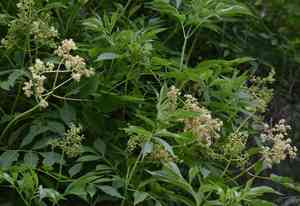
North china red elder (Sambucus williamsii)
Also known as: Williams Elderberry, Chinese Elder
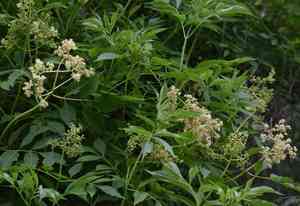
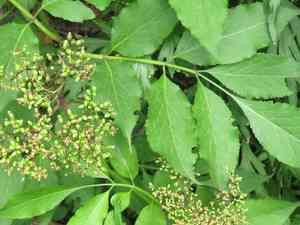
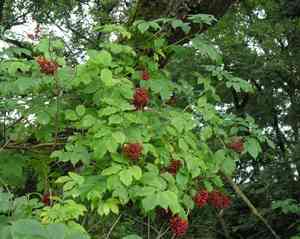
The North China red elder (Sambucus williamsii) is a deciduous shrub or small tree that typically remains relatively short in stature. Indigenous to northern China, it is known for its striking clusters of bright red berries and attractive white flower panicles. These vibrant berries are a magnet for various bird species. It's important to note that, like other members of the genus, Sambucus williamsii is toxic to humans.
In This Article
Attributes of North china red elder
Lifespan
Perennial
Plant Type
Tree, Shrub
Plant Height
5 m to 6 m
Spread
1.5-4 meters
Leaf Color
Green
Flower Size
4 cm to 14 cm
Flower Color
White Yellow
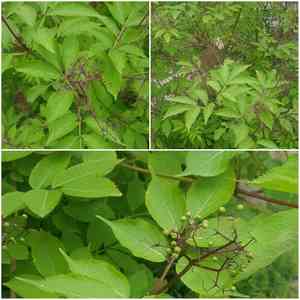
Images of North china red elder
Quickly Identify North china red elder
1
Distinctive narrow elliptic lenticels on trunk bark aid in respiration.
2
Opposite branching pattern on stout, green-to-grayish-brown stem with brown pith.
3
Resilient to harsh conditions, with a bushy appearance from opposite branching.
4
Trunk bark ranges from greyish-brown to darkened brown, with deep fissures.
5
Stem diameter of 0.2 to 0.5 inches (0.5 to 1.3 cm) and firm flexibility.
Scientific Classification of North china red elder
Phylum
Vascular plants
Class
Dicotyledons
Order
Honeysuckles, moschatels and allies
Family
Moschatel
Genus
Sambucus
Species
North china red elder
Planting and Growing of North china red elder
Care Difficulty
Easy
Watering Schedule
Every 3 days
Sunlight Requirements
Partial sun
Sunshine Duration
6-10 hours
Ideal Temperature
60-77℉
Soil Type
Potting Mix, Peat Mix
Soil pH
6.5-7.5
Fertilizer Type
Balanced
Pruning Season
Spring, Summer
Pruning Area
Branches, Leaves
Pruning Frequency
2 times a year
Repotting Season
Spring
Pot Type
Plastic, Ceramic
 How to Water North china red elder?
The watering amount for Sambucus williamsii should be sufficient to moisten the soil deeply but not excessively. This generally means about 500 milliliters per watering session, allowing the water to reach the root zone without causing waterlogging. Ensure the top inch of soil is dry before the next watering.
What are the symptoms of an underwatered North china red elder?
›
What should I do if my North china red elder is not getting enough water?
›
What are the symptoms of an overwatered North china red elder?
›
How to save an overwatered North china red elder?
›
 What Are the Sunlight Requirements for North china red elder?
Sambucus williamsii thrives in partial sun or partial shade, making it suitable for locations with filtered light or morning sun. Ideal lighting enhances foliage density and flower production.
More About Sunlight Requirements Techniques→
What is the ideal amount of sunlight?
›
How to optimize its sunlight exposure?
›
What are the benefits of ideal sunlight?
›
 What Is the Ideal Temperature Range for North china red elder?
The ideal temperature range for cultivating Sambucus williamsii is between 60 and 77 degrees Fahrenheit. This range helps ensure optimal growth and metabolic processes, leading to healthier foliage and improved resistance to diseases. Maintaining stable temperatures within this range allows the plant to flourish in its natural habitat or controlled environments.
 What Soil is Best for North china red elder?
Sambucus williamsii thrives best in well-draining soil. Proper drainage prevents waterlogging and root rot, which are critical for its healthy growth. This plant requires soil rich in organic matter. Fertile soil provides essential nutrients that promote robust growth and vibrant foliage. Although preferring well-drained soil, it benefits from moisture retention to support sustained growth, especially during hotter months.
 How to Fertilize North china red elder?
For Sambucus williamsii, the appropriate amount of fertilizer depends on its growth stage. During the active growing season, they benefit from slightly heavier feeding; apply about half a cup of balanced liquid fertilizer mixed with water per plant, ensuring not to exceed this to avoid root burn.
 How to Prune North china red elder?
The first step is to remove any dead or diseased branches. This helps the plant redirect energy to healthier parts. Next, consider the shape and size you desire. Trim branches that disrupt the overall aesthetics while maintaining a natural form. Remove inward-facing twigs to keep the center of the shrub open. This improves air circulation, reducing the risk of fungal infection.
More About Pruning Techniques→
 How to Propagate North china red elder plant?
1
Start by collecting healthy seeds from the plant in early spring. Sow the seeds in seed trays filled with a well-draining seed-starting mix. Keep the soil consistently moist and maintain a warm environment for germination.
2
In late spring, select healthy stems and cut 4-6 inch segments. Remove lower leaves and dip the cut end into rooting hormone. Plant these cuttings into a potting mix to encourage root development.
3
This method is suitable for mature plants. Dig up the plant carefully in spring and separate the root structure into several sections, ensuring each section has healthy roots. Replant immediately in well-prepared soil.
 How to Repot North china red elder plant?
1
Sambucus williamsii needs repotting when roots begin to emerge from drainage holes or the soil becomes compacted and waterlogged. This indicates that the plant has outgrown its current pot and requires more space for root expansion. Repotting during the active growth period in spring ensures the plant recovers quickly and efficiently.
2
Select a pot that is one size larger than the current one, ensuring adequate drainage holes at the base. A pot that is too large can hold excess moisture, leading to root rot, while too small a pot will restrict root growth. A well-chosen pot helps maintain healthy roots and promotes vigorous plant growth.
3
Opt for a well-draining potting mix to prevent water retention, which could lead to root rot. A blend with perlite or sand is ideal as it facilitates aeration and drainage, providing the roots with the perfect balance of moisture and air, thus encouraging healthy growth and resilience against diseases.
Learn More About North china red elder Diseases
Anthracnose
Bacterial Leaf Spot
Crown Gall
Damping-off
Downy Mildew
Drought Stress
Fusarium Wilt
Gray Mold
Leaf Curl
Leaf Spot
Mosaic
Nutrient Deficiency
Nutrient Toxicity
Powdery Mildew
Root Rot
Root-knot Nematode
Rusts
Sooty Mold
Spider Mites
Temperature Stress
Thrips Damage
White Mold
Chemical Injury



