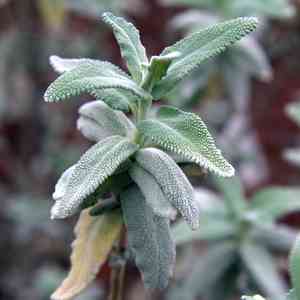
Purple sage (Salvia leucophylla)
Also known as: San Luis purple sage, Bee's Bliss Sage
Cleveland Sage (Salvia clevelandii) is a perennial shrub native to Southern California. It typically reaches heights of 61 to 152 cm and spreads 91 to 305 cm wide. This fast-growing, aromatic shrub features gray-green leaves and thrives in full sun with minimal water requirements. From spring to summer, it produces purple to lavender flowers that are highly attractive to hummingbirds, butterflies, bees, and various insects.
In This Article
Attributes of Purple sage
Lifespan
Perennial
Plant Type
Shrub
Plant Height
1 m to 1.5 m
Spread
1 m to 1.5 m
Leaf Color
Green Gray
Flower Size
2.5 cm
Flower Color
Purple Pink
Images of Purple sage
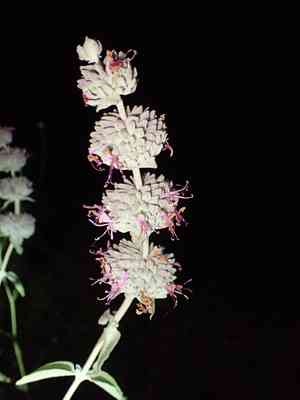
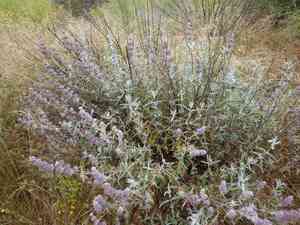
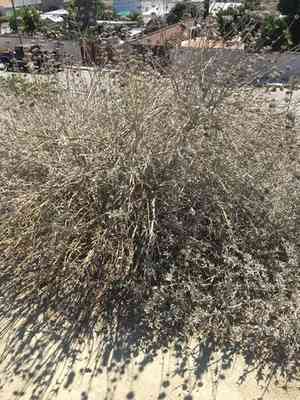
Quickly Identify Purple sage
1
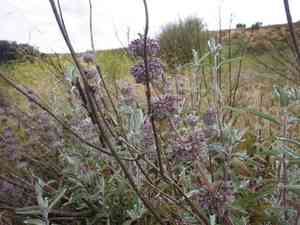
Salvia leucophylla can be identified by its gray-green leaves covered in fine white hairs, its distinctive lavender-purple flowers arranged in ring-like clusters, and its shrubby growth habit.
Scientific Classification of Purple sage
Phylum
Vascular plants
Class
Dicotyledons
Order
Lamiales
Family
Mint
Genus
Sages
Species
Purple sage
Planting and Growing of Purple sage
Care Difficulty
Easy
Watering Schedule
Every 3 days
Sunlight Requirements
Full sun
Sunshine Duration
6-12 hours
Ideal Temperature
65-75℉
Soil Type
Potting Mix, Peat Mix
Soil pH
6.5-7.5
Fertilizer Type
Balanced
Pruning Season
Spring, Summer
Pruning Area
Branches, Leaves
Pruning Frequency
2 times a year
Repotting Season
Spring
Pot Type
Plastic, Ceramic
 How to Water Purple sage?
Salvia leucophylla prefers well-draining soil that is not excessively moist. When watering, aim for about 500 ml of water per session, enough to moisten the soil but not saturate it. Ensure that water penetrates root level, without causing standing water as this could lead to root rot.
What are the symptoms of an underwatered Purple sage?
›
What should I do if my Purple sage is not getting enough water?
›
What are the symptoms of an overwatered Purple sage?
›
How to save an overwatered Purple sage?
›
 What Are the Sunlight Requirements for Purple sage?
This plant thrives best under full sun or partial sun conditions, experiencing up to 8 hours of sunlight. Adequate light intensity aids in its lush growth and flowering potential.
More About Sunlight Requirements Techniques→
What is the best light condition for Salvia leucophylla?
›
How to achieve the ideal lighting for Salvia leucophylla?
›
What are the benefits of achieving ideal lighting for Salvia leucophylla?
›
 What Is the Ideal Temperature Range for Purple sage?
Salvia leucophylla thrives in a warm environment, ideally between 65°F and 75°F. This range provides the best conditions for growth and flowering, ensuring the plant receives enough warmth to foster healthy photosynthesis and metabolic activity.
 What Soil is Best for Purple sage?
Salvia leucophylla thrives best in soil that offers excellent drainage. Good drainage prevents root rot by ensuring water does not stand around the roots after rainfall or watering. This plant prefers soil with moderate fertility levels. Avoid overly rich soils as excess nutrients can lead to excessive foliage growth at the expense of flowering. A soil pH range between 6.5 to 7.5 is ideal for Salvia leucophylla. This range optimizes nutrient availability and supports overall plant health.
 How to Fertilize Purple sage?
For Salvia leucophylla, also known as purple sage, a balanced approach to fertilization is best. Typically, apply a quarter to half strength of a balanced liquid fertilizer. This helps to maintain healthy foliage and vibrant growth, especially during the active growing seasons in spring and early summer.
 How to Prune Purple sage?
Start by removing any dead or diseased wood to promote healthy growth. Use clean, sharp pruning shears to cut back the plant by one-third, focusing on spent flowers and leggy stems. Make cuts just above a leaf node to encourage branching. This not only rejuvenates the plant but also supports vibrant blooms.
More About Pruning Techniques→
 How to Propagate Purple sage plant?
1
Start by filling seed trays with a well-draining potting mix. Sow Salvia leucophylla seeds on the surface and lightly cover them with soil. Maintain consistent moisture and position trays in indirect sunlight to encourage germination.
2
Select healthy stems in summer and use pruning shears to cut 4-6 inches from the tip. Remove leaves from the lower half, dip the cut end in rooting hormone, and plant in a pot with moist rooting medium.
3
Place the potted cuttings in a warm location with indirect sunlight. Maintain humidity by covering with a plastic bag, and ensure the medium remains moist but not waterlogged for successful rooting.
 How to Repot Purple sage plant?
1
Repot Salvia leucophylla when its roots start to outgrow the current pot, often manifested in roots coming through drainage holes or growth slowing down. These signs indicate the plant needs more space and nutrients.
2
Select a pot that is 1-2 inches larger in diameter than the current one. This size allows for adequate root expansion without overwhelming the plant, promoting healthy growth and preventing water retention at the roots.
3
Opt for a well-draining, sandy soil mix to prevent root rot and ensure essential nutrient flow. A blend of cactus mix and perlite works wonders, mimicking the plant's natural coastal habitat.



