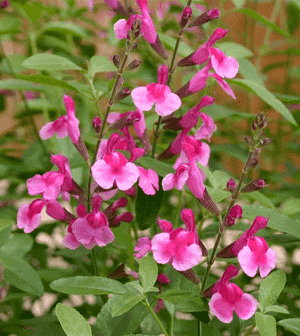
Autumn sage (Salvia greggii)
Also known as: Red Chihuahuan sage, Gregg salvia
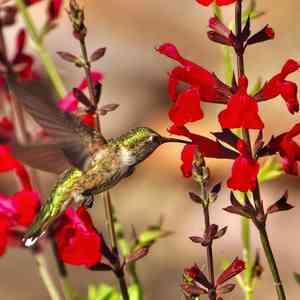
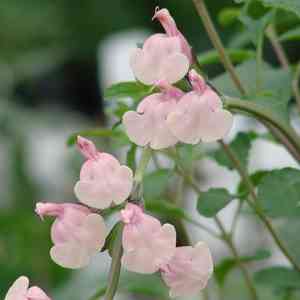
Autumn sage (Salvia greggii) is a perennial shrub that typically reaches a height of 1 to 3 feet. Its tubular flowers, available in hues of red, pink, white, orange, and purple, add vibrant color to the garden. This hardy plant is remarkably low-maintenance, resistant to both drought and common pests. It attracts pollinators like butterflies and hummingbirds, making it an excellent choice for supporting local wildlife. Additionally, Autumn sage is perfect for use as a colorful border plant or in mixed garden beds, providing extended seasonal interest with its long blooming period.
In This Article
Attributes of Autumn sage
Lifespan
Perennial
Plant Type
Herb
Plant Height
30 cm to 1.2 m
Spread
60 cm to 90 cm
Leaf Color
Green
Flower Size
2.5 cm
Flower Color
Red Pink White Purple Yellow Cream Violet
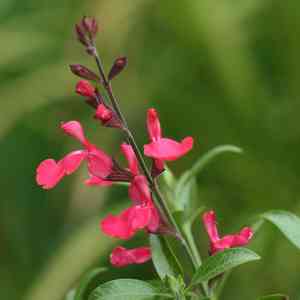
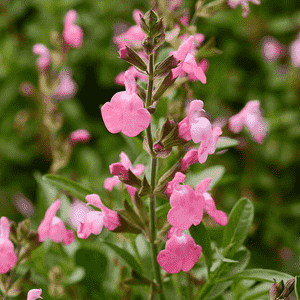
Images of Autumn sage
Quickly Identify Autumn sage
1
Hardy, woody stature reaching 2-3 feet (60-90 cm) in height and width.
2
Tube-shaped, two-lipped flowers in red, pink, or white hues with subtle fragrance.
3
Schizocarp fruit with 4 chambers housing small, hard nutlets.
4
Square, brittle stems with rough texture and grayish-brown color.
5
Terminal spikes of colorful tubular flowers attracting pollinators like hummingbirds.
Scientific Classification of Autumn sage
Phylum
Vascular plants
Class
Dicotyledons
Order
Lamiales
Family
Mint
Genus
Sages
Species
Autumn sage
Planting and Growing of Autumn sage
Care Difficulty
Easy
Watering Schedule
Every 4 days
Sunlight Requirements
Full sun
Sunshine Duration
6-12 hours
Ideal Temperature
60-75℉
Soil Type
Potting Mix, Peat Mix
Soil pH
6.5-7.5
Fertilizer Type
Balanced
Pruning Season
Spring, Summer
Pruning Area
Branches, Leaves
Pruning Frequency
2 times a year
Repotting Season
Spring
Pot Type
Plastic, Ceramic
 How to Water Autumn sage?
Salvia greggii, commonly known as autumn sage, appreciates moderate watering, around 250 milliliters each time. The guiding principle is to allow the soil to dry slightly between waterings but not to the point of becoming bone-dry. Water deeply enough that the moisture reaches the root zone, ensuring the soil remains well-hydrated but not soggy.
More About Watering Techniques→
What are the symptoms of an underwatered Autumn sage?
›
What should I do if my Autumn sage is not getting enough water?
›
What are the symptoms of an overwatered Autumn sage?
›
How to save an overwatered Autumn sage?
›
 What Are the Sunlight Requirements for Autumn sage?
Salvia greggii benefits most from full sun exposure but tolerates partial sun conditions well. The ideal light encourages vibrant flower colors, increased foliage density, and a more prolonged blooming season, fostering maximal growth potential.
More About Sunlight Requirements Techniques→
What is the best lighting condition for Salvia greggii?
›
How can I ensure Salvia greggii receives ideal light throughout the year?
›
What are the benefits of providing Salvia greggii with ideal light?
›
 What Is the Ideal Temperature Range for Autumn sage?
Salvia greggii thrives best in temperatures between 60°F to 75°F. This range ensures that the plant can photosynthesize efficiently, maintain healthy respiration, and conserve energy. Maintaining temperatures within this range promotes vigorous growth and abundant flowering. Regular monitoring can help maintain these optimal conditions for the plant's wellbeing.
 What Soil is Best for Autumn sage?
Salvia greggii thrives in well-drained soil, which prevents root rot and ensures healthy growth. This requirement is crucial for avoiding water-logging, allowing the plant to absorb nutrients effectively. Providing nutrient-rich soil benefits Salvia greggii by boosting its overall health and supporting vibrant flowering. A good balance of organic matter helps sustain a nourishing environment. A moderately fertile soil ensures Salvia greggii grows at an optimal rate without an excess of foliage that would detract from its flowering ability. Maintaining balanced fertility keeps the plant vigorous.
More About Soil→
 How to Fertilize Autumn sage?
For Salvia greggii, apply liquid fertilizers at half the recommended strength given on the product label. This ensures the plant gets gentle nourishment without the risk of nutrient burn. A balanced liquid fertilizer, for example, 10-10-10 will suffice. When using slow-release granular fertilizers, apply at the rate of about 2 tablespoons per plant per application. This gradual nutrient supply supports healthy growth while avoiding over-fertilization.
More About Fertilizing Techniques→
 How to Prune Autumn sage?
Begin by removing dead or damaged stems. Trim back leggy branches to encourage a fuller shape. Focus on cutting just above a leaf node, which stimulates new shoots. Maintain an open center for good air circulation. Prune in early spring to shape your plant before new growth begins. Continue light pruning through summer and autumn to encourage repeated blooming by removing spent flowers and thin stems.
More About Pruning Techniques→
 How to Propagate Autumn sage plant?
1
Collect seeds from mature Salvia greggii plants. Wait until the seed heads are dry and brown, then gently remove them. Extract the seeds by breaking open the seed heads and storing them in a cool, dry place.
2
Select healthy stems from the Salvia greggii plant, ideally non-flowering ones. Use pruning shears to cut a 4-6 inch piece below a node. Remove lower leaves to reduce water loss, ensuring a couple of leaves remain at the top.
3
Place the prepared cuttings in potting mix, ensuring the node is buried. Water lightly and cover with a plastic bag or dome to maintain humidity. Keep in bright, indirect light and mist occasionally until roots form.
 How to Repot Autumn sage plant?
1
It's time to repot Salvia greggii when you notice roots starting to emerge from the drainage holes, or if the plant growth has significantly slowed despite optimal conditions. These are clear signals that the plant has become root-bound.
2
Select a pot that is one size larger than the current one, with ample drainage holes. This ensures that water doesn't accumulate at the bottom, preventing root rot and promoting healthier root growth, allowing the plant to thrive in its new home.
3
Opt for a well-draining potting mix rich in organic matter, such as a cactus mix. This type of soil prevents waterlogging by allowing excess moisture to escape while retaining enough moisture to keep the plant hydrated.
Learn More About Autumn sage Diseases
Anthracnose
Bacterial Leaf Spot
Bacterial Soft Rot
Bacterial Wilt
Black Spot
Chemical Injury
Crown Gall
Damping-off
Downy Mildew
Drought Stress
Fusarium Wilt
Gray Mold
Leaf Spot
Mosaic
Nutrient Deficiency
Nutrient Toxicity
Powdery Mildew
Root Rot
Root-knot Nematode
Rusts
Sooty Mold
Spider Mites
Temperature Stress
Thrips Damage
White Mold



