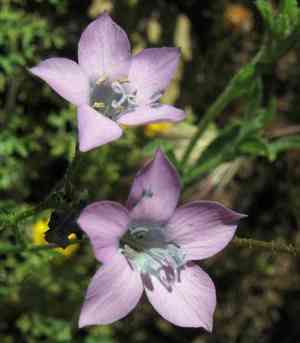
Grant's splendid woodland-gilia (Saltugilia splendens)
Also known as: Splendid woodland-gilia
Saltugilia splendens is a slender wildflower characterized by an upright stem that can grow up to approximately 80 centimeters in height. The stem is primarily bare, with most of the intricately divided leaves forming a basal rosette close to the ground. The plant features an open inflorescence, with small flowers situated at the tips of thin, glandular branches.
In This Article
Attributes of Grant's splendid woodland-gilia
Lifespan
Annual
Plant Type
Herb
Plant Height
15-70 cm
Spread
not applicable
Leaf Color
Green
Flower Size
1-2 cm
Flower Color
Pink to reddish-purple
Images of Grant's splendid woodland-gilia
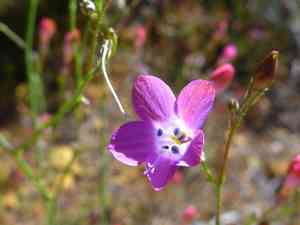
Quickly Identify Grant's splendid woodland-gilia
1
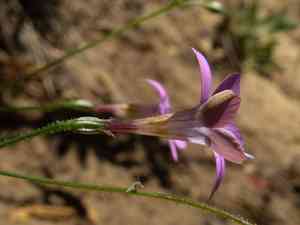
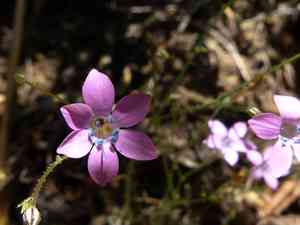
Identifying Saltugilia splendens involves looking for its small, pink to reddish-purple flowers that are funnel-shaped and grow in clusters. The leaves are typically pinnately divided and covered with glandular hairs.
Scientific Classification of Grant's splendid woodland-gilia
Phylum
Vascular plants
Class
Dicotyledons
Order
Ericales
Family
Phlox
Genus
Saltugilia
Species
Grant's splendid woodland-gilia
Planting and Growing of Grant's splendid woodland-gilia
Care Difficulty
Moderate
Watering Schedule
Every 2 days
Sunlight Requirements
Full sun
Sunshine Duration
6-8 hours
Ideal Temperature
55-75℉
Soil Type
Potting Mix, Peat Mix
Soil pH
6.5-7.5
Fertilizer Type
Balanced
Pruning Season
Spring, Summer
Pruning Area
Branches, Leaves
Pruning Frequency
2 times a year
Repotting Season
Spring
Pot Type
Plastic, Ceramic
 How to Water Grant's splendid woodland-gilia?
Saltugilia splendens, or desert gilia, should be watered until the soil is moist but not soggy, ideally providing about 500 ml at each watering session. The plant is adapted to dry environments, so it prefers to dry out between waterings. Ensuring the soil is well-drained is crucial to prevent root rot.
What are the symptoms of an underwatered Grant's splendid woodland-gilia?
›
What should I do if my Grant's splendid woodland-gilia is not getting enough water?
›
What are the symptoms of an overwatered Grant's splendid woodland-gilia?
›
How to save an overwatered Grant's splendid woodland-gilia?
›
 What Are the Sunlight Requirements for Grant's splendid woodland-gilia?
Saltugilia splendens benefits greatly from full sun to partial sun exposure, with approximately 6 to 8 hours of sunlight facilitating vibrant flowering and robust health.
What type of light does Saltugilia splendens prefer?
›
How can you ensure Saltugilia splendens receives the ideal light?
›
What benefits does proper lighting offer to Saltugilia splendens?
›
 What Is the Ideal Temperature Range for Grant's splendid woodland-gilia?
The ideal temperature range for cultivating Saltugilia splendens is between 55°F and 75°F. This range provides optimal conditions for growth and flowering. Ensuring this temperature allows the plant to maintain metabolic functions efficiently and produce vibrant blooms.
 What Soil is Best for Grant's splendid woodland-gilia?
Saltugilia splendens requires soil with excellent drainage to prevent root rot. This property ensures the roots have access to necessary air, avoiding waterlogging, which is detrimental to this species. The plant needs soil that retains moderate moisture without staying too wet. This balance helps facilitate nutrient uptake while maintaining a stable and healthy root environment. A soil enhanced with organic matter is ideal for Saltugilia splendens, as it enhances nutrient content and soil structure, promoting vigorous plant growth and resilience.
 How to Fertilize Grant's splendid woodland-gilia?
For thriving Saltugilia splendens, use a balanced liquid fertilizer diluted to half strength. Apply roughly 20 ml per plant base, spreading evenly to avoid concentration, ensuring vibrant blooms without overwhelming the delicate root system.
 How to Prune Grant's splendid woodland-gilia?
Start by identifying the spent blooms and wilted flowers. Use a pair of clean and sharp pruning shears to cut them about an inch above the nearest healthy leaf node. This stimulates new growth and helps the plant focus energy on blooming rather than seed production. To shape the plant and maintain a full form, prune back any overly leggy stems. Trim just above a leaf node to encourage bushier growth. This helps in maintaining an aesthetic form while also ensuring better airflow through the plant.
More About Pruning Techniques→
 How to Propagate Grant's splendid woodland-gilia plant?
1
Begin by filling your seed tray with sterilized soil. Place the seeds uniformly and cover them lightly with a thin layer of soil or vermiculite. Ensure even spacing to prevent overcrowding and provide adequate air circulation.
2
Position the seed tray in a location that receives indirect sunlight, maintaining a warm temperature. Use a humidity dome or plastic wrap to retain moisture, which is vital for the seeds to germinate within a consistent environment.
3
Water the seeds gently using a spray bottle to avoid displacing them. Keep the soil consistently moist but not waterlogged to ensure proper germination. Over-watering can lead to fungal diseases, so always check moisture levels.
 How to Repot Grant's splendid woodland-gilia plant?
1
Saltugilia splendens typically signals its need for repotting through root-bound symptoms. Look for roots growing out of the drainage holes, slow growth, or when the soil dries out more quickly than usual. These are indications that the plant may require more space to expand its root system.
2
Choose a pot that is one size larger than the current one, ensuring it has ample drainage holes. This allows excess moisture to escape, preventing root rot. The material can vary, but terracotta is excellent as it allows the soil to breathe, providing a healthier environment for root expansion.
3
Opt for a well-draining sandy soil mix, which mirrors its natural habitat. Such soil prevents waterlogging and encourages proper aeration, essential for Saltugilia splendens' delicate root system. This setup supports healthy growth by balancing moisture retention and drainage.
Learn More About Grant's splendid woodland-gilia Diseases
Anthracnose
Bacterial Leaf Spot
Bacterial Wilt
Chemical Injury
Crown Gall
Cyst Nematode
Damping-off
Downy Mildew
Drought Stress
Fusarium Wilt
Gray Mold
Leaf Spot
Mosaic
Nutrient Deficiency
Nutrient Toxicity
Powdery Mildew
Root Rot
Root-knot Nematode
Rusts
Sooty Mold
Spider Mites
Temperature Stress
Thrips Damage
White Mold



