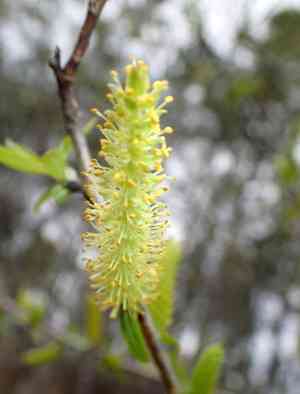
Coastal plain willow (Salix caroliniana)
Also known as: Swamp Willow
The coastal plain willow (Salix caroliniana) is a willow species that can reach heights of up to 6 meters. In spring, its flexible stems produce clusters of small yellow flowers, attracting numerous pollinators such as butterflies and bees. The branches are versatile and can be used for weaving baskets, creating fences, and various other crafts. This willow species thrives in wet, boggy environments and can endure some salt exposure, though it cannot survive complete submersion.
In This Article
Attributes of Coastal plain willow
Lifespan
Perennial
Plant Type
Tree
Plant Height
4.5 m to 6 m
Spread
4.5 m to 9 m
Leaf Color
Green White
Flower Size
2.5 cm
Flower Color
Yellow Green
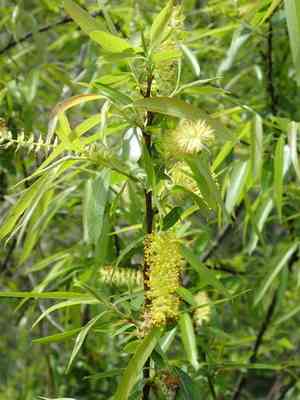
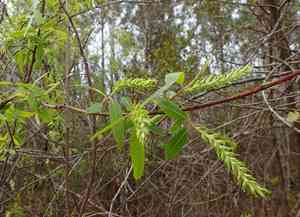
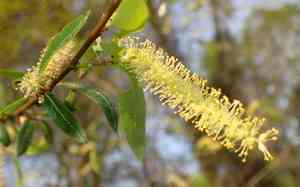
Images of Coastal plain willow

Quickly Identify Coastal plain willow
1
Distinctive pale-white underside of leaves aiding in identification.
2
Small greenish-yellow catkins without distinct petals blooming in clusters.
3
Smooth light brown capsules with cottony seeds for wind dispersal.
4
Elongated light green leaves with serrated edges and prominent veins.
5
Textured gray bark with deep grooves and ridges, peeling in strips.
Scientific Classification of Coastal plain willow
Phylum
Vascular plants
Class
Dicotyledons
Order
Malpighiales
Family
Willow
Genus
Willows
Species
Coastal plain willow
Planting and Growing of Coastal plain willow
Care Difficulty
Easy
Watering Schedule
Every 8 days
Sunlight Requirements
Full sun
Sunshine Duration
4-6 hours
Ideal Temperature
60-75℉
Soil Type
Potting Mix, Peat Mix
Soil pH
5.5-7.5
Fertilizer Type
Balanced
Pruning Season
Spring, Summer
Pruning Area
Branches, Leaves
Pruning Frequency
2 times a year
Repotting Season
Spring
Pot Type
Plastic, Ceramic
 How to Water Coastal plain willow?
For Salix caroliniana, commonly known as Carolina willow, a thorough watering is essential to ensure the soil remains consistently moist. Ideally, each watering session should deliver about 1000 ml of water. It's important that the root zone is adequately saturated, avoiding dry spots, but also ensuring there is proper drainage to avoid standing water.
What are the symptoms of an underwatered Coastal plain willow?
›
What should I do if my Coastal plain willow is not getting enough water?
›
What are the symptoms of an overwatered Coastal plain willow?
›
How to save an overwatered Coastal plain willow?
›
 What Are the Sunlight Requirements for Coastal plain willow?
The ideal light range for this plant is partial to full sun exposure. Ensuring good light availability supports vigorous growth and the development of a sturdy structure for the plant's optimal performance.
More About Sunlight Requirements Techniques→
What is the best lighting condition?
›
How to achieve these lighting conditions?
›
What are the benefits of ideal lighting?
›
 What Is the Ideal Temperature Range for Coastal plain willow?
Salix caroliniana thrives best in an environment where the temperatures are consistent between 60°F to 75°F. This range supports optimal metabolic activities and promotes healthy growth, ensuring the plant can photosynthesize efficiently and maintain robust structure.
 What Soil is Best for Coastal plain willow?
The soil should drain well to prevent waterlogging. Salix caroliniana thrives in conditions where roots can access sufficient air, reducing the risk of rot. Despite needing well-drained soil, Salix caroliniana also requires soil that retains some moisture. This balance supports sustained growth during dry periods. The soil should be rich in organic matter, providing ample nutrients for robust growth. This enhances the plant's overall health and resilience.
 How to Fertilize Coastal plain willow?
Salix caroliniana, commonly known as the Carolina Willow, requires a balanced nutrient approach. This plant appreciates a moderate amount of fertilization to match its vigorous growth. When applying liquid fertilizers, ensure you use about half the recommended dosage on the package for houseplants, as this species isn't overly demanding. For slow-release fertilizers, apply lightly, spreading the granules evenly over the soil surface without exceeding the manufacturer's suggested amount.
 How to Prune Coastal plain willow?
Start by identifying any dead or diseased branches and remove them with clean, sharp pruning shears. Cut at a 45-degree angle to promote quick healing and to prevent water from settling on the cut surfaces. Focus on maintaining a balanced shape, and avoid cutting more than one-third of the plant at a time to minimize stress. Pruning Salix caroliniana can encourage more vibrant growth by cutting back to a healthy bud. Make cuts just above the node, as this is where new growth will emerge. Aim to open up the center of the plant to improve air circulation, which can reduce the risk of fungal infections.
More About Pruning Techniques→
 How to Propagate Coastal plain willow plant?
1
Choose healthy shoots that are free of disease. Cut them at an angle and strip the leaves off the lower half. Apply rooting hormone to the freshly cut end.
2
Plant the prepared cuttings into well-draining potting mix. Ensure the cuttings are inserted deep enough to support themselves and maintain an upright position.
3
Water the cuttings thoroughly immediately after planting, and continue to keep the soil consistently moist but not waterlogged. Monitor regularly for new growth and root development.
 How to Repot Coastal plain willow plant?
1
Repot Salix caroliniana when you see roots emerging from the drainage holes, or growth seems sluggish despite proper care. These signs indicate constrained roots, an issue best addressed by giving them more space with a fresh pot and soil.
2
Choose a pot slightly larger than the current one, with ample drainage holes to prevent waterlogging. The new pot shouldn't be too big; a modest size increase helps the roots establish efficiently and reduces the risk of root rot.
3
Opt for well-drained, sandy loam soil that replicates the tree’s natural habitat. This choice promotes healthy root growth and ensures good water retention without sogginess, crucial for maintaining robust foliage and overall plant vitality.



