
Weeping willow (Salix babylonica)
Also known as: Chinese weeping willow, Babylon willow
The weeping willow (Salix babylonica) is native to China. Its widespread presence in parks and gardens worldwide can be attributed to its trade along the Silk Road. Today, it is commonly planted for ornamental purposes in various regions.
In This Article
Attributes of Weeping willow
Lifespan
Perennial
Plant Type
Tree
Plant Height
12 m to 18 m
Spread
9 m to 15 m
Leaf Color
Green Silver
Flower Size
1.5 cm to 3 cm
Flower Color
Yellow
Images of Weeping willow
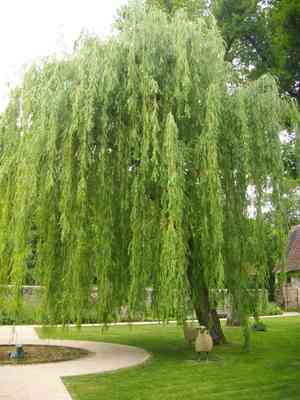



Quickly Identify Weeping willow
1
Weeping habit with branches cascading to the ground, creating a rounded crown.
2
Male catkins measuring 1 to 2 inches (2.5 to 5 cm) long, more prominent than female catkins.
3
Distinct color transition of fruit from green to brown, releasing cottony seeds for dispersal.
4
Alternate, linear-lanceolate leaves with finely serrated margins, turning golden yellow in fall.
5
Smooth stems with reddish to yellowish-brown color, exhibiting elegant drooping appearance.
Scientific Classification of Weeping willow
Phylum
Vascular plants
Class
Dicotyledons
Order
Nances, spurges, willows and allies
Family
Willow
Genus
Willows
Species
Weeping willow
Planting and Growing of Weeping willow
Care Difficulty
Easy
Watering Schedule
Every 4 days
Sunlight Requirements
Full sun
Sunshine Duration
6-12 hours
Ideal Temperature
60-75℉
Soil Type
Potting Mix, Peat Mix
Soil pH
6-8
Fertilizer Type
Balanced
Pruning Season
Spring, Summer
Pruning Area
Branches, Leaves
Pruning Frequency
2 times a year
Repotting Season
Spring
Pot Type
Plastic, Ceramic
 How to Water Weeping willow?
When watering Salix babylonica, ensure that the soil is thoroughly soaked but not waterlogged. This tree enjoys moist conditions, but excessive water can lead to root rot. Observe the soil; it should be moist to the touch, yet not swampy. Aim for a consistent soil wetness without pooling of water.
More About Watering Techniques→
What are the symptoms of an underwatered Weeping willow?
›
What should I do if my Weeping willow is not getting enough water?
›
What are the symptoms of an overwatered Weeping willow?
›
How to save an overwatered Weeping willow?
›
 What Are the Sunlight Requirements for Weeping willow?
Salix babylonica ideally needs full sun to partial sun. Adequate lighting heightens photosynthesis, supporting healthy growth and leaf development. Ensuring exposure to appropriate sunlight balances energy production, leading to well-formed branches and vibrant foliage.
More About Sunlight Requirements Techniques→
Optimal Light for Growth
›
Solution for Ideal Lighting
›
Benefits of Ideal Light
›
 What Is the Ideal Temperature Range for Weeping willow?
Why is it important to maintain temperatures between 60°F and 75°F for Salix babylonica? Salix babylonica, commonly known as weeping willow, thrives in moderate temperatures which promote healthy growth and prevent stress. Consistent temperatures within this range ensure that the plant can photosynthesize efficiently and maintain a robust structure.
 What Soil is Best for Weeping willow?
Salix babylonica thrives in well-drained soil conditions, reducing the risk of root rot. Well-drained soil ensures that excess water is not retained around the roots, which in turn helps to maintain healthy growth and vibrant foliage. While the soil should be well-drained, it should also retain moisture well. This balance ensures the plant receives adequate moisture for optimal growth without becoming waterlogged, promoting robust health and longevity. The tree benefits from a nutrient-rich soil that supports its fast growth rate. The presence of organic matter and essential minerals can enhance growth, fostering lush and resilient weeping willow branches.
More About Soil→
 How to Fertilize Weeping willow?
For Salix babylonica, apply liquid fertilizers at a diluted concentration of about one-quarter of the recommended dose. This helps prevent any root damage and ensures the plant continues to grow healthily. For slow-release fertilizers, apply around 100 grams, distributed evenly around the base of the plant.
More About Fertilizing Techniques→
 How to Prune Weeping willow?
Begin by identifying the health of branches. Remove any that are dead, diseased, or damaged to prevent the spread of any potential pathogens. This first step is crucial for maintaining tree health. Trim back branches to shape the canopy. Opt for a rounded or umbrella form, which maximizes sunlight exposure and air circulation, reducing the risk of disease and promoting a robust and aesthetic appearance. When cutting branches, always prune back to a lateral branch or bud. Make clean cuts at a 45-degree angle to facilitate proper healing and prevent water from accumulating on cut surfaces, which can cause decay.
More About Pruning Techniques→
 How to Propagate Weeping willow plant?
1
Choose a healthy Salix babylonica plant with vibrant foliage and no signs of disease. This ensures the cuttings are viable and increases the chance of successful propagation.
2
Cut a 6-10 inch stem with at least two nodes from the parent plant. Make a clean cut to minimize damage, and remove the lower leaves to expose the nodes.
3
Dip the cut end in rooting hormone, then plant it in a mix of sand and peat. Keep the soil moist but not waterlogged, and place in a well-lit area out of direct sunlight.
 How to Repot Weeping willow plant?
1
Salix babylonica, commonly known as the weeping willow, signals its need for repotting when its roots outgrow the current pot, often circling the bottom or the drainage holes being clogged with roots. An obvious slowdown in growth or wilting despite regular watering also indicates the necessity for a larger container.
2
Choose a pot that is 2-3 inches larger in diameter than the current one to provide ample room for root expansion. Ensure it has adequate drainage holes to prevent waterlogging, which can damage the roots. A larger pot supports healthier growth and reduces the frequency of repotting.
3
Opt for loamy, well-drained soil enriched with organic compost. This type of soil provides the necessary nutrients and aeration, ensuring the willow's robust growth. A well-drained soil prevents root rot, a common issue with water-loving plants like Salix babylonica.



