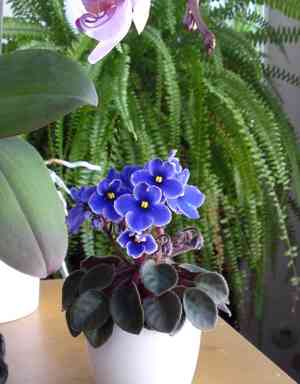
African violet (Saintpaulia ionantha)
Also known as: Usambara violet
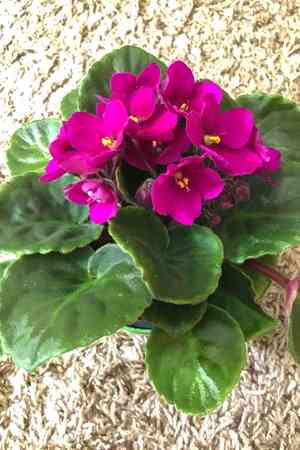
The African violet, as its name suggests, hails from the coastal areas of Tanzania in East Africa. This popular houseplant is cherished for its vibrant blue, pink, purple, or white blossoms and its compact form. African violets can bloom almost all year long but are sensitive to cold temperatures, so it's best to keep them at 55 degrees Fahrenheit or higher.
In This Article
Attributes of African violet
Lifespan
Perennial
Plant Type
Herb
Plant Height
15 cm to 20 cm
Spread
10 cm to 30 cm
Leaf Color
Green Red Purple Brown
Flower Size
1 cm to 4 cm
Flower Color
White Pink Purple Blue Red Violet
Images of African violet
Quickly Identify African violet
1
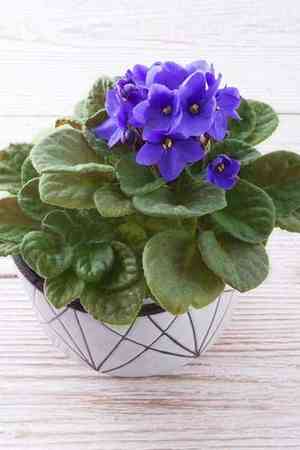
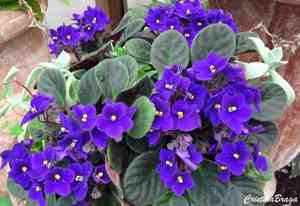
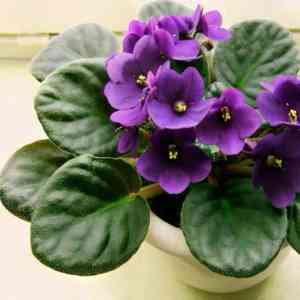
Identify African violets by their rosette-shaped leaves, which are round to oval and have a fuzzy texture. The flowers are typically violet but can range in color from pink to blue and white, with a five-lobed, tubular appearance.
Scientific Classification of African violet
Phylum
Vascular plants
Class
Dicotyledons
Order
Mints plantains olives and allies
Family
African violet
Genus
African violets
Species
African violet
Planting and Growing of African violet
Care Difficulty
Easy
Watering Schedule
Every 8 days
Sunlight Requirements
Partial sun
Sunshine Duration
6-8 hours
Ideal Temperature
65-75℉
Soil Type
Potting Mix, Peat Mix
Soil pH
6.5-7.5
Fertilizer Type
Balanced
Pruning Season
Spring, Summer
Pruning Area
Branches, Leaves
Pruning Frequency
2 times a year
Repotting Season
Spring
Pot Type
Plastic, Terracotta
 How to Water African violet?
When watering Saintpaulia ionantha, ensure the soil is evenly moist but not waterlogged. The plant prefers a consistent moisture level, similar to a well-wrung sponge. This means watering with approximately 100 ml of water until the excess starts to drain from the bottom of the pot, ensuring all roots have adequate access to water.
More About Watering Techniques→
What are the symptoms of an underwatered African violet?
›
What should I do if my African violet is not getting enough water?
›
What are the symptoms of an overwatered African violet?
›
How to save an overwatered African violet?
›
 What Are the Sunlight Requirements for African violet?
Partial sunlight is perfect for Saintpaulia ionantha as it helps to maintain steady growth, encourages brilliant blossoms, and keeps foliage lush and green without the risk of leaf scald.
More About Sunlight Requirements Techniques→
What is the best spot for my African Violet?
›
How to manage light if window space is limited?
›
What are signs my plant is receiving ideal light?
›
 What Is the Ideal Temperature Range for African violet?
For optimal growth, Saintpaulia ionantha thrives in a temperate environment. Maintaining a consistent temperature range between 65°F and 75°F is crucial. This range supports healthy development, promotes vibrant flowering, and prevents stress-related issues. A stable environment without drastic temperature fluctuations is key for the plant's wellbeing.
 What Soil is Best for African violet?
Saintpaulia ionantha thrives in well-drained soil that prevents root rot by ensuring excess water escapes quickly. This prevents the roots from drowning and keeps your plant healthy and vibrant. This plant loves a rich blend of organic material which supports its growth and flowering. The right nutrients in the soil promote lush leaves and abundant blooms, providing a stunning display. The soil should retain enough moisture to nourish the plant without becoming waterlogged. Consistent moisture is key to preventing leaf wilting and maintaining steady growth throughout the seasons.
More About Soil→
 How to Fertilize African violet?
Saintpaulia ionantha, also known as African Violet, requires a delicate balance in its fertilization routine. When using liquid fertilizer, it is essential to dilute the solution to half or even one-quarter of the recommended strength on the packaging. This ensures that the plant receives nutrients without overwhelming its delicate root system. For solid fertilizers, particularly slow-release types, applying sparingly is crucial to avoid salt build-up that can damage roots.
More About Fertilizing Techniques→
 How to Prune African violet?
Begin by identifying the spent blooms and yellowing leaves. Use sharp, sterilized scissors to cut these away at the base, ensuring you do not damage the healthy foliage. For unruly growth, trim the outer leaves to shape the plant into a domed form. If leaves or stems are densely packed, thin out the center to improve air circulation.
More About Pruning Techniques→
 How to Propagate African violet plant?
1
Choose a healthy parent plant free from disease. The vitality of the selected plant influences the success of the propagation process significantly, so assess for signs of stress or disease before proceeding.
2
Using sterilized tools, cut a healthy leaf or stem with at least one intact node. The node is crucial as it contains the cells necessary for root development. Let cuttings dry out for a few hours to prevent rot before planting.
3
Insert the cutting into the prepared potting mix or water. Ensure the node is buried to encourage root growth. Water the medium lightly, keeping it moist but not waterlogged, to mimic the plant’s natural humid environment.
 How to Repot African violet plant?
1
Saintpaulia ionantha, commonly known as African Violet, shows signs of needing repotting when its roots begin to circle the pot or when growth significantly slows. These plants can also be repotted if the soil becomes compacted or loses its fertility. Observing your plant closely will help determine the best timing, often indicated by poor leaf color or reduced blooming.
2
When selecting a pot for your African Violet, it's crucial to choose one that is slightly larger than the current container. Opt for a pot that provides good drainage to avoid waterlogged soil, which can cause root rot. A small, shallow pot is often ideal because African Violets have a relatively shallow root system and thrive better without excess soil.
3
A well-draining soil mix is vital for African Violets to flourish. Consider using a blend specifically designed for these plants, which often contains peat moss to retain moisture, vermiculite for aeration, and perlite to prevent compaction. This type of soil mix ensures adequate air circulation to the roots, promoting healthy growth.
Learn More About African violet Diseases
Bacterial Leaf Spot
Bacterial Soft Rot
Bacterial Wilt
Black Spot
Chemical Injury
Crown Gall
Damping-off
Drought Stress
Fusarium Wilt
Gray Mold
Leaf Curl
Leaf Spot
Mosaic
Nutrient Deficiency
Nutrient Toxicity
Powdery Mildew
Root Rot
Root-knot Nematode
Sooty Mold
Spider Mites
Temperature Stress
Thrips Damage
White Mold



