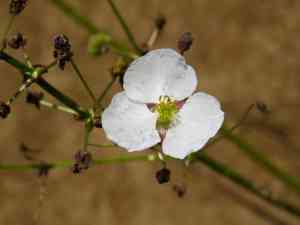
Nipplebract arrowhead (Sagittaria papillosa)
Also known as: N/A
The plant you're describing is the Nipplebract Arrowhead, a freshwater aquatic species. It thrives in shallow, slow-moving waters and is easily recognized by its arrowhead-shaped leaves that rise above the water's surface. The plant produces distinctive white, textured flowers on long, slender stalks. Its tuberous roots help stabilize sediment and offer essential habitat in aquatic environments.
In This Article
Attributes of Nipplebract arrowhead
Lifespan
Perennial
Plant Type
Herb
Plant Height
40 - 100 cm
Spread
N/A
Leaf Color
Green
Flower Size
1 - 2 cm
Flower Color
White
Images of Nipplebract arrowhead
Quickly Identify Nipplebract arrowhead
1
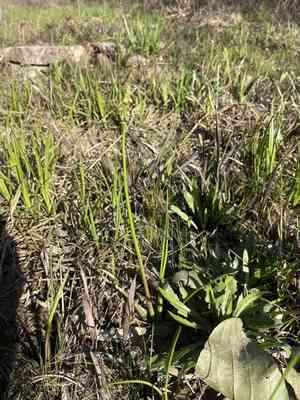
The plant can be identified by its arrowhead-shaped leaves, which are broad and slightly hairy on the surface. Its flowers are typical of the Sagittaria genus, small and white with three petals.
Scientific Classification of Nipplebract arrowhead
Phylum
Vascular plants
Class
Monocotyledons
Order
Alismatales
Family
Water-plantain
Genus
Arrowheads
Species
Nipplebract arrowhead
Planting and Growing of Nipplebract arrowhead
Care Difficulty
Easy
Watering Schedule
Every 2 days
Sunlight Requirements
Full sun
Sunshine Duration
6-10 hours
Ideal Temperature
65-75℉
Soil Type
Potting Mix, Peat Mix
Soil pH
6.5-7.5
Fertilizer Type
Balanced
Pruning Season
Spring, Summer
Pruning Area
Branches, Leaves
Pruning Frequency
2 times a year
Repotting Season
Spring
Pot Type
Plastic, Ceramic
 How to Water Nipplebract arrowhead?
When watering Sagittaria papillosa, aim for about 500 milliliters per session. The key is to ensure the soil is thoroughly moistened but not waterlogged, allowing water to drain freely while maintaining consistent moisture in the root zone. It's important to strike a balance that promotes healthy growth without suffocating the roots.
What are the symptoms of an underwatered Nipplebract arrowhead?
›
What should I do if my Nipplebract arrowhead is not getting enough water?
›
What are the symptoms of an overwatered Nipplebract arrowhead?
›
How to save an overwatered Nipplebract arrowhead?
›
 What Are the Sunlight Requirements for Nipplebract arrowhead?
Partial sun ensures the plant gets enough light for photosynthesis without the risk of scorching. This promotes healthy growth, vibrant leaves, and increased resistance against diseases.
What is the ideal light for Sagittaria papillosa?
›
How can you ensure Sagittaria papillosa gets the right light?
›
What benefits does ideal light bring to Sagittaria papillosa?
›
 What Is the Ideal Temperature Range for Nipplebract arrowhead?
The ideal temperature range for Sagittaria papillosa is between 65°F to 75°F. This aquatic plant thrives in moderate warm temperatures that mimic its natural habitat. Maintaining temperatures within this range ensures optimal growth and health, facilitating vibrant leaves and strong root systems.
 What Soil is Best for Nipplebract arrowhead?
Sagittaria papillosa thrives in moist environments. The soil must retain water effectively to mimic its natural, wetland habitat, promoting healthy growth and robust foliage. Rich, loam soils are ideal as they provide a steady supply of essential nutrients. This ensures steady plant development and prevents nutrient deficiency symptoms like yellowing leaves. While moisture is crucial, proper drainage is vital to avoid root rot. A balance between moisture retention and drainage is necessary, making loam and sandy loam superior choices.
 How to Fertilize Nipplebract arrowhead?
For Sagittaria papillosa, the amount of fertilizer is crucial for optimal growth. Use about one-quarter of the recommended amount on the packaging for liquid fertilizer, reducing to prevent over-fertilization. For solid fertilizers, about 50 grams per square meter is recommended, ensuring it's well-distributed across the soil surface.
 How to Prune Nipplebract arrowhead?
Begin by removing any dead or yellowing leaves at the base of the plant. This will improve the plant's aesthetics and allow it to direct energy to healthier growth. Identify sections of the plant that have become overgrown and cut them back to maintain a tidy appearance. Be sure not to remove more than one-third of the plant at a time to avoid stress. Regularly check the plant's shape and symmetry. Trim back any shoots that disrupt the desired form to encourage an even and balanced growth pattern.
More About Pruning Techniques→
 How to Propagate Nipplebract arrowhead plant?
1
Collect seeds from mature Sagittaria papillosa plants. Clean them to remove debris and store them in a cool, dry place until planting. Before sowing, soak the seeds in water overnight to enhance germination rates.
2
Carefully dig around the base of the plant using a garden fork, lifting it gently from the ground. Remove excess soil and use a spade to divide the root mass into sections, ensuring each section has roots and shoots.
3
Plant seedlings or divided sections in prepared soil, ensuring they are at the appropriate depth. Water thoroughly but avoid over-saturating the soil, as this can lead to root rot. Maintain soil moisture to support initial growth.
 How to Repot Nipplebract arrowhead plant?
1
Sagittaria papillosa signals it's time for a new pot when its roots start encircling the base of the pot or growth seems stunted. Repotting in spring or autumn offers the plant a fresh start without the stress of extreme weather.
2
Select a pot one size larger with good drainage holes. Adequate drainage ensures excess water doesn't saturate the roots, reducing the risk of rot and promoting healthy growth. A terracotta pot is often ideal for allowing breathing.
3
Opt for a loamy, well-draining mix to provide aeration and prevent waterlogged conditions. This type of soil balances moisture retention with oxygen access, catering to the natural growing conditions of Sagittaria papillosa.
Learn More About Nipplebract arrowhead Diseases
Anthracnose
Bacterial Leaf Spot
Bacterial Soft Rot
Bacterial Wilt
Cyst Nematode
Damping-off
Downy Mildew
Drought Stress
Fusarium Wilt
Gray Mold
Leaf Spot
Mosaic
Nutrient Deficiency
Nutrient Toxicity
Powdery Mildew
Root Rot
Root-knot Nematode
Rusts
Sooty Mold
Spider Mites
Temperature Stress
Thrips Damage
White Mold



