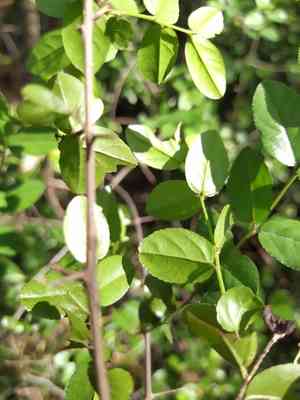
Pauper's-tea (Sageretia thea)
Also known as: Mock Buckthorn, Bird Plum, Chinese Sweetplum, Chinese Tea
Pauper's-tea (Sageretia thea) is an evergreen shrub commonly cultivated for its leaves, which are used to make tea, particularly in India and southern China. This plant typically thrives in mountainous regions, forest edges, and hilly thickets.
In This Article
Attributes of Pauper's-tea
Lifespan
Perennial
Plant Type
Shrub
Plant Height
1.2 m to 3 m
Spread
30 cm to 90 cm
Leaf Color
Dark green
Flower Size
3 mm
Flower Color
Yellow Green
Images of Pauper's-tea
Quickly Identify Pauper's-tea
1
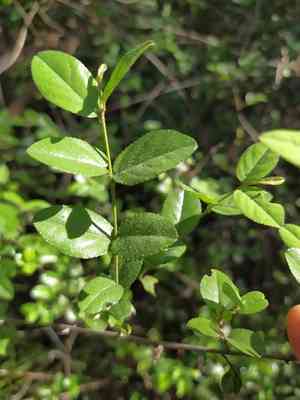
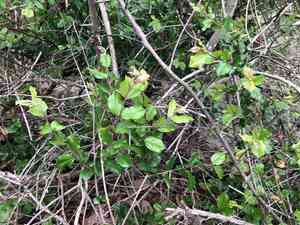
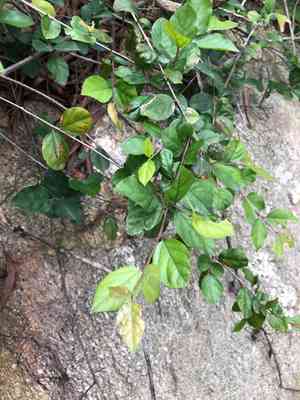
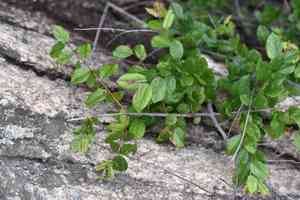
This plant can be recognized by its small, shiny, and leathery leaves which are oval to elliptical in shape. The leaves are 2-4 cm in length and finely serrated. The bark is smooth and brown in young plants, becoming rough with age.
Scientific Classification of Pauper's-tea
Phylum
Vascular plants
Class
Dicotyledons
Order
Roses, elms, figs, and allies
Family
Buckthorn
Genus
Mock buckthorn
Species
Pauper's-tea
Planting and Growing of Pauper's-tea
Care Difficulty
Easy
Watering Schedule
Every 2 days
Sunlight Requirements
Partial sun
Sunshine Duration
4-8 hours
Ideal Temperature
65-75℉
Soil Type
Potting Mix, Peat Mix
Soil pH
6.5-7.5
Fertilizer Type
Balanced
Pruning Season
Spring, Summer
Pruning Area
Branches, Leaves
Pruning Frequency
2 times a year
Repotting Season
Spring
Pot Type
Plastic, Terracotta
 How to Water Pauper's-tea?
Sageretia thea, or Chinese sweet plum, appreciates thorough watering but doesn't like its roots sitting in water. Water until the soil is completely moist, allowing excess water to drain so the roots are not waterlogged.
What are the symptoms of an underwatered Pauper's-tea?
›
What should I do if my Pauper's-tea is not getting enough water?
›
What are the symptoms of an overwatered Pauper's-tea?
›
How to save an overwatered Pauper's-tea?
›
 What Are the Sunlight Requirements for Pauper's-tea?
Partial sun (4-6 hours of light) benefits Sageretia thea by offering sufficient energy for photosynthesis. Proper light levels prevent issues such as stress, leading to vibrant foliage and optimal growth.
More About Sunlight Requirements Techniques→
What is the ideal lighting solution for Sageretia thea?
›
What are the steps to achieve this balance?
›
What benefits does optimal lighting provide?
›
 What Is the Ideal Temperature Range for Pauper's-tea?
For optimal growth and health, Sageretia thea thrives best in environments where temperatures are consistently between 65°F and 75°F. This range supports active growth, healthy foliage, and overall vitality. When temperatures remain within this range, you can expect the plant to exhibit robust growth and resilience against common stress factors.
 What Soil is Best for Pauper's-tea?
Sageretia thea thrives in soil that allows for excellent drainage. Well-draining soil prevents waterlogging, which can lead to root rot, ensuring healthy root growth and plant development. This plant does well in soils with moderate nutrient levels. Balanced nutrients support vigorous growth and ensure the plant gets essential elements needed for photosynthesis and metabolism. While drainage is crucial, the soil should retain some moisture to keep the plant hydrated. Proper moisture levels help the plant in sustaining its lush foliage and vibrant appearance.
 How to Fertilize Pauper's-tea?
For Sageretia thea, the fertilizer should be applied moderately. Liquid fertilizers should be diluted to half their strength to avoid root burn. Typically, apply about 1/4 to 1/2 teaspoon per gallon of water, ensuring the soil can absorb nutrients efficiently without any damage.
 How to Prune Pauper's-tea?
While regular trimming is beneficial, excessive pruning can stress the plant. Remove no more than one-third of the overall growth at once to prevent shock and ensure robust recovery. Hydration is crucial after cutting. Thoroughly water your Sageretia thea after pruning to aid recovery. Avoid waterlogging the soil as excess water can lead to root issues.
More About Pruning Techniques→
 How to Propagate Pauper's-tea plant?
1
Begin by soaking Sageretia thea seeds in warm water for 24 hours to enhance germination. Prepare a seed tray with well-draining soil, sow the seeds, and cover lightly with soil. Maintain soil moisture until germination occurs.
2
Select healthy, non-flowering stems for cuttings, about 10-15 cm long. Ensure each cutting has at least two nodes. Remove lower leaves and treat the cut end with rooting hormone to enhance root development.
3
Place seed trays or cuttings under indirect sunlight in a warm environment. Ensure consistent moisture through misting and maintain high humidity, either by using a plastic dome or a makeshift greenhouse.
 How to Repot Pauper's-tea plant?
1
Sageretia thea shows signs of needing a repot when its roots start circling the pot or when water drains quickly through the soil without being absorbed. These indicate that the pot is becoming too tight for the roots, stunting further growth. Repotting in spring or early summer is ideal as this aligns with the plant's active growth period, encouraging efficient recovery and adaptation.
2
Select a pot that is one size larger than the current pot to allow ample room for root expansion. Pot material can vary, but breathable options like clay help prevent overwatering. Ensure the pot has proper drainage holes to facilitate water escape, thereby preventing root rot and promoting healthy aeration of the soil.
3
Choose a well-draining, loamy soil enriched with organic matter. This soil type retains essential moisture while preventing waterlogging, crucial for preventing root diseases. A soil mix that includes perlite or sand increases drainage efficiency, supporting robust plant development and ensuring healthy nutrient uptake.



