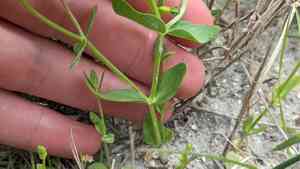
Sand rose gentian (Sabatia arenicola)
Also known as: Seaside Rose Gentian, Sandhill Sabatia
The sand rose gentian (Sabatia arenicola) is a perennial native to sandy coastal environments, thriving in well-drained soils. Its survival is bolstered by striking pink flowers that attract pollinators. Adaptations include slender stems and narrow leaves, which help conserve moisture in the challenging conditions of shifting dunes and salty air.
In This Article
Attributes of Sand rose gentian
Lifespan
Annual
Plant Type
Herb
Plant Height
15-30 cm
Spread
10-20 cm
Leaf Color
Green
Flower Size
2-4 cm
Flower Color
Pink or white with yellow center
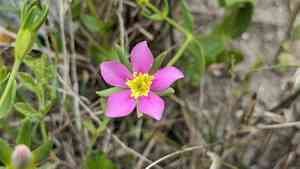
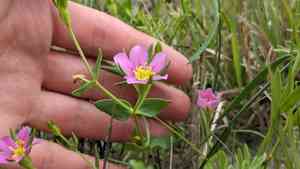
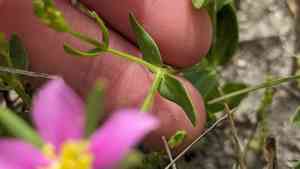
Images of Sand rose gentian

Quickly Identify Sand rose gentian
1
Sabatia arenicola can be identified by its delicate pink to white flowers with a distinct yellow center. The flowers are usually star-shaped with five petals. The plant often grows low to the ground, and its leaves are lance-shaped and opposite.
Scientific Classification of Sand rose gentian
Phylum
Vascular plants
Class
Dicotyledons
Order
Gentianales
Family
Gentian
Genus
Rose gentians
Species
Sand rose gentian
Planting and Growing of Sand rose gentian
Care Difficulty
Hard
Watering Schedule
Every 2 days
Sunlight Requirements
Full sun
Sunshine Duration
6-10 hours
Ideal Temperature
65-75℉
Soil Type
Potting Mix, Peat Mix
Soil pH
5.8-7
Fertilizer Type
Balanced
Pruning Season
Spring, Summer
Pruning Area
Branches, Leaves
Pruning Frequency
Once a year
Repotting Season
Spring
Pot Type
Plastic, Ceramic
 How to Water Sand rose gentian?
When watering Sabatia arenicola, ensure that the soil is evenly moist but not waterlogged. You should provide approximately 250 milliliters of water, allowing it to seep through the soil. This creates a damp environment resembling its natural habitat while ensuring proper drainage.
What are the symptoms of an underwatered Sand rose gentian?
›
What should I do if my Sand rose gentian is not getting enough water?
›
What are the symptoms of an overwatered Sand rose gentian?
›
How to save an overwatered Sand rose gentian?
›
 What Are the Sunlight Requirements for Sand rose gentian?
Sabatia arenicola prefers full to partial sunlight, typically 6 to 8 hours of exposure. Ideal light ensures vibrant blooming and healthy foliage, maximizing photosynthetic output and growth efficiency.
What is the best lighting condition?
›
How to achieve the ideal lighting condition?
›
What are the benefits of ideal lighting?
›
 What Is the Ideal Temperature Range for Sand rose gentian?
The ideal temperature range for Sabatia arenicola is between 65°F and 75°F. This range provides optimal conditions for growth and development, promoting healthy foliage and flowering. Maintaining this temperature range ensures the plant's metabolic processes occur efficiently, leading to robust health and vitality.
 What Soil is Best for Sand rose gentian?
Sabatia arenicola thrives best in well-drained soil environments where excess water can quickly seep away. This condition helps prevent root rot, ensuring that the plant receives sufficient aeration for optimal growth. This plant is adapted to nutrient-poor soils often found in its native habitats. The lack of rich nutrients means it faces less competition from other plants, allowing it to flourish with minimal interference. The plant requires a soil pH that is slightly acidic to neutral, optimally supporting its ability to absorb necessary nutrients. It helps maintain the plant's metabolic processes efficiently.
 How to Fertilize Sand rose gentian?
Sabatia arenicola needs careful attention to fertilizer amounts. Typically, for liquid fertilizers, providing a diluted solution with ratio of 1/4 of the recommended strength is optimal to avoid nutrient burn. For slow-release fertilizers, applying about 2 teaspoons per plant ensures steady nutrient availability without overwhelming the roots.
 How to Prune Sand rose gentian?
Begin by identifying any dead or diseased stems and remove them completely. Use clean, sharp pruning shears to avoid damaging the plant. Always make cuts at a slight angle, just above a node or a healthy bud. This method prevents water from pooling on the cuts, reducing the risk of disease. For Sabatia arenicola, focus on creating an open center to enhance airflow. To improve the aesthetic appearance and encourage a fuller plant, consider selectively thinning out crowded branches. This procedure also helps in distributing sunlight evenly across the plant, which is crucial for robust growth. Maintain a natural silhouette by stepping back frequently to assess the plant's shape during pruning.
More About Pruning Techniques→
 How to Propagate Sand rose gentian plant?
1
Gather seeds from mature Sabatia arenicola plants when the seed heads are dry. Ensure seeds are fully developed by checking their size and firmness. Store them in a dry, cool place until ready to plant.
2
Fill seed trays with a well-draining seed starter mix. Moisten the soil evenly but avoid over-watering, as excess moisture can lead to rot. Make shallow depressions in the soil for placing the seeds.
3
Select healthy stems for cuttings, each about 4-6 inches long. Remove any leaves from the lower half of the cutting. Dip the cut end into rooting hormone to encourage root growth, and plant it in moistened soil.
 How to Repot Sand rose gentian plant?
1
Signs that Sabatia arenicola needs repotting include roots growing out of the drainage holes and the plant becoming unstable in its pot. Ideally, repot in early spring or autumn to minimize stress.
2
Choose a pot that is one size larger than the current one, ensuring it has adequate drainage holes. A slightly bigger pot helps the plant grow without overwhelming its roots, promoting healthy development.
3
Opt for a well-draining sandy soil mix. The right soil ensures better aeration and prevents waterlogging, which is crucial for Sabatia arenicola's root health and growth.
Learn More About Sand rose gentian Diseases
Anthracnose
Bacterial Leaf Spot
Bacterial Wilt
Chemical Injury
Crown Gall
Cyst Nematode
Damping-off
Downy Mildew
Drought Stress
Fusarium Wilt
Gray Mold
Leaf Curl
Leaf Spot
Mosaic
Nutrient Deficiency
Nutrient Toxicity
Powdery Mildew
Root Rot
Root-knot Nematode
Rusts
Sooty Mold
Spider Mites
Temperature Stress
Thrips Damage
White Mold


