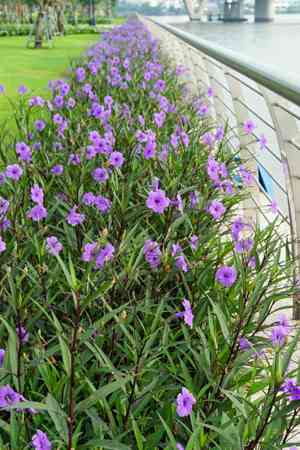
Mexican petunia (Ruellia simplex)
Also known as: Texas Petunia, Mexican blue bells, Britton's wild petunia
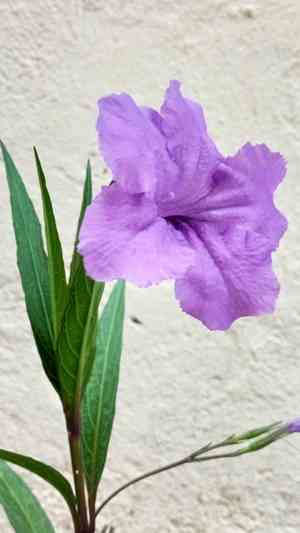
Ruellia simplex, commonly known as Mexican petunia, is an evergreen perennial herb notable for its wrinkled, trumpet-like purple blooms. Originally grown as an ornamental plant, it has a robust spreading nature that has led to its naturalization beyond its native Mexico. This aggressive growth has caused it to be labeled as an invasive species in numerous countries.
In This Article
Attributes of Mexican petunia
Lifespan
Perennial
Plant Type
Herb
Plant Height
91 cm
Spread
30 cm to 60 cm
Leaf Color
Green Purple
Flower Size
8 cm
Flower Color
Purple Lavender
Images of Mexican petunia
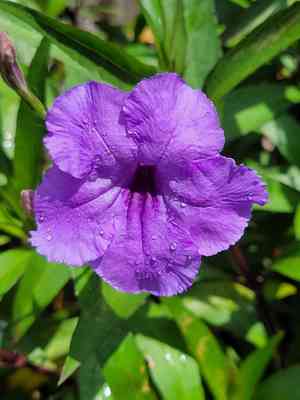
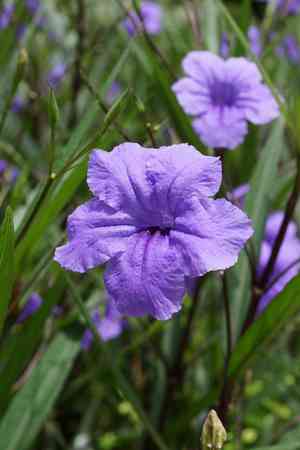
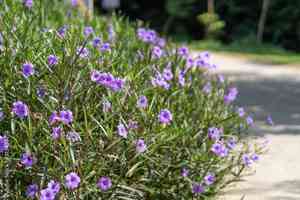
Quickly Identify Mexican petunia
1
Distinctive violet petunia-like flowers lasting one day, 2 inches (5 cm) in diameter.
2
Long, cylinder-like fruit capsules, 1 inch (2.54 cm) in length, with explosive seed dispersal.
3
Linear leaves, 6 to 12 inches (15 to 30 cm) long, dark green with purplish veins.
4
Stems up to 39 inches (100 cm) tall, branching from base with smooth texture.
5
Herbaceous perennial reaching 3-4 feet (90-120 cm) height, with glossy lance-shaped leaves.
Scientific Classification of Mexican petunia
Phylum
Vascular plants
Class
Dicotyledons
Order
Mints plantains olives and allies
Family
Acanthus
Genus
Wild petunias
Species
Mexican petunia
Planting and Growing of Mexican petunia
Care Difficulty
Easy
Watering Schedule
Every 8 days
Sunlight Requirements
Full sun
Sunshine Duration
4-6 hours
Ideal Temperature
70-85℉
Soil Type
Potting Mix, Peat Mix
Soil pH
6.5-7.5
Fertilizer Type
Balanced
Pruning Season
Spring, Summer
Pruning Area
Branches, Leaves
Pruning Frequency
2 times a year
Repotting Season
Spring
Pot Type
Plastic, Ceramic
 How to Water Mexican petunia?
When watering Ruellia simplex, aim to drench the soil thoroughly. Ensure water trickles out of the drainage holes, indicating the roots are accessible to the moisture they crave. This process usually requires around 200ml of water each session, considering typical pot sizes. Avoid allowing the pot to sit in excess water to prevent root rot.
More About Watering Techniques→
What are the symptoms of an underwatered Mexican petunia?
›
What should I do if my Mexican petunia is not getting enough water?
›
What are the symptoms of an overwatered Mexican petunia?
›
How to save an overwatered Mexican petunia?
›
 What Are the Sunlight Requirements for Mexican petunia?
Ruellia simplex benefits from partial to full sun, meaning it can adapt to full-day exposure as well as moderated sunlight. The ideal light range supports its dynamic blooming cycle and ensures vibrant, healthy foliage.
More About Sunlight Requirements Techniques→
What is the ideal lighting condition for Ruellia simplex?
›
How can I achieve the ideal lighting conditions for Ruellia simplex?
›
What are the benefits of providing Ruellia simplex with ideal lighting?
›
 What Is the Ideal Temperature Range for Mexican petunia?
For Ruellia simplex, maintaining an ideal temperature range of 70°F to 85°F is crucial. This range supports optimal growth and ensures the plant remains healthy. Within this temperature range, Ruellia simplex can effectively photosynthesize and grow, leading to lush foliage and vibrant blooms.
 What Soil is Best for Mexican petunia?
Ruellia simplex thrives in well-draining soil as it prevents root rot and ensures healthy growth. This type of soil avoids waterlogging, which could otherwise lead to root diseases. Incorporating nutrient-rich compost is essential for vibrant growth. Compost not only provides necessary nutrients but also improves soil structure and moisture retention. Moderately fertile soil is beneficial as it supports the plant’s growth without risking nutrient overload. It strikes a balance, supplying nutrients essential for healthy foliage and blooms.
More About Soil→
 How to Fertilize Mexican petunia?
For Ruellia simplex, a balanced all-purpose fertilizer with an N-P-K ratio of 10-10-10 should be used. Mix the liquid fertilizer at half the recommended strength to prevent over-fertilization. For slow-release fertilizers, use 1 to 1.5 lbs per 100 square feet.
More About Fertilizing Techniques→
 How to Prune Mexican petunia?
Start by locating any dead or woody stems. These can be pruned back to the base to encourage new growth and rejuvenate the plant. When trimming healthy growth, always cut above a leaf node. This encourages new branches to form below the cut, promoting fuller and bushier foliage. Ruellia simplex grows rapidly and can become unruly. Prune to shape the plant, ensuring a pleasing form and preventing it from overtaking neighboring plants.
More About Pruning Techniques→
 How to Propagate Mexican petunia plant?
1
Begin by soaking the seeds in water overnight to improve germination rates. This helps to break down any seed dormancy and allows water to penetrate the seed coat more effectively, enhancing the chances of successful sprouting.
2
Cut a 4-6 inch long piece from a non-flowering stem. Make a clean cut just below a leaf node, as this is where roots are most likely to develop. Remove the leaves from the bottom half of the cutting to reduce moisture loss.
3
For seeds, plant them in a well-draining soil mix and cover lightly with soil. For cuttings, dip the cut end in rooting hormone and insert it into a pot filled with a sterile rooting medium. Water the medium lightly and ensure it remains moist.
 How to Repot Mexican petunia plant?
1
Ruellia simplex requires repotting when its roots start growing out from the drainage holes or become root-bound. Additionally, if you notice a significant decrease in growth rate or water retention, it's time to consider a larger pot. The best season for repotting is during its active growth phase in Spring or Summer when the plant can quickly adapt to a new environment.
2
Select a pot that is just slightly larger than the current one; about 1-2 inches in diameter is ideal. Ensure the pot has ample drainage holes to prevent waterlogging, which can lead to root rot. A well-sized container helps maintain optimal moisture levels and gives roots adequate room to grow, promoting healthier and more vibrant foliage.
3
Opt for a well-draining potting mix that can retain moisture without becoming waterlogged. This typically includes components like perlite or sand mixed with standard potting soil. Such soil ensures that the roots receive adequate aeration and reduces the risk of fungal diseases, promoting a robust root system and overall plant health.
Learn More About Mexican petunia Diseases
Anthracnose
Bacterial Leaf Spot
Bacterial Wilt
Chemical Injury
Crown Gall
Damping-off
Downy Mildew
Drought Stress
Fusarium Wilt
Gray Mold
Leaf Curl
Leaf Spot
Mosaic
Nutrient Deficiency
Nutrient Toxicity
Powdery Mildew
Root Rot
Root-knot Nematode
Rusts
Sooty Mold
Spider Mites
Temperature Stress
Thrips Damage
White Mold



