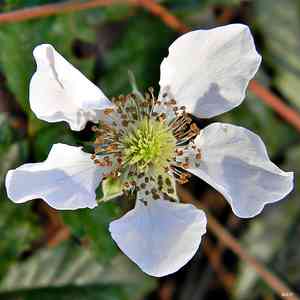
Southern dewberry (Rubus trivialis)
Also known as: Southern Dewberry, Slender Dewberry
The southern dewberry, or Rubus trivialis, hails from the southeastern United States. This plant produces dark blue to black berries that are sweet and can be enjoyed fresh or used in making jams, pies, and wines. Additionally, its leaves can be dried and brewed into tea, which is sometimes used for its potential health benefits, such as soothing sore throats and aiding digestion.
In This Article
Attributes of Southern dewberry
Lifespan
Perennial
Plant Type
Shrub, Vine
Plant Height
30 cm to 70 cm
Spread
4.5 m
Leaf Color
Green Blue Red
Flower Size
2.5 cm to 5 cm
Flower Color
White
Images of Southern dewberry


Quickly Identify Southern dewberry
1
Trailing vines instead of upright growth, resembling a dewberry.
2
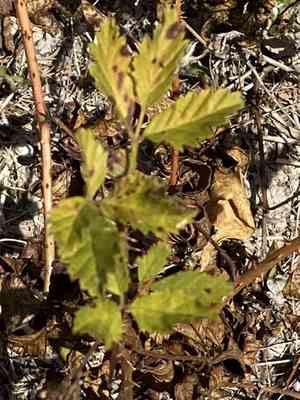
Compound leaves with serrated edges, dark green transitioning to reddish in winter.
3
Deep black fruits in clusters, up to 1 inch (2.5 cm) in diameter.
4
White flowers with five petals, 1-1.5 inches (2.5-3.8 cm) in diameter.
5
Stems up to 15 feet (4.6 meters) long, with sharp bristles and prickles.
Scientific Classification of Southern dewberry
Phylum
Vascular plants
Class
Dicotyledons
Order
Rosales
Family
Rose
Genus
Brambles
Species
Southern dewberry
Planting and Growing of Southern dewberry
Care Difficulty
Easy
Watering Schedule
Every 8 days
Sunlight Requirements
Full sun
Sunshine Duration
6-10 hours
Ideal Temperature
60-75℉
Soil Type
Potting Mix, Peat Mix
Soil pH
5.5-7.5
Fertilizer Type
Balanced
Pruning Season
Spring, Summer
Pruning Area
Branches, Leaves
Pruning Frequency
2 times a year
Repotting Season
Spring
Pot Type
Plastic, Ceramic
 How to Water Southern dewberry?
Rubus trivialis prefers a moderately moist environment. Ensure the soil is consistently moist but not waterlogged. Water deeply, so that the soil is moistened to a depth of at least 6 inches, allowing the roots to access much-needed hydration.
What are the symptoms of an underwatered Southern dewberry?
›
What should I do if my Southern dewberry is not getting enough water?
›
What are the symptoms of an overwatered Southern dewberry?
›
How to save an overwatered Southern dewberry?
›
 What Are the Sunlight Requirements for Southern dewberry?
Rubus trivialis ideally needs 6 to 8 hours of full to partial sun, enhancing its growth and fruiting. Adequate light ensures optimal energy for robust vegetation and increased fruit yield.
How much sunlight does Rubus trivialis need?
›
Are there alternative solutions for insufficient sunlight?
›
What are the benefits of ideal sunlight exposure for Rubus trivialis?
›
 What Is the Ideal Temperature Range for Southern dewberry?
Rubus trivialis thrives best in temperatures ranging from 60°F to 75°F. This range supports optimal photosynthesis processes, leading to vigorous growth and healthy foliage. Ensuring the temperature stays within this range allows the plant to maximize nutrient absorption and growth rates, leading to stronger root systems and abundant fruit production.
 What Soil is Best for Southern dewberry?
Rubus trivialis thrives in well-drained soils, which help prevent root rot by ensuring excess water doesn't linger. This is crucial for maintaining healthy root systems and promoting vigorous plant growth. A soil rich in organic matter provides essential nutrients for Rubus trivialis, enhancing fruit production and plant health. Amend with compost or well-rotted manure for best results. While well-drained, the soil should also retain some moisture to sustain the plant during dry periods. This balance helps prevent stress and supports continuous growth and fruiting.
 How to Fertilize Southern dewberry?
For Rubus trivialis, typically known as Southern Dewberry, it's essential to apply fertilizer judiciously. Use a balanced 10-10-10 NPK fertilizer for this plant. For liquid fertilizers, ensure you apply approximately 1/4 cup per plant, mixed in water as directed on the label. For granular or slow-release fertilizers, use around 1/2 cup per plant dispersed evenly across the soil surface.
 How to Prune Southern dewberry?
Start by examining the plant for any dead or diseased wood. These can easily be identified by their brittle texture and absence of leaves. Carefully remove these sections to prevent disease spread and create space for new growth. Trim back any long, overgrown branches to keep the plant in a manageable shape. This also helps improve air circulation and sunlight penetration, crucial for a healthy Rubus trivialis. Focus on pruning techniques that open up the center of the plant and remove any growth shooting out horizontally. This will channel energy towards upward growth and encourage more fruiting potential.
 How to Propagate Southern dewberry plant?
1
Collect ripe seeds from the fruit of Rubus trivialis in the early autumn. Clean them thoroughly and allow them to dry. Sow the seeds on well-draining soil and cover lightly. Place the tray in a warm area with indirect sunlight to encourage germination.
2
Select healthy, disease-free stems for cutting propagation during late spring. Cut 6 to 8-inch sections, ensuring each cutting has at least three nodes. Remove the leaves from the bottom half and dip the cut end in rooting hormone before planting it in moist potting soil.
3
For layering propagation, choose an existing healthy cane and bend it gently toward the ground in spring. Bury a section of the stem under the soil, leaving the growing tip exposed. Secure the buried part with a U-shaped pin and water regularly until roots establish.
 How to Repot Southern dewberry plant?
1
Rubus trivialis should be repotted when you notice roots poking out of the drainage holes or when the plant's growth has noticeably slowed despite regular care. Repot during early spring or autumn for best results, allowing the plant to establish in its new pot before its active growing season.
2
Select a pot that is one size larger than the current one, with ample drainage holes. A slightly larger pot encourages healthy root growth without risking overwatering and root rot, ensuring the plant has room to expand while maintaining proper moisture levels.
3
Use a well-draining, nutrient-rich soil mix that retains just enough moisture but also allows excess water to escape easily. This kind of soil prevents waterlogging, provides essential nutrients for growth, and mimics the plant's natural habitat, promoting healthy and robust plant development.
Learn More About Southern dewberry Diseases
Anthracnose
Bacterial Leaf Spot
Bacterial Wilt
Crown Gall
Damping-off
Downy Mildew
Drought Stress
Fusarium Wilt
Gray Mold
Leaf Curl
Leaf Spot
Mosaic
Nutrient Deficiency
Nutrient Toxicity
Powdery Mildew
Root Rot
Root-knot Nematode
Rusts
Sooty Mold
Spider Mites
Temperature Stress
Thrips Damage
White Mold
Chemical Injury



