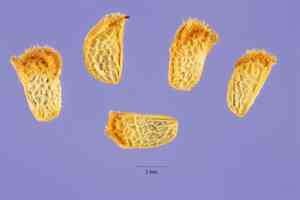
Purple-flowering raspberry (Rubus odoratus)
Also known as: Thimbleberry, Sweet-scented bramble, Flowering raspberry
The purple-flowering raspberry, also known as Rubus odoratus or thimbleberry, is a raspberry bush notable for its large, eye-catching flowers and lack of thorns. Throughout the summer, it blooms continuously and eventually produces small, tart, yet edible berries. Additionally, this plant can spread widely, forming extensive thickets.
In This Article
Attributes of Purple-flowering raspberry
Lifespan
Perennial
Plant Type
Shrub
Plant Height
3 m
Spread
1.8 m to 3.5 m
Leaf Color
Green
Flower Size
3 cm to 5 cm
Flower Color
Pink Purple Lavender
Images of Purple-flowering raspberry
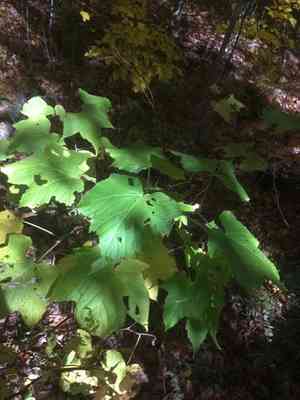
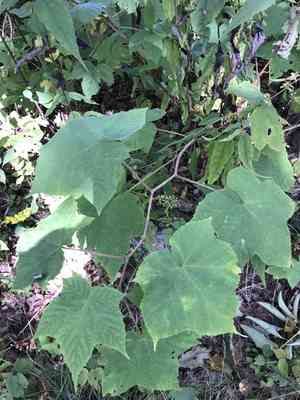
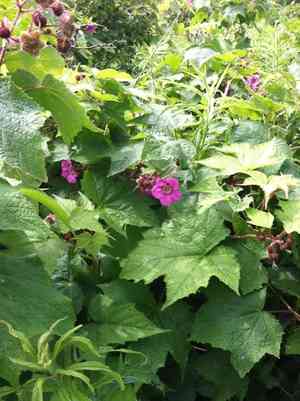
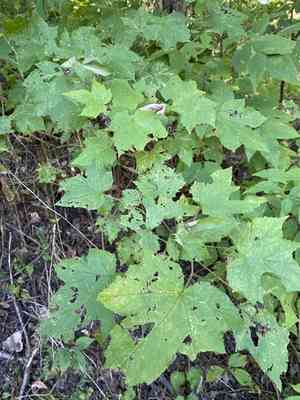
Quickly Identify Purple-flowering raspberry
1
Large palmate leaves with deep lobes and medium green hue transitioning to golden in autumn.
2
Rose-like fragrant flowers resembling roses, with vibrant, long-lasting blooms.
3
Red, cup-shaped berries with fleshy texture, prominent against foliage, and containing multiple seeds.
4
Hairy stems devoid of prickles, peeling bark with cedar-like scent, supporting bushy appearance.
5
Palmate, 5-lobed leaves with serrated edges, medium green changing to pale yellow, and distinctive veining pattern.
Scientific Classification of Purple-flowering raspberry
Phylum
Vascular plants
Class
Dicotyledons
Order
Rosales
Family
Rose
Genus
Brambles
Species
Purple-flowering raspberry
Planting and Growing of Purple-flowering raspberry
Care Difficulty
Easy
Watering Schedule
Every 4 days
Sunlight Requirements
Partial sun
Sunshine Duration
4-8 hours
Ideal Temperature
60-75℉
Soil Type
Potting Mix, Peat Mix
Soil pH
6.5-7.5
Fertilizer Type
Balanced
Pruning Season
Spring, Summer
Pruning Area
Branches, Leaves
Pruning Frequency
2 times a year
Repotting Season
Spring
Pot Type
Plastic, Ceramic
 How to Water Purple-flowering raspberry?
For Rubus odoratus, the watering amount should generally be about 500 milliliters. Ensure that the water penetrates deep into the soil, reaching the roots without causing pooling on the surface. The goal is to maintain a consistently moist environment, but not to excess. Use a finger test to check soil dampness: if the top inch feels dry, it’s time to water.
What are the symptoms of an underwatered Purple-flowering raspberry?
›
What should I do if my Purple-flowering raspberry is not getting enough water?
›
What are the symptoms of an overwatered Purple-flowering raspberry?
›
How to save an overwatered Purple-flowering raspberry?
›
 What Are the Sunlight Requirements for Purple-flowering raspberry?
Rubus odoratus prefers partial sun to full shade conditions. Ideal lighting enhances its bloom density and foliage quality, offering vibrant and healthy growth.
More About Sunlight Requirements Techniques→
What is the best location for Rubus odoratus?
›
How can I ensure optimal light conditions for this plant?
›
What are the benefits of providing ideal sunlight conditions?
›
 What Is the Ideal Temperature Range for Purple-flowering raspberry?
For optimal growth, Rubus odoratus thrives in temperatures ranging from 60°F to 75°F. This range provides the plant with a stable environment that promotes healthy leaf growth and abundant flowering. Maintaining these temperatures helps ensure that the plant's metabolic processes function efficiently.
 What Soil is Best for Purple-flowering raspberry?
Rubus odoratus thrives in soil that is rich in organic matter. This ensures the plant gets sufficient nutrients, which leads to vibrant blooms and healthy foliage. The plant needs soil that offers good drainage. This prevents waterlogging, protecting the roots from rot and ensuring vigorous growth. Consistent moisture is crucial for Rubus odoratus without causing saturation. This maintains plant hydration and supports continuous growth.
More About Soil→
 How to Fertilize Purple-flowering raspberry?
Rubus odoratus, commonly known as the purple-flowering raspberry, thrives with moderate fertilization. Liquid fertilizers should be applied at half the recommended strength to avoid nitrogen burn and ensure a balanced nutrient supply. A general-purpose liquid fertilizer with an N-P-K ratio around 10-10-10 or 20-20-20 is ideal. For slow-release granular types, use approximately one tablespoon per square foot. Adjust the amount based on plant size and growth phase.
More About Fertilizing Techniques→
 How to Prune Purple-flowering raspberry?
When pruning Rubus odoratus, focus on removing dead, damaged, or diseased canes. Cut these canes down to their base. Next, remove overcrowded stems to improve air circulation, which helps prevent fungal diseases. Always use sharp, clean pruning shears to make clean cuts just above a leaf node or bud. To maintain an attractive form, selectively prune back the tips of vigorous branches. This not only enhances the plant's shape but also stimulates lateral growth, resulting in a fuller appearance. Be sure to thin out excess new growth in late spring to prevent the plant from becoming too dense.
More About Pruning Techniques→
 How to Propagate Purple-flowering raspberry plant?
1
To propagate Rubus odoratus by seed, collect seeds from ripe fruit in late summer. Clean and dry the seeds thoroughly before storage to ensure successful germination when sown in spring.
2
In early summer, take semi-hardwood cuttings from healthy plants. Ensure each cutting is about 10-15 cm long and has a few nodes. Remove the lower leaves and dip the cut end in rooting hormone before planting.
3
In early spring, dig up and carefully separate the root clumps of established plants. Ensure each division has roots and shoots. Replant immediately, spacing them adequately to allow for growth.
 How to Repot Purple-flowering raspberry plant?
1
Rubus odoratus signals that repotting is needed when its roots start to emerge from the drainage holes, indicating the plant needs more room to grow. Repotting is ideal in spring or autumn when the plant is not in active growth, reducing transplant shock.
2
Choose a pot that is 2-3 inches larger in diameter than the current one to provide sufficient space for root expansion. Selecting a pot with proper drainage holes is crucial as it prevents waterlogging and root rot, creating a healthier environment for the plant.
3
Opt for a well-draining loamy soil mix, which retains necessary nutrients and moisture without becoming waterlogged. This type of soil provides the perfect balance of air, moisture, and support for the Rubus odoratus's roots, promoting healthy growth and flowering.



