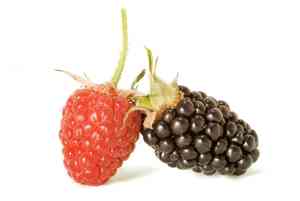
Kittatinny blackberry (Rubus bellobatus)
Also known as: None
The American wild plum (*Prunus americana*) is a flowering plant in the rose family native to North America. It can be found in both eastern and central Canada (including Ontario, Québec, and Nova Scotia) as well as the eastern and central United States, ranging from Maine to North Carolina and extending westward to Oklahoma, Kansas, and Minnesota.
In This Article
Attributes of Kittatinny blackberry
Lifespan
Perennial
Plant Type
Shrub
Plant Height
Approximately 1 to 2 meters
Spread
Varies, generally sprawling or vine-like
Leaf Color
Green
Flower Size
1 to 2 centimeters
Flower Color
White or pink
Images of Kittatinny blackberry
Quickly Identify Kittatinny blackberry
1
The plant can be identified by its thorny stems, compound leaves with serrated edges, and small, white or pink flowers that eventually turn into edible berries.
Scientific Classification of Kittatinny blackberry
Phylum
Vascular plants
Class
Dicotyledons
Order
Rosales
Family
Rose
Genus
Brambles
Species
Kittatinny blackberry
Planting and Growing of Kittatinny blackberry
Care Difficulty
Moderate
Watering Schedule
Every 2 days
Sunlight Requirements
Partial sun
Sunshine Duration
6-8 hours
Ideal Temperature
55-75℉
Soil Type
Potting Mix, Peat Mix
Soil pH
6-7.5
Fertilizer Type
Balanced
Pruning Season
Spring, Summer
Pruning Area
Branches, Leaves
Pruning Frequency
2 times a year
Repotting Season
Spring
Pot Type
Plastic, Ceramic
 How to Water Kittatinny blackberry?
For Rubus bellobatus, it's essential to water until the soil feels evenly moist but not soggy. Typically, this equates to around 500 milliliters of water per session, ensuring the moisture reaches the root zone effectively. Overwatering or allowing the roots to stay submerged can cause root rot, so monitor the moisture levels closely.
What are the symptoms of an underwatered Kittatinny blackberry?
›
What should I do if my Kittatinny blackberry is not getting enough water?
›
What are the symptoms of an overwatered Kittatinny blackberry?
›
How to save an overwatered Kittatinny blackberry?
›
 What Are the Sunlight Requirements for Kittatinny blackberry?
Rubus bellobatus grows well in partial to full sun settings. Ideal light conditions result in increased fruit production and healthier foliage, benefiting from a balance of sun exposure and shade.
How much sunlight does Rubus bellobatus need?
›
What solutions are available for optimizing its sunlight exposure?
›
What are the benefits of proper lighting conditions?
›
 What Is the Ideal Temperature Range for Kittatinny blackberry?
Rubus bellobatus thrives in cooler climates, with an ideal temperature range between 55°F and 75°F. This range supports optimal physiological functions and encourages balanced growth and fruit production. Maintaining this temperature ensures the plant’s metabolic processes, such as photosynthesis and respiration, are not hindered by temperature-induced stresses. A consistent climate within this range will help avoid potential stress, preserving plant vitality.
 What Soil is Best for Kittatinny blackberry?
Rubus bellobatus thrives in soil with excellent drainage, preventing waterlogging which can harm roots. Well-drained soils help avoid root rot, keeping the plant healthy and robust. A soil rich in organic matter, like compost or well-rotted manure, provides essential nutrients, boosting growth and plant vigor. Nutrient-dense soil enhances flowering and berry production. While Rubus bellobatus prefers well-draining conditions, it also benefits from soil that retains consistent moisture levels. Mulching can help regulate moisture, ensuring steady growth and fruit yields.
 How to Fertilize Kittatinny blackberry?
For Rubus bellobatus, apply a balanced fertilizer with an NPK ratio of 10-10-10. Use about 1/2 cup for each plant for solid fertilizers. For liquid fertilizers, mix according to package instructions, usually 1 tablespoon per gallon of water.
 How to Prune Kittatinny blackberry?
Ensure you are wearing protective gloves and suitable clothing when pruning as the plant can be thorny and may cause skin irritation. It’s crucial to maintain your safety while achieving the best pruning results. Over-pruning can stress the plant and reduce its fruit-bearing potential. Carefully decide on the branches that need removal, focusing mainly on dead, damaged, or crossing canes.
 How to Propagate Kittatinny blackberry plant?
1
Collect seeds from mature Rubus bellobatus fruits. Clean the seeds to remove any pulp residue and allow them to dry before planting.
2
Select healthy stems and take cuttings about 10-15 cm long. Remove any leaves from the lower half and dip the base in rooting hormone.
3
Carefully dig up the mature plant and divide the root clumps ensuring each division has a good root system attached. Replant immediately at the same depth as the original.
 How to Repot Kittatinny blackberry plant?
1
Look for signs like roots emerging from the drainage holes, soil that dries too quickly, or stunted growth. These are clear indicators that your Rubus bellobatus needs repotting, offering it more room to grow and thrive.
2
When selecting a new pot, opt for one that's 2-3 inches larger in diameter than the current one. This size provides adequate space for root expansion while preventing overwatering. A pot with drainage holes is essential to avoid waterlogging.
3
Select well-draining loamy soil that retains enough moisture yet prevents the roots from sitting in water. This soil type allows sufficient air exchange, promoting healthy root development and preventing root rot.
Toxicity
Ingestion, Dermal contact
WARNING
The judgment on toxicity and danger is for reference only. We DO NOT GUARANTEE any accuracy of such judgment. Therefore, you SHALL NOT rely on such judgment. It is IMPORTANT TO SEEK PROFESSIONAL ADVICE in advance when necessary.
Learn More About Kittatinny blackberry Diseases
Anthracnose
Bacterial Leaf Spot
Black Spot
Chemical Injury
Crown Gall
Damping-off
Downy Mildew
Drought Stress
Fusarium Wilt
Gray Mold
Leaf Curl
Leaf Spot
Mosaic
Nutrient Deficiency
Nutrient Toxicity
Powdery Mildew
Root Rot
Root-knot Nematode
Rusts
Sooty Mold
Spider Mites
Temperature Stress
Thrips Damage
White Mold



