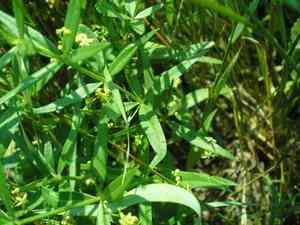
Dyer's madder (Rubia tinctorum)
Also known as: Madder, Dyer's Madder
Dyer's madder, or Rubia tinctorum, has been primarily valued for producing a bright red dye from its roots. Beyond textile dyeing, it has been historically significant in creating pigments for artists, especially noted in Renaissance paintings. Additionally, it has applications in traditional medicine for conditions like kidney stones. This perennial plant, known for its climbing nature, is often found in disturbed soils and hedge areas. While not typically noted for supporting butterfly larvae, it remains a plant of both cultural and practical importance.
In This Article
Attributes of Dyer's madder
Lifespan
Perennial
Plant Type
Herb
Plant Height
1 m
Spread
1 m
Leaf Color
Dark green
Flower Size
Around 2 to 4 mm (0.08 to 0.16 inches)
Flower Color
Yellow Green
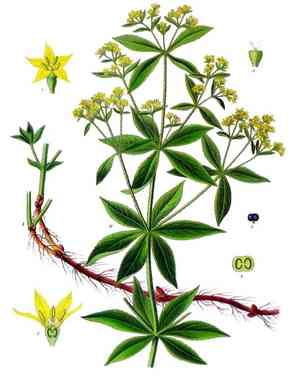
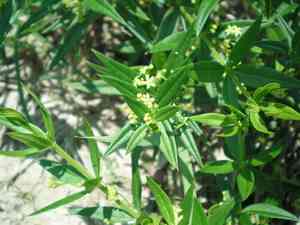
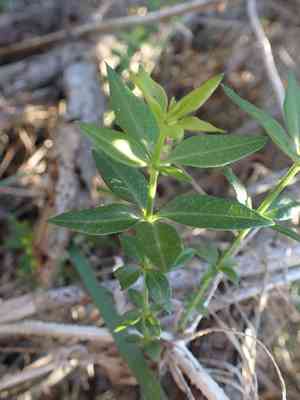
Images of Dyer's madder
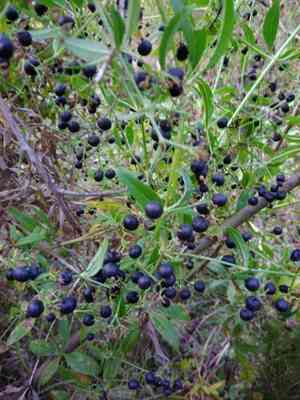
Quickly Identify Dyer's madder
1
Rubia tinctorum can be identified by its square stems, whorled leaves with rough edges, and small yellowish flowers which cluster in groups. Another distinguishing feature is the reddish root system.
Scientific Classification of Dyer's madder
Phylum
Vascular plants
Class
Dicotyledons
Order
Gentians, dogbanes, madders, and allies
Family
Madder
Genus
Rubia
Species
Dyer's madder
Planting and Growing of Dyer's madder
Care Difficulty
Easy
Watering Schedule
Every 5 days
Sunlight Requirements
Partial sun
Sunshine Duration
4-8 hours
Ideal Temperature
60-70℉
Soil Type
Potting Mix, Peat Mix
Soil pH
6.5-7.5
Fertilizer Type
Balanced
Pruning Season
Spring, Summer
Pruning Area
Branches, Leaves
Pruning Frequency
2 times a year
Repotting Season
Spring
Pot Type
Plastic, Terracotta
 How to Water Dyer's madder?
When it comes to Rubia tinctorum, the soil should be moist but not waterlogged. Watering about 200 ml each time ensures the soil is sufficiently hydrated without submerging the roots. Water until you see slight drainage from the pot, indicating the soil has absorbed enough moisture.
What are the symptoms of an underwatered Dyer's madder?
›
What should I do if my Dyer's madder is not getting enough water?
›
What are the symptoms of an overwatered Dyer's madder?
›
How to save an overwatered Dyer's madder?
›
 What Are the Sunlight Requirements for Dyer's madder?
Rubia tinctorum prefers partial sun, thriving in conditions where it receives 4 to 6 hours of light daily. Ideal lighting supports robust growth and enhances the plant's natural dye production abilities.
More About Sunlight Requirements Techniques→
How much sunlight does Rubia tinctorum need?
›
What are the solutions for achieving ideal lighting?
›
What are the benefits of ideal lighting for Rubia tinctorum?
›
 What Is the Ideal Temperature Range for Dyer's madder?
For Rubia tinctorum, the ideal temperature range is between 60°F and 70°F. This range allows the plant to thrive by optimizing photosynthesis and growth. Temperatures within this range promote the production of healthy foliage and vibrant root systems. Maintaining these temperatures can help prevent stress-related issues and ensure robust growth.
 What Soil is Best for Dyer's madder?
Rubia tinctorum thrives in well-drained soils that prevent waterlogging, which can lead to root rot. This condition ensures roots breathe and absorb nutrients effectively, promoting vigorous plant growth. The plant benefits from a nutrient-rich substrate that supplies essential minerals for robust growth. Such soils support the plant's dye production capability, enhancing the vividness of the extracted color. While needing well-drained conditions, a moderate moisture-retentive soil helps in maintaining a consistent hydration level, critical for sustained growth cycles and healthy root development.
 How to Fertilize Dyer's madder?
For Rubia tinctorum, it's essential to ensure the soil receives adequate nutrients without overwhelming the plant. Liquid fertilizers should be applied at a concentration of half the recommended strength to avoid root burn. A balanced 10-10-10 NPK fertilizer is ideal, ensuring each application maintains a coverage of one ounce per gallon of water used.
 How to Prune Dyer's madder?
First, look for any dead, diseased, or damaged stems. These should be removed at the base to prevent any disease from spreading and to encourage healthier growth. To ensure good air circulation around the plant, selectively prune excess stems and leaves. This helps reduce the risk of fungal diseases by improving air flow through the plant. Prune to shape the plant as desired. Typically, maintaining a bushy, compact shape is advantageous for both appearance and health. Cut back the longest branches to promote a dense growth habit.
More About Pruning Techniques→
 How to Propagate Dyer's madder plant?
1
Start by filling the seed trays with a seed starting mix. Sow the seeds thinly over the surface and lightly cover with soil. Water gently to avoid disturbing the seeds. Keep trays in a warm location with indirect sunlight until germination.
2
Select a healthy plant and carefully dig around the root area. Choose a root section with several growth nodes, then cut using a sterilized sharp knife. Plant the root cutting in a pot with moist soil and cover lightly.
3
Carefully dig up a mature plant during early spring. Gently separate the root clumps into several sections ensuring each has a set of roots and shoots. Replant these sections in a prepared bed.
 How to Repot Dyer's madder plant?
1
Rubia tinctorum should be repotted when its roots become bound, usually every 2-3 years. Signs that repotting is needed include roots growing out of drainage holes, slowed growth, or soil that dries out quickly despite regular watering.
2
Choose a pot that is slightly larger than the current one. The pot should have drainage holes to prevent waterlogging, which can lead to root rot. A terracotta pot is ideal as it allows the soil to breathe, promoting healthy root growth.
3
Opt for a well-draining loamy soil mix. This kind of soil retains necessary moisture while allowing excess water to drain away, preventing the roots from sitting in water, thus avoiding root rot and promoting vigorous plant health.
Learn More About Dyer's madder Diseases
Anthracnose
Bacterial Leaf Spot
Bacterial Soft Rot
Bacterial Wilt
Chemical Injury
Crown Gall
Cyst Nematode
Damping-off
Downy Mildew
Drought Stress
Fusarium Wilt
Gray Mold
Leaf Spot
Mosaic
Nutrient Deficiency
Nutrient Toxicity
Powdery Mildew
Root Rot
Root-knot Nematode
Rusts
Sooty Mold
Spider Mites
Temperature Stress
Thrips Damage
White Mold



