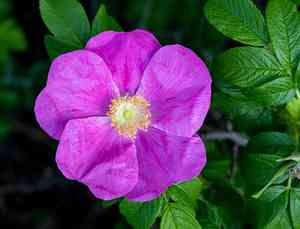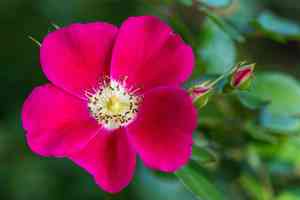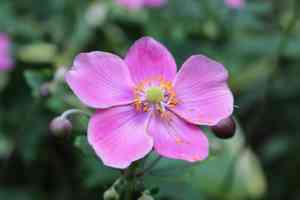
Alpine rose(Rosa pendulina)

Alpine rose (Rosa pendulina)

Also known as: Alpine Rose, Mountain Rose

Alpine rose (Rosa pendulina) is a deciduous perennial shrub that typically reaches heights of up to 1.8 meters. Known for its nearly thornless stems, it produces vibrant pink flowers with striking yellow centers. These fragrant blooms appear profusely in early summer, usually presenting as single flowers on each stem.

Growing conditions:
- **Light:** Prefers full sun but can tolerate partial shade.
- **Soil:** Thrives in well-drained, slightly acidic to neutral soils.
- **Water:** Requires moderate watering; drought-tolerant once established.
- **Climate:** Adapted to cold mountain climates and hardy in zones 4-7.

Characteristics:
- **Flowers:** Single, 5-petaled, aromatic.
- **Leaves:** Composed of 5-7 leaflets.
- **Fruit:** Produces small, red hips that last through winter.
- **Maintenance:** Low, with pruning recommended post-bloom to maintain shape.

Ideal for rock gardens, slopes, and naturalized landscapes, Alpine rose is a hardy and visually appealing addition to various garden settings.

Attributes of Alpine rose

Lifespan
Perennial
Plant Type
Vine, Shrub
Plant Height
50 cm to 2 m
Spread
1.5 m
Leaf Color
Green
Flower Size
4 cm
Flower Color
White Pink Purple

ForwardPlant - Identify plants with a snap

Identify and diagnose plants, get toxicity alerts, and explore safety guides for all types of fungi.

Try for Free

Images of Alpine rose

Alpine rose(Rosa pendulina)

Quickly Identify Alpine rose

1
Look for an erect, deciduous shrub with arching, thorny stems. Leaves are pinnate with serrated edges, and the flowers are typically solitary with five petals. The hips are elongated and turn bright red as they mature.

Scientific Classification of Alpine rose

Phylum
Vascular plants
Class
Dicotyledons
Order
Rosales
Family
Rose
Genus
Roses
Species
Alpine rose

Planting and Growing of Alpine rose

Care Difficulty
Easy
Watering Schedule
Every 4 days
Sunlight Requirements
Full sun
Sunshine Duration
6-10 hours
Ideal Temperature
60-70℉
Soil Type
Potting Mix, Peat Mix
Soil pH
6.5-7.5
Fertilizer Type
Balanced
Pruning Season
Spring, Summer
Pruning Area
Branches, Leaves
Pruning Frequency
2 times a year
Repotting Season
Spring
Pot Type
Plastic, Ceramic

water icon How to Water Alpine rose?

Rosa pendulina appreciates a generous watering session where the soil is soaked thoroughly, yet it should never sit in water. Aim for about 250 ml each time, ensuring that water penetrates down to reach deep roots. It's important not to waterlog the soil, as this can lead to root rot.
What are the symptoms of an underwatered Alpine rose?
What should I do if my Alpine rose is not getting enough water?
What are the symptoms of an overwatered Alpine rose?
How to save an overwatered Alpine rose?
More About Watering Techniques

sunlight icon What Are the Sunlight Requirements for Alpine rose?

Sunlight Requirements: Full sun, Partial sun
Duration of light: 6-8 hours daily
Partial to full sun is ideal; this range allows Rosa pendulina to harness adequate energy for profuse flowering, optimal photosynthesis, and robust growth.
What is the ideal light for Rosa pendulina?
How to ensure Rosa pendulina receives ideal sunlight?
What benefits does ideal light provide Rosa pendulina?
More About Sunlight Requirements Techniques

temperature icon What Is the Ideal Temperature Range for Alpine rose?

Ideal Temperature: 60 ~ 70℉
The ideal temperature range for Rosa pendulina, between 60°F and 70°F, supports optimal growth and flowering. These conditions help maintain healthy cellular processes and strong physiological functions, crucial for the rose's overall development.

soil icon What Soil is Best for Alpine rose?

Soil type: Loam, Sandy loam, Sandy soil
Soil PH: 6.5 ~ 7.5
Rosa pendulina thrives in well-drained soil, which prevents waterlogging and root rot. Good drainage facilitates the proper oxygen flow to the roots, ensuring healthy plant growth. This rose species prefers nutrient-rich soil. The presence of essential nutrients like nitrogen, phosphorus, and potassium enhances blooming and foliage health, making the flowers vibrant. Incorporating organic matter into the soil is beneficial for Rosa pendulina as it improves soil structure, aids in moisture retention, and provides a slow release of nutrients essential for the plant's development. More About Soil

fertilize icon How to Fertilize Alpine rose?

Fertilizer type: Balanced
For Rosa pendulina, it is important to stick to moderate fertilization. Liquid fertilizers should be diluted to half strength, applying about 250 ml per application. Solid fertilizers, such as slow-release granular forms, should be used sparingly, ensuring around 50 grams per application in the growth season. More About Fertilizing Techniques

prune icon How to Prune Alpine rose?

Pruning Time: Spring, Summer
Begin by cutting out any dead, damaged, or diseased wood from your Rosa pendulina. These parts do not contribute to the plant's growth and can lead to disease spreading if left unattended. Remove any crossing branches and open up the center of the plant. This facilitates better air circulation and sunlight penetration, reducing the risk of fungal diseases and promoting vigorous growth. Prune selectively to control the height and spread of Rosa pendulina. Cut back overly long canes to a healthy outward-facing bud, encouraging bushier growth and preventing legginess. More About Pruning Techniques

propagate icon How to Propagate Alpine rose plant?

Propagate Time: Spring,Late spring,Early spring
1
Harvest seeds from mature Rosa pendulina plants in late summer. Dry the seeds and store them in a cool, dry place until spring.
2
Select healthy stems and make a clean cut just below a node. Remove lower leaves to reduce water loss and enhance rooting.
3
Divide the root clumps in early spring when new growth appears. Ensure each division has roots and shoots for successful establishment.
More About Propagating Techniques

repot icon How to Repot Alpine rose plant?

Repotting frequency: Every 2-3 years
1
Rosa pendulina typically signals its need for repotting when its growth stagnates, roots start emerging through drainage holes, or soil compaction is observed. Spring is the optimal time as it aligns with the plant's natural growth cycle, ensuring less stress and allowing the plant to quickly establish in the new soil.
2
Select a pot that is at least 2 inches wider in diameter than the current one. A pot with proper drainage is essential to prevent waterlogging, which can lead to root rot. A terracotta or ceramic pot is preferable as it provides breathability and stability, beneficial for Rosa pendulina's root health and growth.
3
Opt for well-draining loamy soil to ensure proper aeration and moisture retention. Such a soil mix offers a balanced nutrient profile and is perfect for supporting Rosa pendulina's delicate root system, encouraging robust growth and vibrant blooms.

ForwardPlant - Identify plants with a snap

Find the best spots for them to optimize their health, simply using your phone.

Try for Free