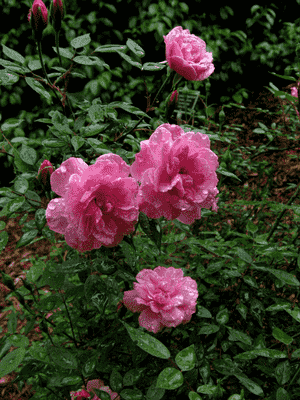
China rose (Rosa chinensis)
Also known as: Bengal rose
The China rose (Rosa chinensis) hails from Southwest China. Over centuries of cultivation, distinguishing wild plants from cultivated ones has become challenging. Known for its medium-sized flower clusters and extended blooming period, the China rose has played a crucial role in rose hybridization, contributing these desirable traits to many modern rose varieties.
In This Article
Attributes of China rose
Lifespan
Perennial
Plant Type
Shrub, Vine
Plant Height
1 m to 2 m
Spread
90 cm to 1.8 m
Leaf Color
Green
Flower Size
4 cm to 5 cm
Flower Color
Purple Red White Yellow Pink Cream Orange Gold
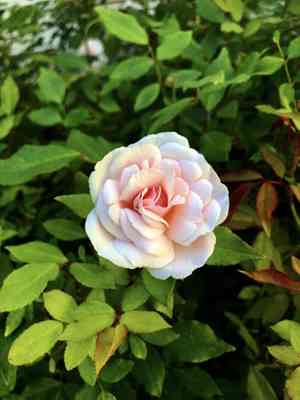
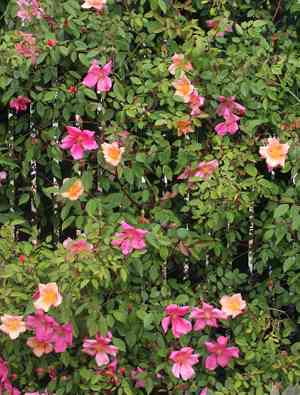
Images of China rose


Quickly Identify China rose
1
Distinct flowers arranged in a tight circular pattern, measuring 1-3 inches (2.5-7.6 cm) in diameter.
2
Slightly fragrant flowers with petals in colors ranging from white to red and purple, often in groups of four or five.
3
Red hips under 1 inch (2.54 cm) in diameter, rich in vitamin C, persisting into winter.
4
Compound leaves with 3-7 leaflets, hairy and serrated, reddish-purple when young, measuring 2-4.5 inches (5-11.5 cm) in length.
5
Color-changing stem from reddish-purple to green to brown, covered in prickles, 0.5 inches (1.27 cm) in diameter.
Scientific Classification of China rose
Phylum
Vascular plants
Class
Dicotyledons
Order
Roses, elms, figs, and allies
Family
Rose
Genus
Roses
Species
China rose
Planting and Growing of China rose
Care Difficulty
Moderate
Watering Schedule
Every 3 days
Sunlight Requirements
Full sun
Sunshine Duration
4-6 hours
Ideal Temperature
65-77℉
Soil Type
Potting Mix, Peat Mix
Soil pH
6.5-7.5
Fertilizer Type
Balanced
Pruning Season
Spring, Summer
Pruning Area
Branches, Leaves
Pruning Frequency
2 times a year
Repotting Season
Spring
Pot Type
Plastic, Ceramic
 How to Water China rose?
Rosa chinensis, commonly known as the China Rose, thrives best when its soil is kept consistently moist but not waterlogged. This means ensuring about 500 ml of water per session, enough to thoroughly saturate the root zone without flooding the pot, mimicking a natural, gentle rainfall.
More About Watering Techniques→
What are the symptoms of an underwatered China rose?
›
What should I do if my China rose is not getting enough water?
›
What are the symptoms of an overwatered China rose?
›
How to save an overwatered China rose?
›
 What Are the Sunlight Requirements for China rose?
Rosa chinensis ideally requires full to partial sunlight conditions. Adequate sunlight maximizes its flowering potential and ensures robust, healthy growth, making it a standout in any garden setting.
More About Sunlight Requirements Techniques→
What is the ideal amount of light for Rosa chinensis?
›
How can you ensure adequate light exposure for Rosa chinensis?
›
What are the benefits of ideal lighting conditions for Rosa chinensis?
›
 What Is the Ideal Temperature Range for China rose?
Rosa chinensis thrives best in temperatures ranging between 65°F to 77°F. This range provides the ideal conditions for growth, allowing for optimal photosynthesis and nutrient uptake. Such temperatures also support healthy flowering and help in maintaining the vitality of the plant.
 What Soil is Best for China rose?
Rosa chinensis thrives in well-drained soil which prevents waterlogging, ensuring the roots have enough air. This minimizes root rot and helps the plant access necessary nutrients efficiently, leading to robust growth and vibrant blooms. Rich, nutrient-dense soil is critical for Rosa chinensis, providing essential minerals for optimal growth. Fertility ensures the plant develops strong roots, sturdy stems, and abundant flowers, making the garden flourish with color. The soil should have adequate moisture retention properties, ensuring the plant stays hydrated without becoming overly wet. This balance supports continuous growth and prevents stress, aiding in beautiful floral displays.
More About Soil→
 How to Fertilize China rose?
For Rosa chinensis, the amount of fertilizer applied should be carefully measured. Use approximately 1/2 cup of granular fertilizer per plant for slow-release, or follow the manufacturer's instructions for liquid fertilizers. Be cautious to avoid over-fertilization, which can be detrimental.
More About Fertilizing Techniques→
 How to Prune China rose?
Begin by sanitizing your pruning shears to prevent disease spread. Then, identify dead, diseased, or crossing branches and remove them first. Make clean cuts at 45-degree angles about a quarter inch above outward-facing buds. This encourages outward growth, allowing sunlight to penetrate the plant evenly. In the summer, focus on deadheading spent blooms to encourage more flowering. Also, remove any suckers that emerge from the rootstock or below the graft union. Be cautious not to prune too severely, as this can stress the plant in hot weather.
More About Pruning Techniques→
 How to Propagate China rose plant?
1
Choose healthy, disease-free stems from the mother plant. Cut the stems at a 45-degree angle using sterilized pruning shears. Each cutting should be approximately 6 inches long and have at least three nodes.
2
Dip the cut end of the stem into rooting hormone. Tap off any excess powder. This application encourages root development and increases the success rate of the cutting propagation process.
3
Place the treated cuttings into a pot filled with a well-draining potting mix. Ensure that at least two nodes are buried in the soil. Water the planted cuttings thoroughly to settle the soil around the stems.
 How to Repot China rose plant?
1
Rosa chinensis should be repotted when you notice it has outgrown its current pot, which often shows through roots poking out of drainage holes. Growth may also become stunted, indicating insufficient space for root expansion. Repotting in early spring or autumn gives the plant a chance to establish itself before the intensive growth period.
2
Select a pot that is just a few inches larger in diameter than the current one. The pot should have ample drainage holes to prevent waterlogging, which is detrimental to Rosa chinensis. A slightly larger pot enhances the plant's stability while ensuring room for root growth without causing excessive soil moisture.
3
Use a well-draining and rich soil mixture, ideally one formulated for roses. Good drainage is crucial to avoid root rot, while nutrients in the rich soil sustain healthy growth and vibrant blooms. Amending with organic compost or peat can improve soil aeration and nutrient content.



