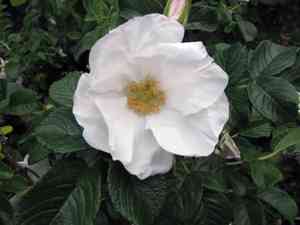
Himalayan musk rose (Rosa brunonii)
Also known as: Himalayan Musk Rose
The Himalayan musk rose (Rosa brunonii) is a climbing plant native to the Himalayas, recognized for its vigorous growth and clusters of small, fragrant white flowers that bloom in late spring and early summer. It often features sharp thorns and is commonly used in gardens and landscaping for its decorative appeal and sweet fragrance. This rose is ideal for covering trellises, walls, and fences. Besides its ornamental use, the rose hips (fruits) of this plant can be utilized in making jams and teas. Additionally, it plays an ecological role by providing habitat and nourishment for pollinators like bees and butterflies.
In This Article
Attributes of Himalayan musk rose
Lifespan
Perennial
Plant Height
3 to 6 meters
Spread
2 to 4 meters
Leaf Color
Green Gray Silver
Flower Size
2 to 3 centimeters
Flower Color
White
Images of Himalayan musk rose

Quickly Identify Himalayan musk rose
1
Identify Rosa brunonii by its long, arching canes and fragrant, small, white to pale pink flowers that are borne in large clusters. The leaves are pinnate with five to nine leaflets.
Scientific Classification of Himalayan musk rose
Phylum
Vascular plants
Class
Dicotyledons
Order
Rosales
Family
Rose
Genus
Roses
Species
Himalayan musk rose
Planting and Growing of Himalayan musk rose
Care Difficulty
Hard
Watering Schedule
Every 3 days
Sunlight Requirements
Full sun
Sunshine Duration
6-8 hours
Ideal Temperature
60-75℉
Soil Type
Potting Mix, Peat Mix
Soil pH
6.5-7.5
Fertilizer Type
Balanced
Pruning Season
Spring, Summer
Pruning Area
Branches, Leaves
Pruning Frequency
2 times a year
Repotting Season
Spring
Pot Type
Terracotta, Plastic
 How to Water Himalayan musk rose?
For Rosa brunonii, it's important to ensure that the soil is moist but not waterlogged. Water approximately 500 ml each time, ensuring the soil remains moist but not saturated. The key is to let the top inch of the soil dry out before watering again, which prevents root rot and promotes healthy growth.
What are the symptoms of an underwatered Himalayan musk rose?
›
What should I do if my Himalayan musk rose is not getting enough water?
›
What are the symptoms of an overwatered Himalayan musk rose?
›
How to save an overwatered Himalayan musk rose?
›
 What Are the Sunlight Requirements for Himalayan musk rose?
Partial sun to full sun exposure is ideal for Rosa brunonii. This ensures the plant receives enough energy for photosynthesis, leading to lush foliage and plenty of fragrant flowers.
What is the optimal light condition for Rosa brunonii?
›
What solutions are available to ensure Rosa brunonii receives ideal lighting?
›
What benefits does Rosa brunonii gain from ideal light exposure?
›
 What Is the Ideal Temperature Range for Himalayan musk rose?
For optimal growth, Rosa brunonii thrives in moderate temperatures. The ideal range is between 60°F and 75°F. This range supports healthy leaf and blossom development and minimizes stress on the plant.
 What Soil is Best for Himalayan musk rose?
Rosa brunonii requires well-drained soil to prevent root rot and fungal diseases. Such soil allows excess water to escape efficiently, ensuring that the roots receive just the right amount of moisture. A well-draining soil not only supports robust root development but also facilitates adequate nutrient uptake, promoting lush growth and abundant flowering. The plant thrives in moderately fertile soils that provide essential nutrients for its growth. Fertile soils are abundant in organic matter and minerals, supporting the vigorous development of Rosa brunonii. This nutrient-rich environment allows the plant to produce vibrant flowers and maintain a healthy foliage cover, enhancing its ornamental appeal. Maintaining a soil pH between 6.5 and 7.5 is crucial for Rosa brunonii. This pH range optimizes nutrient availability, ensuring that the plant can efficiently absorb critical nutrients such as nitrogen, phosphorus, and potassium. The balanced pH also reduces the likelihood of nutrient lockout and promotes overall plant health and vitality.
 How to Fertilize Himalayan musk rose?
For Rosa brunonii, it is crucial to balance the amount of fertilizer applied. Generally, use 1 tablespoon of granular fertilizer per square foot. Liquid fertilizers should be diluted according to package instructions, typically at a concentration of 1:100. This ensures that the nutrients are sufficiently accessible without overwhelming the root system.
 How to Prune Himalayan musk rose?
Begin by removing any dead, damaged, or diseased wood to prevent the spread of infections. Cut back old flowering branches by about a third to promote new growth. Make clean cuts just above a bud to support further development. Regularly opening up the center of the plant improves airflow, reducing the risk of fungal infections. Rosa brunonii is a vigorous climber, so guiding and training the main stems along trellises or arches is crucial. Prune lateral shoots to about four to six buds to maintain the desired shape. This strategic pruning supports better flower distribution along the structure while keeping the plant manageable.
 How to Propagate Himalayan musk rose plant?
1
Choose a robust and disease-free parent plant. This ensures that the cuttings will have the best chance of taking root and growing healthily.
2
Cut a 4-6 inch length from a healthy stem with at least a couple of leaf nodes. Remove lower leaves to prepare it for rooting.
3
Dip the base of the cutting in rooting hormone and plant it into moist, well-drained soil. Firm the soil around the cutting to eliminate air pockets.
 How to Repot Himalayan musk rose plant?
1
Repot Rosa brunonii when you notice it's outgrowing its current container, roots are poking out of the drainage holes, or soil is drying out too quickly. Early spring or autumn are ideal times, as the plant can establish new roots without the stress of extreme temperatures.
2
Select a pot that is one size larger, with ample drainage holes to prevent waterlogging. A terracotta pot is beneficial for its breathability, which promotes healthy root systems by allowing soil moisture to evaporate properly, avoiding root rot.
3
Choose a well-draining loamy mix that retains adequate moisture but does not become waterlogged. This soil type provides the right balance of nutrients and drainage, ensuring the roots can breathe and take up nutrients effectively.



