California tree poppy(Romneya coulteri)

California tree poppy (Romneya coulteri)

Also known as: Matilija poppy, Canyon poppy dream of the desert

Romneya coulteri, commonly known as the Matilija poppy, is a perennial shrub that draws bees and butterflies with its large, white flowers. This plant is low-maintenance and enters dormancy during the summer months. It thrives in dry, well-drained environments, including rocky and sandy soils.

Attributes of California tree poppy

Lifespan
Perennial, Annual
Plant Type
Herb
Plant Height
2.5 m
Spread
1.5 m
Leaf Color
Green Gray Silver
Flower Size
10 cm to 23 cm
Flower Color
White Yellow

PlantJoy - Identify plants with a snap

Identify and diagnose plants, get toxicity alerts, and explore safety guides for all types of fungi.

Try for Free

Images of California tree poppy

California tree poppy(Romneya coulteri)

Quickly Identify California tree poppy

1
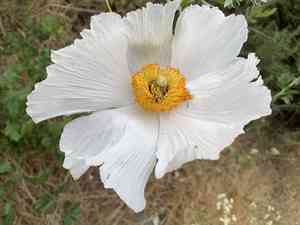
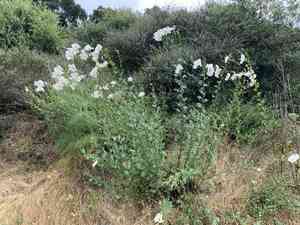
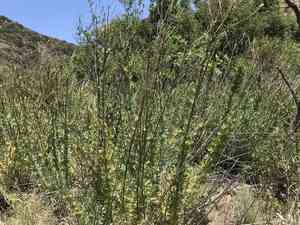
Statuesque growth reaching 4-6 feet (1.2-1.8 meters) tall.
2
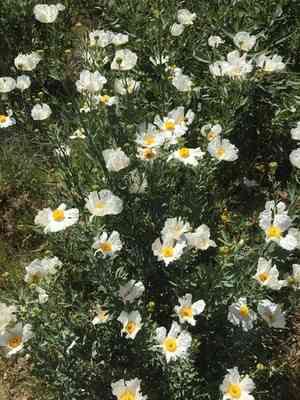
Distinctive glaucus gray foliage with pinnately divided, 3-5 lobed leaves.
3
Large flowers, about seven inches (18 centimeters) wide, with white crinkled petals and yellow center.
4
Abundant blooms emit a delicate fragrance in spring and summer seasons.
5
Thrives in well-drained soils, exhibiting drought tolerance and preferring full to partial sun exposure.

Scientific Classification of California tree poppy

Phylum
Vascular plants
Class
Dicotyledons
Order
Ranunculales
Family
Poppy
Genus
Matilija poppies
Species
California tree poppy

Planting and Growing of California tree poppy

Care Difficulty
Hard
Watering Schedule
Every 2 days
Sunlight Requirements
Full sun
Sunshine Duration
6-10 hours
Ideal Temperature
60-75℉
Soil Type
Potting Mix, Peat Mix
Soil pH
6.5-7.5
Fertilizer Type
Balanced
Pruning Season
Spring, Summer
Pruning Area
Branches, Leaves
Pruning Frequency
2 times a year
Repotting Season
Spring
Pot Type
Plastic, Ceramic

water icon How to Water California tree poppy?

For Romneya coulteri, water the plant until the soil is thoroughly moist but not waterlogged. The ideal watering volume is about 500 milliliters per session, ensuring it reaches deep into the soil to encourage the plant's deep root growth.
What are the symptoms of an underwatered California tree poppy?
What should I do if my California tree poppy is not getting enough water?
What are the symptoms of an overwatered California tree poppy?
How to save an overwatered California tree poppy?

sunlight icon What Are the Sunlight Requirements for California tree poppy?

Sunlight Requirements: Full sun
Duration of light: 6-8 hours daily
Romneya coulteri thrives best under full sun, benefiting from 6-8 hours of sunlight daily. Ideal light promotes vibrant blooms and strong growth, making it a showy and healthy addition to sunny gardens.
How much sunlight does Romneya coulteri need?
What happens if Romneya coulteri doesn't get enough sunlight?
What are the best solutions to provide ideal sunlight?
More About Sunlight Requirements Techniques

temperature icon What Is the Ideal Temperature Range for California tree poppy?

Ideal Temperature: 60 ~ 75℉
Romneya coulteri thrives best within a temperature range of 60 to 75 degrees Fahrenheit. This range ensures optimal growth and flowering, providing conditions similar to its native Californian habitats. Maintaining these temperatures in cultivation will promote lush foliage and vibrant blooms, making sure temperature dips or spikes do not stress the plant.

soil icon What Soil is Best for California tree poppy?

Soil type: Sandy soil, Loam, Sandy loam
Soil PH: 6.5 ~ 7.5
Romneya coulteri thrives in well-drained soil, which prevents root rot and ensures that the plant gets the right amount of moisture. Good drainage is imperative, as it mimics its natural habitat, enhancing root health and overall vigor. While not overly demanding, this plant appreciates a touch of organic matter in the soil to provide essential nutrients. A nutrient-rich medium allows for robust growth and vibrant blooms, fulfilling its ornamental potential. Aerated soil ensures oxygen reaches the plant roots, promoting healthy respiration. Soil structure that allows air circulation supports root development and nutrient uptake, thus fostering a healthy, flourishing plant.

fertilize icon How to Fertilize California tree poppy?

Fertilizer type: Balanced
Romneya coulteri benefits from a balanced fertilizer application. Aim for a general-purpose liquid fertilizer diluted to half strength. For solid fertilizers, use a slow-release type; about 1 pound per plant per year is sufficient and will help it flourish.

prune icon How to Prune California tree poppy?

Pruning Time: Spring, Summer, Autumn
Begin by identifying any dead or damaged stems. These are often brown and brittle. Removing them allows the plant to direct energy to healthy growth and maintain its vibrant appearance. Cut back the plant by up to one-third or to a height of 18 inches. This encourages lush, new growth and helps maintain the plant's structure. Be cautious to not cut too deeply into older stems. More About Pruning Techniques

propagate icon How to Propagate California tree poppy plant?

Propagate Time: Early spring, Late spring, Early summer
1
Fill seed trays with a well-draining seed-starting mix and evenly distribute the seeds over the surface. Lightly cover them with more mix and mist with water to ensure even moisture. Place trays in a bright, warm area to promote germination.
2
Select a healthy and non-flowering stem from the Romneya coulteri plant. Using sharp pruning shears, cut around 4-6 inches. Remove the lower leaves and dip the cut end into rooting hormone to encourage faster root development.
3
Insert the cutting into a pot filled with a mixture of peat and perlite. Firmly press the soil around the base of the stem. Water thoroughly and cover with a plastic dome or bag to maintain humidity until roots develop.
More About Propagating Techniques

repot icon How to Repot California tree poppy plant?

Repotting frequency: Every 2-3 years
1
Romneya coulteri signals its need for repotting when its roots begin to circle the interior of the pot or grow out from drainage holes. Another indicator is if the plant's growth seems stunted or it is producing fewer blooms. Spring and summer offer the ideal conditions for repotting as the plant is actively growing and can recover more quickly.
2
Choose a pot that is one size larger and has excellent drainage properties. Clay pots are ideal as they allow moisture to evaporate more readily, preventing root rot. Ensure the pot depth accommodates the root system while offering room for future growth, which aids in robust floral and foliage development.
3
Opt for a well-draining sandy soil mix that mimics its natural habitat. This type of soil ensures that water does not accumulate around the roots, reducing the risk of rot. The sandy texture allows roots to explore and extract the necessary nutrients efficiently, promoting a healthy and vibrant plant.

PlantJoy - Identify plants with a snap

Find the best spots for them to optimize their health, simply using your phone.

Try for Free

Toxicity of California tree poppy

Is California tree poppy toxic to humans?

The risk of poisoning from the California tree poppy primarily arises from inadvertent contact with the plant. Its leaves contain saponin compounds that can lead to mild skin irritation, including symptoms such as redness, discomfort, and itching after physical contact. Ingesting the leaves may also result in slight gastrointestinal distress, presenting as nausea and stomach discomfort. This toxic species is commonly found as a cultivated plant in gardens or in arid regions of southern California and northern Mexico. Due to its attractive flowers and potential proximity to residential areas, children are particularly vulnerable to unintentional poisoning. Gardeners should remember to wear gloves to protect themselves when handling the California tree poppy.

Identify toxic plants for your safety

Learn which plants are harmful to you and your pets, and make informed choices for a safer home!

Try for Free
WARNING
The judgment on toxicity and danger is for reference only. We DO NOT GUARANTEE any accuracy of such judgment. Therefore, you SHALL NOT rely on such judgment. It is IMPORTANT TO SEEK PROFESSIONAL ADVICE in advance when necessary.
More About Toxic Techniques