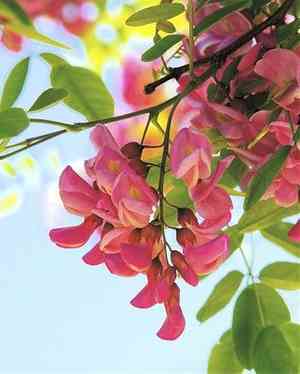
Clammy locust (Robinia viscosa)
Also known as: Highlands locust
Clammy locust, scientifically known as Robinia viscosa, is a medium-sized deciduous tree indigenous to the southeastern regions of the United States.
In This Article
Attributes of Clammy locust
Lifespan
Perennial
Plant Type
Tree, Shrub
Plant Height
3-5 meters (10-16 feet)
Spread
3-4 meters (10-13 feet)
Leaf Color
Green
Flower Size
2-2.5 centimeters (0.8-1 inch)
Flower Color
Pink
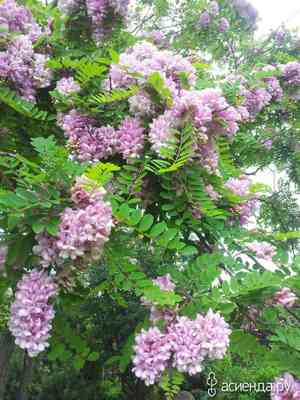
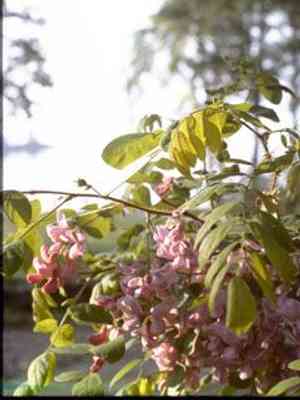
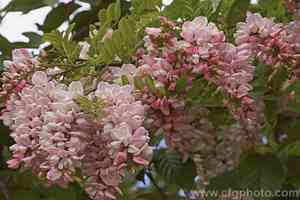
Images of Clammy locust
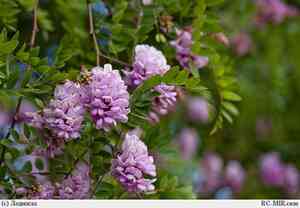
Quickly Identify Clammy locust
1
Look for its sticky and hairy branches and leaves, which exude a viscous substance. Its pink, fragrant flowers are clustered in racemes, and the plant typically has thorns on its branches.
Scientific Classification of Clammy locust
Phylum
Vascular plants
Class
Dicotyledons
Order
Fabales
Family
Legume
Genus
Locusts
Species
Clammy locust
Planting and Growing of Clammy locust
Care Difficulty
Moderate
Watering Schedule
Every 4 days
Sunlight Requirements
Full sun
Sunshine Duration
4-8 hours
Ideal Temperature
60-75℉
Soil Type
Potting Mix, Peat Mix
Soil pH
6.5-7.5
Fertilizer Type
Balanced
Pruning Season
Spring, Summer
Pruning Area
Branches, Leaves
Pruning Frequency
2 times a year
Repotting Season
Spring
Pot Type
Plastic, Ceramic
 How to Water Clammy locust?
Robinia viscosa thrives best when its soil is kept consistently moist but not waterlogged. Therefore, you should water until the soil is saturated but ensure that excess water drains away completely. When the top inch of the soil feels dry, it is time to water again.
What are the symptoms of an underwatered Clammy locust?
›
What should I do if my Clammy locust is not getting enough water?
›
What are the symptoms of an overwatered Clammy locust?
›
How to save an overwatered Clammy locust?
›
 What Are the Sunlight Requirements for Clammy locust?
Robinia viscosa prefers full sun to partial sun conditions, ideally receiving 6 to 8 hours of light daily. Adequate light is crucial for photosynthesis, contributing to vibrant foliage, strong structural growth, and abundant flowering.
How much sunlight does it need?
›
What are the optimal solutions to get ideal sunlight?
›
What benefits does ideal sunlight provide?
›
 What Is the Ideal Temperature Range for Clammy locust?
The ideal temperature range for Robinia viscosa lies between 60°F and 75°F. This range provides optimal conditions for growth, where the plant can efficiently carry out photosynthesis, absorb nutrients, and maintain overall health. Stability within this temperature bracket helps in minimizing stress on the plant, thus ensuring robust growth and development.
 What Soil is Best for Clammy locust?
Robinia viscosa thrives in soils that provide excellent drainage. Well-drained soils prevent root rot and allow the roots to access necessary oxygen, promoting healthy growth. This tree appreciates loamy soils that are rich in nutrients, as they support vigorous growth and vibrant foliage. Enhancing soil fertility with organic matter can be a great advantage. While it tolerates some drought, Robinia viscosa prefers soils that retain moderate moisture levels. Consistent watering during dry spells will help maintain its healthy appearance.
 How to Fertilize Clammy locust?
For Robinia viscosa, fertilization should be approached with balance. It requires moderate amounts of nutrients; a blend containing nitrogen, phosphorus, and potassium in a 10-10-10 ratio works optimally. For liquid fertilizers, around 250 ml per plant is sufficient, while granular fertilizers should be applied at about 100 grams per application.
 How to Prune Clammy locust?
Carefully examine your Robinia viscosa, identifying any dead, diseased, or crossing branches that need pruning to maintain the plant's health. Make clean cuts at a 45-degree angle to promote healing. Avoid leaving stubs, and ensure cuts are just above a bud or lateral branch. If shaping is necessary, consider the natural growth pattern of the plant, shaping it to allow light penetration and air circulation. Once pruning is complete, water the plant thoroughly and consider applying a balanced fertilizer to support new growth.
 How to Propagate Clammy locust plant?
1
Before planting, soak the Robinia viscosa seeds in tepid water for 24 hours to soften the seed coat, which increases germination rates by allowing water penetration.
2
Select healthy, non-flowering stems of about 10-15 cm from the parent plant. Cut just below a node and remove leaves from the lower half to reduce moisture loss.
3
Place seeds or cuttings in pre-moistened soil or potting mix. Ensure adequate sunlight exposure and consistent moisture without waterlogging to promote healthy growth.
 How to Repot Clammy locust plant?
1
Look for signs like roots coming out of drainage holes, slow growth, or soil dryness shortly after watering. These indicate that your Robinia viscosa may be root-bound and in need of repotting. Spring is ideal as it coincides with the natural growth phase, minimizing stress.
2
Select a pot that is 1-2 inches larger in diameter than the current one. This ensures enough room for growth without overwhelming the plant. A pot with drainage holes is crucial to prevent soggy soil, which can lead to root rot, ensuring healthy and robust plant growth.
3
Opt for well-draining loamy soil. This type provides a balance of moisture retention and drainage, ensuring roots have access to necessary nutrients and water. It mimics natural conditions, helping to keep the plant healthy and vigorous after repotting.
Toxicity
ingestion
WARNING
The judgment on toxicity and danger is for reference only. We DO NOT GUARANTEE any accuracy of such judgment. Therefore, you SHALL NOT rely on such judgment. It is IMPORTANT TO SEEK PROFESSIONAL ADVICE in advance when necessary.
Learn More About Clammy locust Diseases
Anthracnose
Bacterial Leaf Spot
Bacterial Wilt
Black Spot
Chemical Injury
Crown Gall
Damping-off
Drought Stress
Fusarium Wilt
Gray Mold
Leaf Curl
Leaf Spot
Mosaic
Nutrient Deficiency
Nutrient Toxicity
Powdery Mildew
Root Rot
Root-knot Nematode
Rusts
Sooty Mold
Spider Mites
Temperature Stress
Thrips Damage
White Mold



