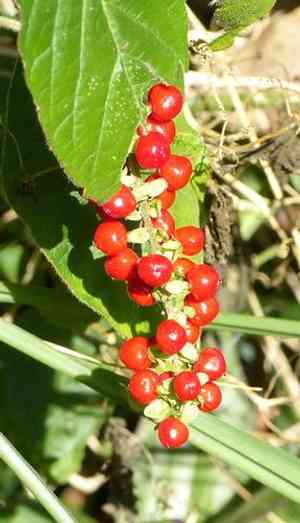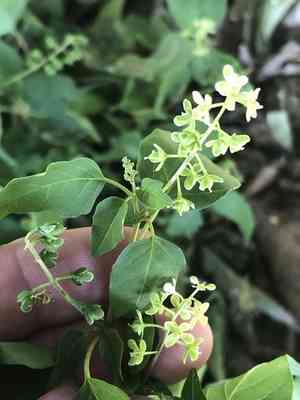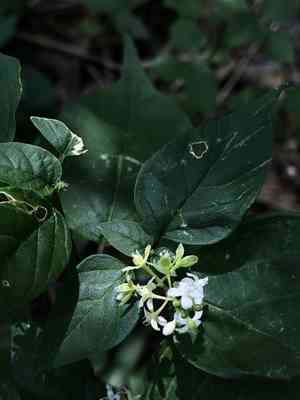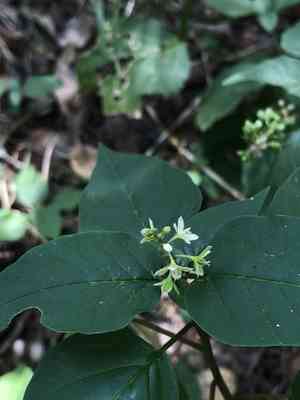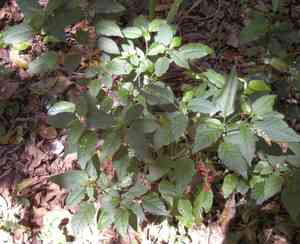
Pigeonberry(Rivina humilis)

Pigeonberry (Rivina humilis)

Also known as: Rougeplant, Coralito, Dog blood, Small pokeweed, Bloodberry rougeplant

The plant in question is likely pokeweed (Phytolacca americana), which can grow from 40 to 200 cm tall. It produces bright red berries that were historically utilized to make dye and ink. However, unlike what might be inferred from its name, these berries are not safe for consumption.

Attributes of Pigeonberry

Lifespan
Perennial
Plant Type
Herb
Plant Height
1.8 m
Spread
90 cm
Leaf Color
Green
Flower Size
2.5 cm
Flower Color
White Pink Green

ForwardPlant - Identify plants with a snap

Identify and diagnose plants, get toxicity alerts, and explore safety guides for all types of fungi.

Try for Free

Images of Pigeonberry

Pigeonberry(Rivina humilis)

Quickly Identify Pigeonberry

1
Look for a small, bushy plant with arching stems, heart-shaped leaves, and small white flowers followed by bright red berries.

Scientific Classification of Pigeonberry

Phylum
Vascular plants
Class
Dicotyledons
Order
Caryophyllales
Family
Pokeweed
Genus
Rivina
Species
Pigeonberry

Planting and Growing of Pigeonberry

Care Difficulty
Easy
Watering Schedule
Every 4 days
Sunlight Requirements
Partial sun
Sunshine Duration
4-8 hours
Ideal Temperature
65-85℉
Soil Type
Potting Mix, Peat Mix
Soil pH
6.5-7.5
Fertilizer Type
Balanced
Pruning Season
Spring, Summer
Pruning Area
Branches, Leaves
Pruning Frequency
Once a year
Repotting Season
Spring
Pot Type
Plastic, Ceramic

water icon How to Water Pigeonberry?

Rivina humilis prefers its soil to be kept moderately moist. Water the plant until moisture begins to drain from the bottom of the pot, which typically requires around 200 ml per watering. This ensures the top inch of soil is thoroughly soaked but not waterlogged.
What are the symptoms of an underwatered Pigeonberry?
What should I do if my Pigeonberry is not getting enough water?
What are the symptoms of an overwatered Pigeonberry?
How to save an overwatered Pigeonberry?

sunlight icon What Are the Sunlight Requirements for Pigeonberry?

Sunlight Requirements: Partial sun, Full shade
Duration of light: 2 to 4 hours daily
Rivina humilis flourishes in partial sun to full shade, needing about two to four hours of filtered sunlight daily. Ideal light conditions ensure strong, vibrant foliage and enhance its flowering and fruiting capabilities, providing a lush and colorful appearance.
Question: How much sunlight does Rivina humilis need?
Solution: How to achieve ideal sunlight conditions for Rivina humilis?
Effect: Benefits of optimal light conditions on Rivina humilis

temperature icon What Is the Ideal Temperature Range for Pigeonberry?

Ideal Temperature: 65 ~ 85℉
For optimal growth, the Rivina humilis thrives in a temperature range between 65°F and 85°F. This range mimics the warm climates of its native habitats, ensuring the plant receives enough heat without excessive stress. Maintaining this temperature range promotes healthy growth and flowering.

soil icon What Soil is Best for Pigeonberry?

Soil type: Loam, Sandy loam, Sandy soil
Soil PH: 6.5 ~ 7.5
Rivina humilis thrives in soil that drains well, preventing waterlogging. This is essential to avoid root rot, enhancing the plant’s health and encouraging lush growth. The plant prefers soil with a moderate level of nutrients, which supports steady growth without the risk of nutrient burn. This balance ensures the plant develops robust foliage and blooms. Maintaining a slightly acidic to neutral pH allows Rivina humilis to absorb nutrients effectively, promoting vitality and resistance to diseases. Proper pH levels support the whole plant system.

fertilize icon How to Fertilize Pigeonberry?

Fertilizer type: Balanced
When fertilizing Rivina humilis, use a balanced fertilizer with an N-P-K ratio such as 10-10-10. For liquid fertilizers, dilute it to half the recommended strength to avoid over-fertilization, and apply approximately 100-150 ml per plant.

prune icon How to Prune Pigeonberry?

Pruning Time: Spring, Summer, Autumn
Ensure not to remove more than one-third of the plant at a time. Over-pruning can stress the plant, leading to diminished growth and reduced fruiting potential. While pruning, check for signs of pest infestations or diseases. Early detection and removal of affected areas can prevent them from spreading to healthy parts of Rivina humilis.

propagate icon How to Propagate Pigeonberry plant?

Propagate Time: Spring, Early summer
1
Collect seeds from mature Rivina humilis berries. Ensure the berries are ripe and crush them gently to extract seeds, after which seeds should be cleaned and dried properly.
2
For both seeds and cuttings, prepare a well-draining potting mix. You can use a mixture of peat and perlite to ensure adequate drainage and aeration.
3
For seeds, plant them on the surface of the soil and lightly cover them with more mix. For cuttings, insert them into the soil mix until they are stable, ensuring that at least one node is buried.

repot icon How to Repot Pigeonberry plant?

Repotting frequency: Every 2-3 years
1
Repotting Rivina humilis is necessary when the roots begin to outgrow the current container or when the soil becomes depleted of nutrients. Another key signal is when the plant shows stunted growth or the soil is drying out too quickly. Typically, this occurs every two to three years. Spring and summer, being the active growth periods, are the optimal times for repotting as the plant is better able to adapt to changes then.
2
The right pot for Rivina humilis should be one size larger than the current pot, ideally with drainage holes to prevent waterlogging. Clay pots are often a great choice as they allow for airflow to the roots, helping prevent root rot. The benefit of selecting a slightly larger pot is to give the roots room to expand while not overwhelming the plant with too much space.
3
Rivina humilis thrives in a well-draining potting mix, which often comprises two parts peat, one part perlite, and one part sand. Such a blend maintains adequate moisture while ensuring excess water drains away, preventing root rot. Good soil composition is paramount for holding nutrients, allowing efficient exchange of air, and supporting robust root development.

ForwardPlant - Identify plants with a snap

Find the best spots for them to optimize their health, simply using your phone.

Try for Free

Toxicity of Pigeonberry

Is Pigeonberry toxic to humans?

Every part of the pigeonberry plant is poisonous when consumed. Nevertheless, the most hazardous components are the berries, roots, and leaves. While birds can consume the berries without adverse effects, humans should avoid them entirely. The specific toxin responsible for the toxicity has yet to be identified. Symptoms of pigeonberry poisoning may include a tingling sensation in the mouth accompanied by a warm feeling in both the mouth and stomach. Additional symptoms could involve fatigue, excessive thirst, vomiting, and diarrhea. Although this plant is safe for touching and handling, no part of it is safe for ingestion.

Is Pigeonberry toxic to cat?

Pigeonberry is a poisonous plant for cats, presenting a significant threat if ingested. Cats might inadvertently consume the harmful components of pigeonberry, including its fruits, leaves, or roots. After ingestion, a cat can display various symptoms that signify physical distress or discomfort, which can worsen without prompt intervention. Swift veterinary assistance is essential for effectively addressing any cases of poisoning. Pet owners should take proactive measures to keep their cats away from pigeonberry and remain attentive to their surroundings and behaviors to avert accidental consumption.

Is Pigeonberry toxic to dog?

Pigeonberry is recognized as toxic to dogs. Canines may unintentionally consume various parts of the plant, including its fruits, leaves, or roots, which can result in poisoning. Symptoms that may arise in dogs include gastrointestinal disturbances, vomiting, diarrhea, lethargy, and potentially more severe reactions, depending on how much was ingested. It is imperative for dog owners to remain alert and deter their pets from approaching areas where pigeonberry plants exist. If there is a suspicion that a dog has ingested any portion of pigeonberry, seeking immediate veterinary assistance is vital to ensure timely intervention and the highest chance of a favorable outcome.

Identify toxic plants for your safety

Learn which plants are harmful to you and your pets, and make informed choices for a safer home!

Try for Free
WARNING
The judgment on toxicity and danger is for reference only. We DO NOT GUARANTEE any accuracy of such judgment. Therefore, you SHALL NOT rely on such judgment. It is IMPORTANT TO SEEK PROFESSIONAL ADVICE in advance when necessary.
More About Toxic Techniques