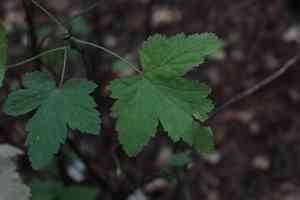
Red flowering currant (Ribes sanguineum)
Also known as: Flowering currant, Winter currant
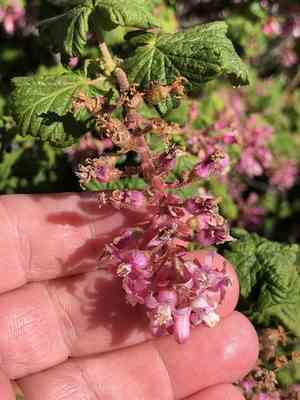
The shrub you're referring to is likely the Red Flowering Currant (Ribes sanguineum). This deciduous plant forms a rounded, bushy shape when grown in full sun. In spring through summer, it produces numerous small blooms ranging from pinkish-red to pale-pink, which are highly attractive to hummingbirds, bees, and butterflies. Additionally, in mid-summer, the shrub yields blue-black berries that appeal to various wildlife.
In This Article
Attributes of Red flowering currant
Lifespan
Perennial
Plant Type
Shrub
Plant Height
2 m
Spread
2 m
Leaf Color
Green
Flower Size
5 mm to 1 cm
Flower Color
Red Pink White
Images of Red flowering currant
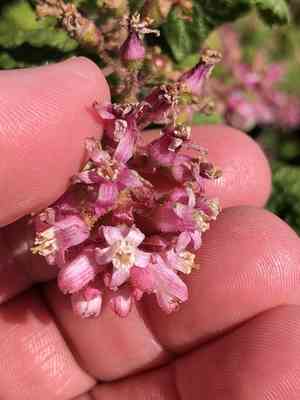
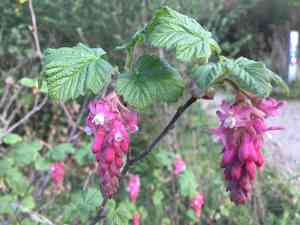
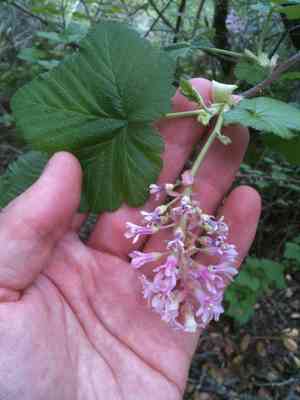
Quickly Identify Red flowering currant
1
Matte green leaves with 3-5 lobes and irregularly serrated edges.
2
Pendulous racemes of white, pink, or deep red flowers in spring.
3
Purple or blue-black berries with a noticeable white glaucous coating.
4
Upright stem covered in fine pubescence, aging from dark green to grayish brown.
5
Bark transitions from orange-red to grayish-brown, peeling with maturity.
Scientific Classification of Red flowering currant
Phylum
Vascular plants
Class
Dicotyledons
Order
Saxifragales
Family
Currant
Genus
Currants
Species
Red flowering currant
Planting and Growing of Red flowering currant
Care Difficulty
Easy
Watering Schedule
Every 4 days
Sunlight Requirements
Partial sun
Sunshine Duration
6-10 hours
Ideal Temperature
55-70℉
Soil Type
Potting Mix, Peat Mix
Soil pH
6.5-7.5
Fertilizer Type
Balanced
Pruning Season
Spring, Summer
Pruning Area
Branches, Leaves
Pruning Frequency
2 times a year
Repotting Season
Spring
Pot Type
Plastic, Ceramic
 How to Water Red flowering currant?
Ribes sanguineum enjoüy a consistent moisture level, meaning it needs deep watering sessions. Ensure water penetrates to the root level – a good 500ml should suffice at a time, saturating the soil, yet preventing standing water.
More About Watering Techniques→
What are the symptoms of an underwatered Red flowering currant?
›
What should I do if my Red flowering currant is not getting enough water?
›
What are the symptoms of an overwatered Red flowering currant?
›
How to save an overwatered Red flowering currant?
›
 What Are the Sunlight Requirements for Red flowering currant?
Ribes sanguineum thrives best with partial sun exposure, benefiting from a balanced amount of sunlight and shade. Ideal lighting encourages robust growth and enhances flowering potential.
More About Sunlight Requirements Techniques→
What is the best location for Ribes sanguineum?
›
How can I ensure Ribes sanguineum gets enough light?
›
Why is partial sun ideal for Ribes sanguineum?
›
 What Is the Ideal Temperature Range for Red flowering currant?
For optimal growth, Ribes sanguineum thrives in a temperature range of 55°F to 70°F. This range supports robust vegetative and reproductive growth, ensuring healthy leaves and vibrant flowers. Maintaining consistent temperatures within this range allows the plant to maximize its photosynthesis and nutrient uptake processes, thereby resulting in stronger growth and an abundant flowering season.
 What Soil is Best for Red flowering currant?
Ribes sanguineum thrives in well-drained soil, which prevents waterlogging and root rot. This type of soil allows excess water to filter through seamlessly, ensuring the roots have the right amount of moisture alongside ample aeration. While needing well-drained soils, it is crucial to balance with moisture retention to sustain plant growth. Loamy soils are ideal as they retain moisture without becoming waterlogged, providing the plant with consistent hydration levels. A nutrient-rich substrate ensures robust growth with vibrant foliage and abundant flowering. Regularly amended soils enriched with organic matter like compost can offer an additional boost of nutrients, making the plant healthier and more resilient.
More About Soil→
 How to Fertilize Red flowering currant?
For Ribes sanguineum, it's recommended to apply liquid fertilizer at a concentration that offers 1/4 strength of a balanced 10-10-10 NPK nutrient formula. This prevents nutrient burn while ensuring the plant receives adequate nutrition. When using slow-release granular fertilizer, apply approximately 1 to 2 tablespoons per plant, distributed evenly around the base, just beyond the root zone.
More About Fertilizing Techniques→
 How to Prune Red flowering currant?
Ribes sanguineum flowers in spring; therefore, the best time to prune is immediately after flowering. This allows the plant to establish new growth that will bear next year's blooms. When cutting back stems, always prune back to an outward-facing bud. This encourages new growth to develop in a direction that promotes an open, attractive shape and prevents congestion in the center.
More About Pruning Techniques→
 How to Propagate Red flowering currant plant?
1
Select healthy stems free from disease and pests. Use pruning shears to cut a 4-6 inch long section just below a node. Remove leaves from the lower half to reduce water loss.
2
Fill propagation trays with seed-starting mix and plant seeds ½ inch deep, spacing them uniformly. Keep the soil moist but not waterlogged, and cover with plastic to retain humidity.
3
Insert the prepared cutting into the propagation medium, such as moist sand or a peat-perlite mix, ensuring at least one node is below the surface. Firm the medium around the cutting.
 How to Repot Red flowering currant plant?
1
For Ribes sanguineum, repotting is signaled when roots start peeking through the drainage holes or the growth appears stunted. These signs indicate that the plant is root-bound and requires additional space for optimal growth, making spring the ideal season due to its active growth period.
2
Choose a pot that is one size larger than the current one, with sufficient drainage holes. A slightly larger pot ensures more space for root expansion without overwhelming the plant, promoting healthy growth and preventing waterlogging issues.
3
Opt for a well-draining potting mix enriched with organic matter. This type of soil balances moisture retention and drainage, providing the roots with essential nutrients while preventing root rot, making it ideal for Ribes sanguineum.
Toxicity
None
WARNING
The judgment on toxicity and danger is for reference only. We DO NOT GUARANTEE any accuracy of such judgment. Therefore, you SHALL NOT rely on such judgment. It is IMPORTANT TO SEEK PROFESSIONAL ADVICE in advance when necessary.
Learn More About Red flowering currant Diseases
Anthracnose
Bacterial Leaf Spot
Black Spot
Chemical Injury
Crown Gall
Damping-off
Downy Mildew
Drought Stress
Fusarium Wilt
Gray Mold
Leaf Curl
Leaf Spot
Mosaic
Nutrient Deficiency
Nutrient Toxicity
Powdery Mildew
Root Rot
Root-knot Nematode
Rusts
Sooty Mold
Spider Mites
Temperature Stress
Thrips Damage
White Mold



