Staghorn sumac(Rhus typhina)

Staghorn sumac (Rhus typhina)

Also known as: Red sumac, Vinegar tree

The staghorn sumac (Rhus typhina) offers several parts that can be utilized for making dyes and mordants:

1. **Berries**: These can be used to produce red or brown dyes.
2. **Leaves**: Capable of yielding a yellow dye.
3. **Bark**: The inner bark is rich in tannins, making it effective as a mordant to fix dyes.

It’s noteworthy that almost every part of the plant, except the roots, can be used for dyeing purposes due to the tannin content, which helps in maintaining the colorfastness of the dyes. Additionally, the plant serves ecological roles, with luna moth caterpillars feeding on its leaves and birds such as pheasants and wild turkeys consuming its fruits.

Attributes of Staghorn sumac

Lifespan
Perennial
Plant Type
Tree, Shrub
Plant Height
5 m to 12 m
Spread
6 m
Leaf Color
Green Red Orange
Flower Size
4 cm to 6 cm
Flower Color
Green Yellow Red

PlantJoy - Identify plants with a snap

Identify and diagnose plants, get toxicity alerts, and explore safety guides for all types of fungi.

Try for Free

Images of Staghorn sumac

Staghorn sumac(Rhus typhina)

Quickly Identify Staghorn sumac

1
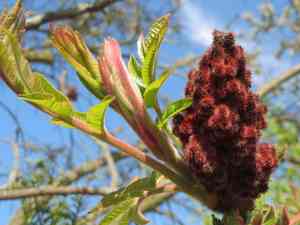
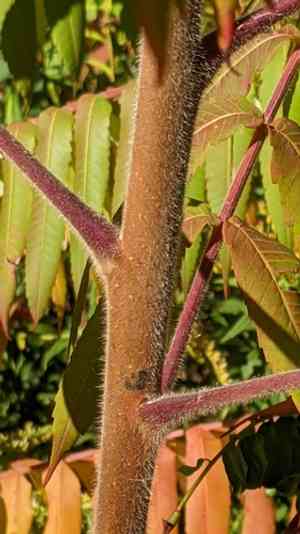
Velvet-like fuzzy young branches resembling stag's antlers.
2
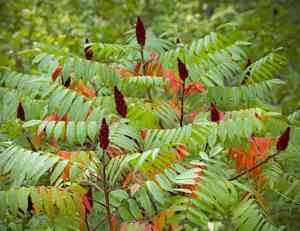
Large pinnately compound leaves up to 2 feet (60 cm) long.
3
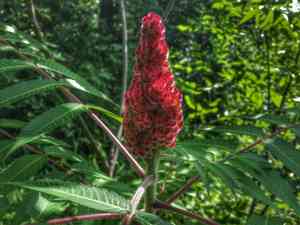
Vivid red drupes persisting through winter on female plants.
4
Rough-textured, lanceolate leaflets with serrate margins.
5
Distinctive reddish-brown hairy stem with velvety texture.

Scientific Classification of Staghorn sumac

Phylum
Vascular plants
Class
Dicotyledons
Order
Maples, mangos, mahogany, citrus, and allies
Family
Cashew
Genus
Sumacs
Species
Staghorn sumac

Planting and Growing of Staghorn sumac

Care Difficulty
Easy
Watering Schedule
Every 2 days
Sunlight Requirements
Full sun
Sunshine Duration
6-10 hours
Ideal Temperature
50-68℉
Soil Type
Potting Mix, Peat Mix
Soil pH
6.5-7.5
Fertilizer Type
Balanced
Pruning Season
Spring, Summer
Pruning Area
Branches, Leaves
Pruning Frequency
Once a year
Repotting Season
Spring
Pot Type
Plastic, Ceramic

water icon How to Water Staghorn sumac?

Rhus typhina prefers to have a deep drink but not too frequently. When you water, aim to moisten the top 6 inches of soil, which generally equates to about 500 ml per watering session. This ensures that the root system can access water deeply, promoting healthy growth.
What are the symptoms of an underwatered Staghorn sumac?
What should I do if my Staghorn sumac is not getting enough water?
What are the symptoms of an overwatered Staghorn sumac?
How to save an overwatered Staghorn sumac?
More About Watering Techniques

sunlight icon What Are the Sunlight Requirements for Staghorn sumac?

Sunlight Requirements: Full sun, Partial sun
Duration of light: 6-12 hours daily
Rhus typhina ideally thrives in full sun to partial sun conditions. This lighting helps to enhance photosynthesis, intensifying the plant's brilliant fall colors and promoting vigorous growth.
Optimal Light Exposure
Light Adjustment Solutions
Benefits of Ideal Light
More About Sunlight Requirements Techniques

temperature icon What Is the Ideal Temperature Range for Staghorn sumac?

Ideal Temperature: 50 ~ 68℉
The ideal temperature range for Rhus typhina, commonly known as Staghorn Sumac, is between 50°F and 68°F. This range allows the plant to maintain optimal physiological functions, promoting healthy growth and vibrant foliage. This species thrives in moderate climates where temperatures are neither too hot nor too cold, ensuring sufficient metabolic activity and optimal photosynthesis.

soil icon What Soil is Best for Staghorn sumac?

Soil type: Sandy loam, Loam, Sandy soil
Soil PH: 6.5 ~ 7.5
Rhus typhina thrives best in well-drained soil that prevents waterlogging, which can lead to root rot. Ensuring good drainage improves aeration, allowing roots to access nutrients efficiently for healthy growth. This plant prefers moderately fertile soils that provide essential nutrients while preventing excessive growth that could make it unruly or prone to pests. Fertile soil supports the natural vigor of this species. Incorporating organic matter like compost enhances the soil's structure and moisture retention, which benefits Rhus typhina by maintaining consistent hydration and nutrient availability. More About Soil

fertilize icon How to Fertilize Staghorn sumac?

Fertilizer type: Balanced
For Rhus typhina, use a balanced mix of liquid fertilizer at half-strength, around 10-20 ml per plant in one application. This ensures nutrients are delivered without overwhelming the root system. For solid fertilizers, apply approximately 50-75 grams per plant per session to stimulate gradual growth and nourishment. More About Fertilizing Techniques

prune icon How to Prune Staghorn sumac?

Pruning Time: Spring, Summer, Autumn
Begin by removing any dead, damaged, or diseased wood. Also, look for branches that are crossing or rubbing against each other. These should be cut to prevent future injury and to maintain a well-shaped tree. Additionally, selectively thin the interior branches to improve light penetration and air circulation. Use clean, sharp pruning shears for smaller branches and a pruning saw for thicker limbs. Make cuts at a 45-degree angle, just above a bud facing outward. This encourages outward growth, maintaining the tree's natural shape while allowing more light into the canopy. More About Pruning Techniques

propagate icon How to Propagate Staghorn sumac plant?

Propagate Time: Spring, Late spring, Early spring
1
To propagate Rhus typhina through seed, it's important to start with stratification. Place the seeds in a moist sand or peat mix and store them in a refrigerator for 30-60 days to simulate winter conditions, which helps break seed dormancy.
2
When propagating through cuttings, select healthy, semi-hardwood stems during late spring. Cut sections approximately 6-8 inches long, ensuring each has a few nodes. Remove leaves from the lower half to minimize water loss.
3
After stratification or preparing cuttings, plant them in well-draining soil with adequate moisture. Place them under indirect light and maintain a consistent temperature of around 70°F. Regularly monitor for root development and soil moisture.
More About Propagating Techniques

repot icon How to Repot Staghorn sumac plant?

Repotting frequency: Every 2-3 years
1
Repotting Rhus typhina should be considered when its roots start to emerge from drainage holes or the plant's growth noticeably slows. Usually, this indicates the plant is root-bound and unable to gain enough nutrients. Spring and summer are optimal seasons as active growth before peak sunlight hours helps minimize stress on the plant.
2
Selecting a slightly larger pot provides Rhus typhina room for root growth without overwhelming its current structure. A pot 2-3 inches larger in diameter than the current one allows roots to expand naturally, maintaining balance in plant growth. Ensuring the pot has adequate drainage is crucial to prevent root rot.
3
Opt for well-draining, loamy soil to ensure Rhus typhina retains sufficient moisture without becoming waterlogged. This soil type provides essential nutrients and allows air circulation around the roots, promoting healthy growth. Avoid heavy, clay soils which retain excess moisture.

PlantJoy - Identify plants with a snap

Find the best spots for them to optimize their health, simply using your phone.

Try for Free

Toxicity of Staghorn sumac

Is Staghorn sumac toxic to humans?

Limited studies indicate that the sap of staghorn sumac may lead to skin rashes in individuals who are sensitive; however, more extensive research is necessary. Numerous species within the Rhus genus are known to be toxic and can provoke severe skin irritation, yet staghorn sumac lacks the hairy particles and smooth fruits characteristic of those species. Nonetheless, it is prudent to exercise caution when handling this plant.

Identify toxic plants for your safety

Learn which plants are harmful to you and your pets, and make informed choices for a safer home!

Try for Free
WARNING
The judgment on toxicity and danger is for reference only. We DO NOT GUARANTEE any accuracy of such judgment. Therefore, you SHALL NOT rely on such judgment. It is IMPORTANT TO SEEK PROFESSIONAL ADVICE in advance when necessary.
More About Toxic Techniques