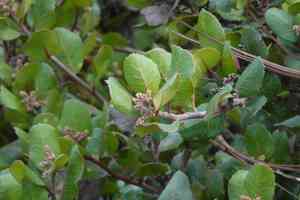
Lemonade Berry (Rhus integrifolia)
Also known as: Lemonade Berry, Lemonade Sumac
The Lemonade Berry plant (Rhus integrifolia), native to coastal and southwestern California, offers various practical applications:
1. **Culinary**: The tart berries can be soaked to create a lemonade-like beverage.
2. **Traditional Uses**: Indigenous peoples have utilized its parts for medicinal purposes.
3. **Erosion Control**: Its robust root system helps prevent soil erosion.
4. **Wildlife Support**: Provides essential food and habitat for local wildlife.
5. **Crafts**: The tannin-rich oil from the plant can be used to make candles and brown dye.
6. **Firewood**: The wood of mature plants is often used as kindling.
These diverse uses highlight the plant's ecological and practical significance.
Attributes of Lemonade Berry
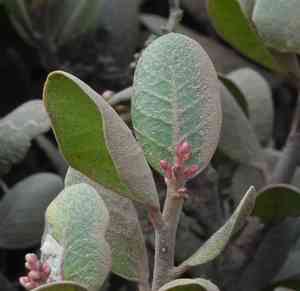
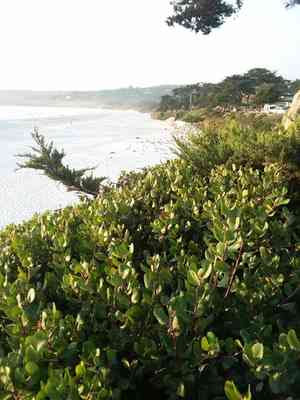
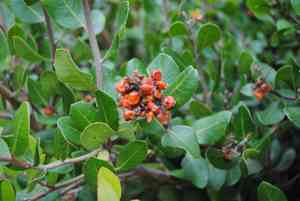
Images of Lemonade Berry

Quickly Identify Lemonade Berry
Scientific Classification of Lemonade Berry
Planting and Growing of Lemonade Berry
 How to Water Lemonade Berry?
 What Are the Sunlight Requirements for Lemonade Berry?
 What Is the Ideal Temperature Range for Lemonade Berry?
 What Soil is Best for Lemonade Berry?
 How to Fertilize Lemonade Berry?
 How to Prune Lemonade Berry?
 How to Propagate Lemonade Berry plant?
 How to Repot Lemonade Berry plant?
Toxicity of Lemonade Berry
Is Lemonade Berry toxic to humans?
While the lemonade Berry is not officially categorized as poisonous, some sources indicate that its sap possesses slight toxicity. Contact with the sap may result in allergic reactions ranging from mild to severe, including skin irritation, which manifests as redness, itching, burning, and blisters in certain individuals. The plant is also covered in fine yet coarse and dense hairs that could contribute to skin irritation upon contact. Additionally, other sources speculate that the plant might exhibit toxic effects if ingested, even though there have been no confirmed instances of internal poisoning. Nevertheless, due to its skin-irritating properties, ingestion could potentially prove harmful.



