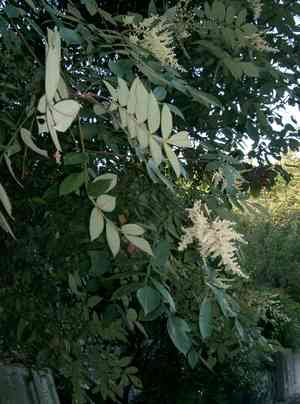
Chinese sumac(Rhus chinensis)

Chinese sumac (Rhus chinensis)

Also known as: Chinese gall, Nutgal sumac

The Chinese sumac tree, scientifically known as Rhus chinensis, is a small tree distinguished by its hairy stems and leaves that transition to a striking red before falling in autumn. It is commonly found throughout East and South Asia.

**Traditional Uses:**
1. **Medicinal:** The galls produced by the tree, known as "galla chinensis," are utilized in traditional Chinese medicine to address ailments such as diarrhea, cough, and wounds due to their astringent properties.
2. **Tannins and Dyes:** The tree's leaves and galls are rich in tannins, making them useful for leather tanning and as a source of natural dye.
3. **Edible Fruits:** The small, red-brown fruits are edible and also rich in tannins.

**Physical Characteristics:**
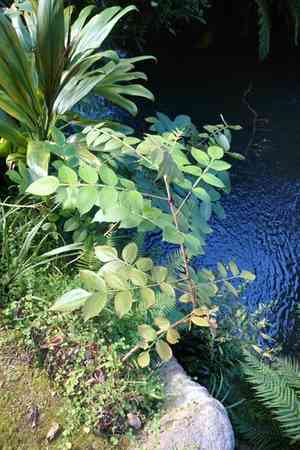
1. **Leaves:** The tree features pinnately compound leaves, each with 7-13 leaflets that turn vibrant red in the fall.
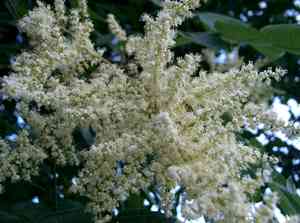
2. **Flowers:** It bears small, greenish-white flowers in clusters.
3. **Size:** Typically growing between 3 to 10 meters tall, the tree has a rounded crown.
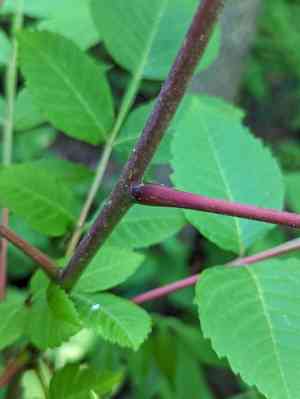
4. **Stems:** The stems are characteristically downy.

This tree is valued both for its practical uses and its ornamental beauty.

Attributes of Chinese sumac

Lifespan
Perennial
Plant Type
Tree, Shrub
Plant Height
4.5 m to 7 m
Spread
4.5 m to 6 m
Leaf Color
Green Yellow Red Gold Orange
Flower Size
15 cm
Flower Color
White Yellow

ForwardPlant - Identify plants with a snap

Identify and diagnose plants, get toxicity alerts, and explore safety guides for all types of fungi.

Try for Free

Images of Chinese sumac

Chinese sumac(Rhus chinensis)

Quickly Identify Chinese sumac

1
Compound leaves up to 2 feet (60 cm) long, turning red or orange in fall.
2
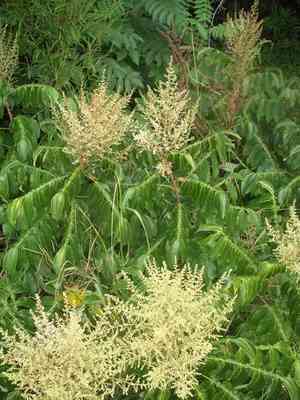
Panicles of yellowish flowers, transitioning to red, hairy fruits about 0.25 inches (0.64 cm).
3
Large panicles with creamy white star-shaped blooms, turning into vibrant orange-red fruits.
4
Elliptical to lance-shaped leaflets with serrated edges, displaying yellow, orange, and red hues in fall.
5
Smooth texture, pinnate vein pattern with central vein and side veins towards edges.

Scientific Classification of Chinese sumac

Phylum
Vascular plants
Class
Dicotyledons
Order
Maples, mangos, mahogany, citrus, and allies
Family
Cashew
Genus
Sumacs
Species
Chinese sumac

Planting and Growing of Chinese sumac

Care Difficulty
Easy
Watering Schedule
Every 2 days
Sunlight Requirements
Full sun
Sunshine Duration
4-6 hours
Ideal Temperature
59-77℉
Soil Type
Potting Mix, Peat Mix
Soil pH
4.5-7.5
Fertilizer Type
Balanced
Pruning Season
Spring, Summer
Pruning Area
Branches, Leaves
Pruning Frequency
2 times a year
Repotting Season
Spring
Pot Type
Plastic, Ceramic

water icon How to Water Chinese sumac?

When watering Rhus chinensis, make sure that the water reaches deep into the soil but doesn't leave it waterlogged. A general rule of thumb is to provide about 500 milliliters per session, ensuring that the soil is moist but not overly saturated. This helps the roots absorb the necessary nutrients while preventing root rot.
What are the symptoms of an underwatered Chinese sumac?
What should I do if my Chinese sumac is not getting enough water?
What are the symptoms of an overwatered Chinese sumac?
How to save an overwatered Chinese sumac?

sunlight icon What Are the Sunlight Requirements for Chinese sumac?

Sunlight Requirements: Full sun, Partial sun
Duration of light: 4 to 8 hours
Half-day to full-day sun exposure is ideal for Rhus chinensis, promoting robust growth and foliage vibrancy. Ideal lighting encourages efficient photosynthesis, resulting in healthier, more resilient plants.
Preferred Lighting Environment
Solution to Achieve Ideal Light
Benefits of Ideal Light
More About Sunlight Requirements Techniques

temperature icon What Is the Ideal Temperature Range for Chinese sumac?

Ideal Temperature: 59 ~ 77℉
Rhus chinensis thrives best in temperatures ranging from 59°F to 77°F. This range allows optimal growth and development, promoting both leaf and root health. Maintaining this temperature range can ensure that the plant photosynthesizes efficiently, providing it with the necessary energy to flourish.

soil icon What Soil is Best for Chinese sumac?

Soil type: Loam, Sandy loam
Soil PH: 4.5 ~ 7.5
Rhus chinensis thrives in well-draining soils, which prevent waterlogging and root rot, allowing for healthy root development and optimal nutrient absorption essential for the plant's growth. A nutrient-rich soil supports Rhus chinensis by providing essential minerals and nutrients, promoting lush foliage and vibrant growth. Organic matter like compost can enhance soil fertility effectively. Soils with moderate moisture retention ensure Rhus chinensis receives consistent hydration without risking oversaturation, maintaining ideal moisture for steady growth and stress reduction.

fertilize icon How to Fertilize Chinese sumac?

Fertilizer type: Balanced
Rhus chinensis prefers a balanced application of fertilizer. For liquid fertilizers, mix 10 ml of a balanced NPK (nitrogen, phosphorus, potassium) solution per liter of water every two weeks. When using slow-release granules, spread about 30 grams around the plant base, avoiding direct contact with the stem, three times a year.

prune icon How to Prune Chinese sumac?

Pruning Time: Spring, Summer, Autumn
Start by removing any dead, diseased, or damaged wood. Make cuts at a 45-degree angle just above an outward-facing bud or branch, promoting a natural look and encouraging outward growth. To shape Rhus chinensis, focus on creating a balanced and open canopy. Remove crossing branches and any that grow inward. This allows for better air circulation and sunlight penetration, fostering a healthier plant. If the plant becomes too large, can cut back some of the longer branches. Aim for a neat, controlled size that maintains the hedge or privacy screen if grown as such. Make sure not to remove more than one-third of the plant at once to prevent shock. More About Pruning Techniques

propagate icon How to Propagate Chinese sumac plant?

Propagate Time: Spring, Early spring
1
Soak the seeds of Rhus chinensis in warm water for 24 hours to enhance germination rates. This process helps to soften the seed coat and encourages quicker sprouting.
2
Select a healthy branch from the parent plant and cut a 6-8 inch section. Ensure the cutting includes several leaf nodes as this promotes root development.
3
Dip the cut end of each cutting in a rooting hormone and plant in a well-draining potting mix. Place the container in a location with indirect sunlight and maintain consistent moisture.
More About Propagating Techniques

repot icon How to Repot Chinese sumac plant?

Repotting frequency: Every 2-3 years
1
Rhus chinensis shows signs like roots protruding from the drainage holes or stunted growth, indicating it's time to repot. These signals often mean the roots have outgrown their space and need a larger pot to thrive.
2
Choose a pot that is 2-3 inches larger in diameter than the current one, ensuring it has proper drainage holes. This size allows adequate space for root expansion and helps prevent waterlogging, which can lead to root rot.
3
A well-draining loamy soil mixed with organic matter is ideal. This combination retains essential moisture while allowing excess water to drain, promoting healthy root development and preventing root disease.

ForwardPlant - Identify plants with a snap

Find the best spots for them to optimize their health, simply using your phone.

Try for Free

Toxicity of Chinese sumac

Is Chinese sumac toxic to humans?

Chinese sumac presents a serious toxicity risk to humans if ingested. Every component of the plant is harmful, and consumption can result in considerable health complications. Symptoms of poisoning are significant and may manifest as severe gastrointestinal distress, including intense vomiting and diarrhea, along with potential harm to the kidneys and liver. Neurological effects such as tremors, confusion, and seizures can also arise, underscoring the severity of the plant's toxicity. It is vital for individuals to prevent accidental consumption of any part of Chinese sumac, as the ramifications can be severe. Extra caution is recommended to protect children and pets from any contact with this plant.

Identify toxic plants for your safety

Learn which plants are harmful to you and your pets, and make informed choices for a safer home!

Try for Free
WARNING
The judgment on toxicity and danger is for reference only. We DO NOT GUARANTEE any accuracy of such judgment. Therefore, you SHALL NOT rely on such judgment. It is IMPORTANT TO SEEK PROFESSIONAL ADVICE in advance when necessary.
More About Toxic Techniques