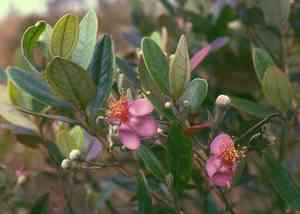
Rhodomyrtus (Rhodomyrtus) (Rhodomyrtus)
Also known as: Rose Myrtle
Syzygium is a genus of shrubs and trees within the Myrtaceae family, first described in 1841. This genus is indigenous to regions including southern China, the Indian Subcontinent, Southeast Asia, Melanesia, and Australia.
In This Article
Attributes of Rhodomyrtus (Rhodomyrtus)
Lifespan
Perennial
Plant Height
1 to 4 meters
Spread
1 to 3 meters
Leaf Color
Green
Flower Size
1 to 5 cm
Flower Color
White, Pink, Purple
Images of Rhodomyrtus (Rhodomyrtus)
Quickly Identify Rhodomyrtus (Rhodomyrtus)
1
Rhodomyrtus can be identified by its ovate to elliptic leaves, attractive flowers usually composed of five petals, and its berry-like fruit which can range in color. The bark is usually smooth, and the leaves are aromatic when crushed.
Scientific Classification of Rhodomyrtus (Rhodomyrtus)
Phylum
Tracheophyta
Class
Magnoliopsida
Order
Myrtales
Family
Myrtaceae
Genus
Rhodomyrtus
Planting and Growing of Rhodomyrtus (Rhodomyrtus)
Care Difficulty
Moderate
Watering Schedule
Every 4 days
Sunlight Requirements
Partial sun
Ideal Temperature
65-77℉
Soil pH
6-7.5
 How to Water Rhodomyrtus (Rhodomyrtus)?
For Rhodomyrtus, it is essential to keep the soil consistently moist but not waterlogged. Aim for about 500 ml of water per session, ensuring water permeates the soil evenly without causing pooling on the surface.
What are the symptoms of an underwatered Rhodomyrtus (Rhodomyrtus)?
›
What should I do if my Rhodomyrtus (Rhodomyrtus) is not getting enough water?
›
What are the symptoms of an overwatered Rhodomyrtus (Rhodomyrtus)?
›
How to save an overwatered Rhodomyrtus (Rhodomyrtus)?
›
 What Are the Sunlight Requirements for Rhodomyrtus (Rhodomyrtus)?
Rhodomyrtus thrives best in conditions offering partial sun to full sun exposure. Ideal light enhances photosynthesis, leading to stronger, bushier growth and a more abundant display of flowers.
What is the best lighting solution for Rhodomyrtus?
›
How can you ensure Rhodomyrtus gets ideal lighting?
›
What are the benefits of proper lighting for Rhodomyrtus?
›
 What Is the Ideal Temperature Range for Rhodomyrtus (Rhodomyrtus)?
The ideal temperature range for Rhodomyrtus is between 65°F to 77°F. This range provides optimal conditions for growth, ensuring the plant receives adequate warmth without experiencing heat stress. Maintaining these temperatures helps in promoting lush foliage and healthy blooms, as it mimics the natural subtropical environment where Rhodomyrtus thrives.
 What Soil is Best for Rhodomyrtus (Rhodomyrtus)?
Rhodomyrtus thrives in soil that is rich in organic matter because it provides essential nutrients that support robust growth and vibrant blooms. This kind of soil enhances moisture retention and improves root development, which is crucial for the plant's vitality. This plant prefers well-draining soil to prevent waterlogging, which can lead to root rot. Good drainage ensures that the roots receive adequate air circulation and prevents the accumulation of excess salts and minerals, promoting healthier plant growth. A slightly acidic to neutral pH is optimal for Rhodomyrtus as it ensures the availability of critical nutrients. This pH level helps in the proper functioning of biochemical processes within the plant, enhancing overall health and resistance to diseases.
 How to Fertilize Rhodomyrtus (Rhodomyrtus)?
Rhodomyrtus requires a balanced approach to fertilization. Use a well-balanced fertilizer, applying approximately 50 grams per plant during the growing season. This ensures the plant receives essential nutrients without overwhelming its roots.
 How to Prune Rhodomyrtus (Rhodomyrtus)?
Start by examining the Rhodomyrtus for any dead, diseased, or damaged branches. Removing these can prevent the spread of disease and promote better air circulation, essential for healthy growth. To maintain a pleasing shape, consider the natural growth pattern of Rhodomyrtus. Trim back branches selectively to achieve a balanced appearance, ensuring light penetrates to all parts of the plant. Prune during the early spring just before new growth starts for the best results. If needed, a light trim in early summer can help refine the shape and boost flower production.
 How to Propagate Rhodomyrtus (Rhodomyrtus) plant?
1
Choose mature and healthy seeds from a parent Rhodomyrtus plant. Ensure they are free from pests and diseases, which can compromise germination success.
2
For cutting propagation, select semi-hardwood cuttings. Cut nodes diagonally to expose more tissue area for root growth and treat with rooting hormone for better chances.
3
Identify a low branch on the Rhodomyrtus plant. Bend it to the ground, cover part of it with soil, and secure it in place. Roots will develop over time and encourage new growth.
 How to Repot Rhodomyrtus (Rhodomyrtus) plant?
1
Rhodomyrtus plants signal the need for repotting when roots start circling the pot or growing through drainage holes. Spring or early summer is ideal for repotting, allowing the plant to benefit from active growth periods. Watch for slowed growth and drooping leaves as indicators.
2
Select a pot that is 1-2 inches larger in diameter than the current one, with drainage holes to prevent waterlogging. Using a slightly bigger pot encourages growth without overwhelming the plant, and good drainage ensures a healthy root system.
3
Opt for well-draining loamy soil, enriched with organic matter. This choice provides Rhodomyrtus with essential nutrients and excellent drainage, preventing root rot and promoting robust growth and vibrancy.

