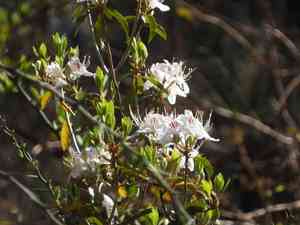
Yunnan rhododendron (Rhododendron yunnanense)
Also known as: Yunnan Rhododendron, Yunnan Azalea
Yunnan rhododendron is a perennial shrub originating from the mountainous regions of Yunnan, China. It boasts leathery, lance-shaped leaves and is celebrated for its trusses of bell-shaped flowers, which range from white to pink with occasional purple speckles. Yunnan rhododendron typically flourishes in cool climates and acidic soils, thriving under forest canopies that provide filtered sunlight and protection.
In This Article
Attributes of Yunnan rhododendron
Lifespan
Perennial
Plant Type
Shrub
Plant Height
6 m
Spread
4 m
Leaf Color
Green
Flower Size
4 to 6 centimeters (1.5 to 2.5 inches)
Flower Color
White Purple Pink
Images of Yunnan rhododendron
Quickly Identify Yunnan rhododendron
1
Look for clusters of bell-shaped flowers in shades of pink, white, or purple. The leaves are oblong and leathery, typically dark green above and paler beneath. The plant often forms a multi-stemmed shrub with spreading branches.
Scientific Classification of Yunnan rhododendron
Phylum
Vascular plants
Class
Dicotyledons
Order
Ericales
Family
Heath
Genus
Azaleas
Species
Yunnan rhododendron
Planting and Growing of Yunnan rhododendron
Care Difficulty
Moderate
Watering Schedule
Every 4 days
Sunlight Requirements
Partial sun
Sunshine Duration
4-8 hours
Ideal Temperature
59-68℉
Soil Type
Potting Mix, Peat Mix
Soil pH
4.5-6
Fertilizer Type
Balanced
Pruning Season
Spring, Summer
Pruning Area
Branches, Leaves
Pruning Frequency
2 times a year
Repotting Season
Spring
Pot Type
Plastic, Terracotta
 How to Water Yunnan rhododendron?
For Rhododendron yunnanense, ensure that each watering session delivers about 500 milliliters. This amount keeps the soil consistently moist without being waterlogged. Aim for water to thoroughly penetrate the root zone, ensuring healthy and vibrant growth, but always avoid letting the plant sit in water.
What are the symptoms of an underwatered Yunnan rhododendron?
›
What should I do if my Yunnan rhododendron is not getting enough water?
›
What are the symptoms of an overwatered Yunnan rhododendron?
›
How to save an overwatered Yunnan rhododendron?
›
 What Are the Sunlight Requirements for Yunnan rhododendron?
Rhododendron yunnanense thrives with partial sun or dappled light conditions, typically found in woodland or semi-shaded areas. Proper light enhances its flower production and fortifies its resistance to environmental stressors.
What is the best location for Rhododendron yunnanense?
›
How do I adjust light levels for this plant?
›
What are the benefits of ideal light for Rhododendron yunnanense?
›
 What Is the Ideal Temperature Range for Yunnan rhododendron?
Rhododendron yunnanense thrives best in a temperate environment where the temperature ranges from 59°F to 68°F. Maintaining temperatures within this range ensures optimal growth and flowering, as the plant can efficiently carry out photosynthesis without experiencing stress. It's important to shield these plants from sudden temperature fluctuations to maintain their health and vitality.
 What Soil is Best for Yunnan rhododendron?
Rhododendron yunnanense thrives in soil that is rich in nutrients. A fertile soil ensures the plant gets the right balance of nitrogen, phosphorus, and potassium, promoting vibrant growth and profuse flowering. This plant demands soil that can retain moisture without becoming waterlogged. Adequate moisture retention facilitates consistent hydration, which is vital for maintaining its lush, healthy foliage. Despite needing moisture, Rhododendron yunnanense requires well-drained soil to prevent root rot. Proper drainage helps the plant's roots receive the necessary oxygen, ensuring robust health and growth.
 How to Fertilize Yunnan rhododendron?
Rhododendron yunnanense plants prefer light to moderate feeding. Utilize a balanced 10-10-10 liquid fertilizer, applying at a reduced concentration of roughly 50% of the suggested rate on the label. Be cautious not to over-apply, as these plants are sensitive to nutrient build-up.
 How to Prune Yunnan rhododendron?
Begin by removing any dead, damaged, or diseased branches. Use sharp, clean shears to make cuts at a 45-degree angle near the base of the branch. Focus on branches that are crossing over or growing inward. Trim back overgrown areas to maintain the plant's shape and encourage light penetration. After pruning, clean up the area to prevent the spread of pests and diseases. Every few years, consider heavy pruning to rejuvenate the Rhododendron yunnanense. Cut back up to one-third of the oldest wood to the base. This may sacrifice some blooms the following year but will result in a healthier, more vibrant plant thereafter.
More About Pruning Techniques→
 How to Propagate Yunnan rhododendron plant?
1
Collect seeds from Rhododendron yunnanense pods once they have matured and dried on the plant. Ensure they are fully dry before storing them for later use to prevent mold growth.
2
Select healthy stems from the parent plant, cutting them slightly above a node. Remove the lower leaves and dip the cut end in rooting hormone to enhance the root development process.
3
Bend a low-growing branch to the ground and bury it securely, allowing the tip to remain above the soil. Over time, roots will develop from the buried section, and the new plant can be separated.
 How to Repot Yunnan rhododendron plant?
1
Rhododendron yunnanense needs repotting when roots begin to emerge from drainage holes or growth appears stunted. This typically occurs every 2 to 3 years. Signs such as leaf drop can also indicate the need for a fresh start in a new pot.
2
Choose a pot that is 2 inches wider than the current one to allow room for growth, ensuring it has adequate drainage holes. This prevents waterlogging, which is crucial for this species that prefers moist but well-drained conditions.
3
Use an acidic, well-draining soil mix, such as one that includes peat, perlite, and bark. This formulation mimics the plant's natural environment, providing necessary aeration and pH conditions favorable for Rhododendron yunnanense.
Toxicity
Ingestion of any part of the plant, especially the leaves and flowers
WARNING
The judgment on toxicity and danger is for reference only. We DO NOT GUARANTEE any accuracy of such judgment. Therefore, you SHALL NOT rely on such judgment. It is IMPORTANT TO SEEK PROFESSIONAL ADVICE in advance when necessary.
Learn More About Yunnan rhododendron Diseases
Anthracnose
Bacterial Leaf Spot
Black Spot
Chemical Injury
Crown Gall
Damping-off
Downy Mildew
Drought Stress
Fusarium Wilt
Gray Mold
Leaf Curl
Leaf Spot
Mosaic
Nutrient Deficiency
Nutrient Toxicity
Powdery Mildew
Root Rot
Root-knot Nematode
Rusts
Sooty Mold
Spider Mites
Temperature Stress
Thrips Damage



