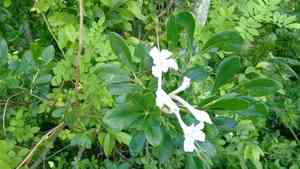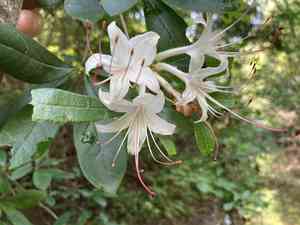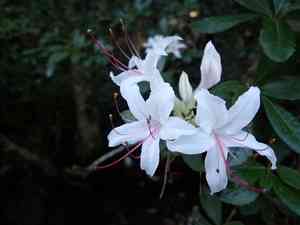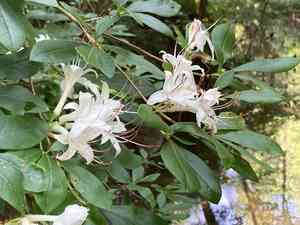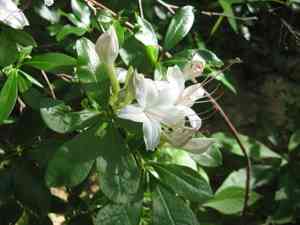
Sweet azalea(Rhododendron arborescens)

Sweet azalea (Rhododendron arborescens)

Also known as: Smooth Azalea, Sweet Azalea

Sweet Azalea (Rhododendron arborescens) is a perennial shrub that typically reaches heights of 1.5 to 1.8 meters (about 5 to 6 feet). It blooms in late spring to early summer, showcasing fragrant, white, lily-like flowers that attract butterflies and hummingbirds. The plant's foliage transforms from green to a striking reddish-purple in the fall. It thrives in full sun to partial shade and prefers moist, humus-rich soil.

Attributes of Sweet azalea

Lifespan
Perennial
Plant Type
Shrub
Plant Height
2.5 m to 6 m
Spread
2.5 m to 6 m
Leaf Color
Green Red Orange Purple
Flower Size
1.5 to 2 inches (3.8 to 5 cm)
Flower Color
White Pink Red

PlantJoy - Identify plants with a snap

Identify and diagnose plants, get toxicity alerts, and explore safety guides for all types of fungi.

Try for Free

Images of Sweet azalea

Sweet azalea(Rhododendron arborescens)

Quickly Identify Sweet azalea

1
Fragrant white flowers with prominent stamens, occasionally tinged with pink.
2
Egg-shaped woody capsules, around 3/4 inch (1.9 cm) long, releasing tiny seeds.
3
Dark green, lustrous leaves, 3-6 inches (7-15 cm) long, turning vibrant shades in autumn.

Scientific Classification of Sweet azalea

Phylum
Vascular plants
Class
Dicotyledons
Order
Ericales
Family
Heath
Genus
Azaleas
Species
Sweet azalea

Planting and Growing of Sweet azalea

Care Difficulty
Hard
Watering Schedule
Every 4 days
Sunlight Requirements
Partial sun
Sunshine Duration
4-8 hours
Ideal Temperature
60-75℉
Soil Type
Potting Mix, Peat Mix
Soil pH
4.5-6
Fertilizer Type
Balanced
Pruning Season
Spring, Summer
Pruning Area
Branches, Leaves
Pruning Frequency
2 times a year
Repotting Season
Spring
Pot Type
Plastic, Ceramic

water icon How to Water Sweet azalea?

For Rhododendron arborescens, imagine gently soaking the root zone until the soil feels pleasantly damp. Aim for 500 ml per watering session. Ensure even soaking throughout without turning the area into a muddy pool, allowing for consistent moisture levels while avoiding root rot.
What are the symptoms of an underwatered Sweet azalea?
What should I do if my Sweet azalea is not getting enough water?
What are the symptoms of an overwatered Sweet azalea?
How to save an overwatered Sweet azalea?

sunlight icon What Are the Sunlight Requirements for Sweet azalea?

Sunlight Requirements: Partial sun, Full sun
Duration of light: 4 to 6 hours
The ideal range for Rhododendron arborescens is partial sun with filtered afternoon light. This setup helps the plant maintain healthy growth and vibrant flower production.
What amount of sunlight is ideal?
How to achieve this lighting condition?
What benefits does ideal lighting provide?
More About Sunlight Requirements Techniques

temperature icon What Is the Ideal Temperature Range for Sweet azalea?

Ideal Temperature: 60 ~ 75℉
Rhododendron arborescens thrives best in a temperature range of 60 to 75°F. This range ensures optimal metabolic processes, photosynthesis rate, and overall growth. Within this temperature window, the plant's physiological functions are ideally balanced, supporting healthy foliage and vibrant blossoms. Maintaining temperatures within this specified range can lead to robust plant development and extended blooming periods.

soil icon What Soil is Best for Sweet azalea?

Soil type: Loam, Acidic soil, Sandy loam
Soil PH: 4.5 ~ 6
Rhododendron arborescens thrives in well-drained soil, which prevents root rot and promotes healthy root development. Ensuring proper drainage can significantly increase its survival rate, as it reduces moisture accumulation. This plant prefers an acidic pH, often between 4.5 and 6.0, as it enhances nutrient availability and uptake. Acidic conditions help color and bloom development, providing vibrant flowers that captivate the eye. Adding organic matter to the soil improves its texture, retains moisture, and provides essential nutrients. The presence of organic components supports microbial activity, which facilitates nutrient cycling.

fertilize icon How to Fertilize Sweet azalea?

Fertilizer type: Balanced
For Rhododendron arborescens, the amount of fertilizer must be carefully measured to prevent damage to the plant. A general recommendation is to use half the amount suggested on the fertilizer package for liquid fertilizers, typically applying around 1 tablespoon per gallon of water, ensuring it is well-dissolved. For slow-release fertilizers, apply about 1 cup around the root zone, taking care not to let the granules touch the base of the stem.

prune icon How to Prune Sweet azalea?

Pruning Time: Spring, Summer
Begin by identifying branches that are dead or diseased. These branches can be pruned at any time of the year but should be prioritized during your scheduled pruning session. Cut back to healthy wood or the base of the plant if the entire branch is dead. Once the dead wood is removed, focus on shaping your Rhododendron arborescens. Trim back overgrown branches to maintain a balanced shape. Thin out the center of the plant to increase airflow and sunlight penetration, which helps prevent disease and encourages new growth. Always make cuts just above a leaf node or bud to encourage new growth from that point. Angled cuts are recommended to prevent water from collecting on the wound, which can lead to rot or infection. More About Pruning Techniques

propagate icon How to Propagate Sweet azalea plant?

Propagate Time: Late spring,Early summer
1
Collect seeds in late autumn once the seed pods have matured. Store them in a cool, dry place until ready to sow in early spring to ensure viability and proper germination.
2
Select healthy stems and cut 6-8 inches long segments. Remove lower leaves and dip the cut end into rooting hormone. Place cuttings in a well-draining potting mix, keeping them moist.
3
In late spring, select a low-growing branch, remove leaves where it contacts the soil, and slightly wound the stem. Pin it to the ground and cover with soil, ensuring constant moisture until roots develop.
More About Propagating Techniques

repot icon How to Repot Sweet azalea plant?

Repotting frequency: Every 2-3 years
1
Rhododendron arborescens should be repotted when you notice roots emerging from the pot's drainage holes or the plant shows stunted growth. Repotting during active growth periods in spring or autumn ensures quick recovery and establishment.
2
Select a pot that is 1-2 inches larger in diameter than the current one. Ensure it has proper drainage holes to prevent waterlogging. A slightly bigger pot prevents the plant from becoming root-bound without overwhelming it with excess soil.
3
Opt for acidic, well-draining soil, like a mix designed for azaleas or camellias. A suitable soil allows for proper aeration and root growth while maintaining the acidic environment rhododendrons thrive in.

PlantJoy - Identify plants with a snap

Find the best spots for them to optimize their health, simply using your phone.

Try for Free

Toxicity of Sweet azalea

Is Sweet azalea toxic to humans?

Sweet azalea, a widely cherished ornamental plant found in various gardens, is exceedingly toxic and may lead to fatal outcomes if ingested. The threat of children experiencing poisoning from the plant's vividly colored blossoms is notably high. This plant encompasses the potent toxin andromedotoxin within all of its parts. Following consumption, individuals may exhibit symptoms such as watery eyes and nasal discharge, excessive salivation, fatigue, depressive states, nausea, vomiting, diarrhea, and, in severe cases, progressive paralysis of the limbs, potentially culminating in coma. Additionally, honey derived from sweet azalea blooms can pose poisoning risks, heightening concerns about unintentional toxic exposure.

Identify toxic plants for your safety

Learn which plants are harmful to you and your pets, and make informed choices for a safer home!

Try for Free
WARNING
The judgment on toxicity and danger is for reference only. We DO NOT GUARANTEE any accuracy of such judgment. Therefore, you SHALL NOT rely on such judgment. It is IMPORTANT TO SEEK PROFESSIONAL ADVICE in advance when necessary.
More About Toxic Techniques