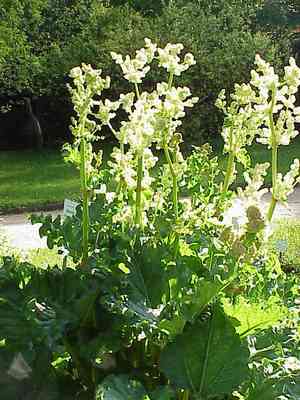
Chinese rhubarb (Rheum officinale)
Also known as: Chinese Rhubarb, Medicinal Rhubarb
Chinese rhubarb, or Rheum palmatum, features prominently large, palmate leaves and substantial, fleshy roots. In summer, it produces tall flower spikes adorned with small, white to red flowers. This perennial herb flourishes in temperate climates with cold winters, requiring well-drained, fertile soil with a neutral to slightly acidic pH. It performs best in full sun to partial shade and needs regular watering to keep the soil moist but not soggy. Given adequate space for its extensive root system, Chinese rhubarb grows vigorously, reflecting its significant role in traditional medicine.
In This Article
Attributes of Chinese rhubarb
Lifespan
Perennial
Plant Type
Herb
Plant Height
1.5 to 2.5 meters
Spread
1 to 1.5 meters
Leaf Color
Green, sometimes with a reddish tint
Flower Size
Approximately 1 centimeter
Flower Color
White to light pink
Quickly Identify Chinese rhubarb
1
Rheum officinale can be identified by its large, broad leaves with a heart-like shape, thick stems that are often reddish, and small clustered flowers that range from white to light pink. The plant typically has a robust structure and can grow quite tall.
Scientific Classification of Chinese rhubarb
Phylum
Vascular plants
Class
Dicotyledons
Order
Pinks, cacti, and allies
Family
Buckwheat
Genus
Rhubarbs
Species
Chinese rhubarb
Planting and Growing of Chinese rhubarb
Care Difficulty
Moderate
Watering Schedule
Every 2 days
Sunlight Requirements
Partial sun
Sunshine Duration
4-6 hours
Ideal Temperature
60-75℉
Soil Type
Potting Mix, Peat Mix
Soil pH
6.5-7.5
Fertilizer Type
Balanced
Pruning Season
Spring, Summer
Pruning Area
Branches, Leaves
Pruning Frequency
2 times a year
Repotting Season
Spring
Pot Type
Plastic, Ceramic
 How to Water Chinese rhubarb?
The watering amount for Rheum officinale should be such that the soil remains consistently moist but not waterlogged. A good rule of thumb is to water until you see a bit of moisture seeping out of the drainage holes. This ensures the roots have enough to drink without causing them to drown.
What are the symptoms of an underwatered Chinese rhubarb?
›
What should I do if my Chinese rhubarb is not getting enough water?
›
What are the symptoms of an overwatered Chinese rhubarb?
›
How to save an overwatered Chinese rhubarb?
›
 What Are the Sunlight Requirements for Chinese rhubarb?
Partial sun or dappled light allows Rheum officinale to photosynthesize effectively while avoiding the stress of full sun. This balance promotes healthy growth and maintains vibrant leaf color.
How much sun does Rheum officinale need?
›
What type of environment is ideal for Rheum officinale?
›
How can one ensure Rheum officinale receives optimal sunlight?
›
 What Is the Ideal Temperature Range for Chinese rhubarb?
The ideal temperature range for growing Rheum officinale, commonly known as Chinese rhubarb, is between 60°F and 75°F. This range provides optimal conditions for growth and vitality, ensuring the plant can photosynthesize efficiently and maintain general health without being stressed by excessive heat or cold.
 What Soil is Best for Chinese rhubarb?
Rheum officinale requires soil that drains well to prevent root rot. Well-draining soil ensures that excess water does not accumulate, helping the roots to access oxygen and nutrients effectively. The plant thrives in nutrient-dense soil rich in organic matter. Organic materials like compost or well-rotted manure can help maintain fertility, supporting vigorous growth and a robust root system. While good drainage is essential, the soil must also retain adequate moisture. Consistent moisture levels work to reduce stress on the plant during dry spells, ensuring continuous growth and health.
 How to Fertilize Chinese rhubarb?
For Rheum officinale, it is crucial to provide adequate nutrition to support its rapid growth and large leaves. Use a balanced fertilizer with an N-P-K ratio of roughly 10-10-10. Apply about 1 ounce per gallon of water for liquid feedings to ensure that the plant receives an even distribution of nutrients without overwhelming it.
 How to Prune Chinese rhubarb?
Look for older, larger leaves and stems that are overcrowding younger growth. Trim these back to allow space and resources for new shoots to thrive. When cutting, always prune at a 45-degree angle. This promotes quick healing and helps with water runoff, reducing the risk of rot. After completing your pruning, disinfect your tools with a mixture of water and alcohol. This step is crucial to prevent the spread of diseases to other plants.
More About Pruning Techniques→
 How to Propagate Chinese rhubarb plant?
1
Start by filling seed trays with a well-draining seed-starting mix. Sow the seeds on the surface and cover lightly with soil. Keep the soil consistently moist but not waterlogged until germination occurs.
2
Select healthy, mature rhizomes and divide them into sections using a sterilized knife. Each section should have at least one growth bud. Replant immediately in prepared soil, ensuring good contact with soil moisture.
3
Cut sections of the root about 2-3 inches long using a sharp, sterilized knife. Bury the cuttings horizontally in sandy soil or perlite, and maintain consistent warmth and moisture until new shoots appear.
 How to Repot Chinese rhubarb plant?
1
Rheum officinale shows it's time for a new pot when the roots start protruding from the drainage holes or when growth noticeably slows down. Spring and summer are ideal, as the plant takes advantage of the growing season to establish in fresh soil.
2
Select a pot slightly larger than its current one with good drainage holes. The added space allows for root expansion and prevents root binding, fostering better nutrient uptake and vigorous growth.
3
Opt for well-drained, compost-based soil. This type of soil ensures adequate airflow and moisture retention, critical for avoiding waterlogging and promoting healthy root development.
Learn More About Chinese rhubarb Diseases
Anthracnose
Bacterial Leaf Spot
Bacterial Soft Rot
Bacterial Wilt
Chemical Injury
Crown Gall
Cyst Nematode
Damping-off
Downy Mildew
Drought Stress
Fusarium Wilt
Gray Mold
Leaf Spot
Mosaic
Nutrient Deficiency
Nutrient Toxicity
Powdery Mildew
Root Rot
Root-knot Nematode
Rusts
Sooty Mold
Spider Mites
Temperature Stress
Thrips Damage
White Mold



