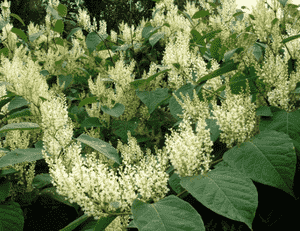
Japanese knotweed (Reynoutria japonica)
Also known as: Fleeceflower, Elephant ears
The mention of Japanese knotweed often alarms homeowners. Due to its aggressive and invasive nature, mortgage lenders may refuse loans or require extensive chemical treatment when it's found on a property. This is because Japanese knotweed has an extensive root system that can cause significant structural damage to buildings and infrastructure, making eradication extremely difficult. This lowers the property's value and increases the financial risk for lenders.
In This Article
Attributes of Japanese knotweed
Lifespan
Perennial
Plant Type
Herb
Plant Height
1 m to 2 m
Spread
90 cm to 6 m
Leaf Color
Green Blue Red
Flower Size
2.5 cm
Flower Color
White Yellow Green Cream
Images of Japanese knotweed
Quickly Identify Japanese knotweed
1
Heart-shaped green leaves with rippled edges, up to 6 inches (15 cm) long.
2
Hollow bamboo-like stems, 6 to 9 feet (2 to 3 meters) tall.
3
Small creamy white flowers in branched clusters during late summer.
4
Distinct triangular-shaped dark brown to black fruit with winged achenes.
5
Large, hollow, jointed stem with mottled pattern resembling bamboo, reaching up to 10 feet (3 meters).
Scientific Classification of Japanese knotweed
Phylum
Vascular plants
Class
Dicotyledons
Order
Caryophyllales
Family
Buckwheat
Genus
Reynoutria
Species
Japanese knotweed
Planting and Growing of Japanese knotweed
Care Difficulty
Hard
Watering Schedule
Every 2 days
Sunlight Requirements
Full sun
Sunshine Duration
4-8 hours
Ideal Temperature
60-77℉
Soil Type
Potting Mix, Peat Mix
Soil pH
6.5-7.5
Fertilizer Type
Balanced
Pruning Season
Spring, Summer
Pruning Area
Branches, Leaves
Pruning Frequency
2 times a year
Repotting Season
Spring
Pot Type
Plastic, Ceramic
 How to Water Japanese knotweed?
Reynoutria japonica thrives best with moderate watering. The principle here is to ensure the soil is consistently moist but not waterlogged. A good rule of thumb is to water until the top inch of soil feels damp to the touch. Depending on the plant's size and environment, this usually translates to about 500 ml per session.
What are the symptoms of an underwatered Japanese knotweed?
›
What should I do if my Japanese knotweed is not getting enough water?
›
What are the symptoms of an overwatered Japanese knotweed?
›
How to save an overwatered Japanese knotweed?
›
 What Are the Sunlight Requirements for Japanese knotweed?
Reynoutria japonica flourishes in full to partial sun. Ideally, it benefits immensely from morning sunlight with balanced afternoon shade. Adequate light fosters robust leaf growth and strong stem development, boosting its competitive nature.
Optimal Sunlight Exposure
›
Sunlight Solutions
›
Benefits of Proper Lighting
›
 What Is the Ideal Temperature Range for Japanese knotweed?
Reynoutria japonica thrives best within an ideal temperature range of 60 to 77 degrees Fahrenheit. These temperatures are optimal for promoting healthy growth and development. Within this range, the plant can maintain its metabolic processes efficiently, ensuring vibrant foliage and robust growth. This range mimics the natural conditions of their native habitat, providing an environment where the plant can successfully undergo photosynthesis and nutrient uptake.
 What Soil is Best for Japanese knotweed?
Reynoutria japonica thrives in nutrient-rich soil that supports its rapid growth. Well-fertilized soil ensures the plant receives adequate nourishment, resulting in robust roots and lush foliage. This plant prefers soil that retains moisture without becoming waterlogged. Consistent moisture aids in maintaining its vigorous growth, allowing it to spread expansively in suitable environments. Though moisture retention is key, the soil must also drain effectively to prevent root rot. Well-draining soil facilitates healthy root development, crucial for sustaining its sprawling nature.
 How to Fertilize Japanese knotweed?
For Reynoutria japonica, it is essential to apply fertilizers modestly. A balanced approach is to use a liquid fertilizer with an N-P-K ratio of 10-10-10. Apply about 5 grams per liter of water, ensuring thorough coverage without waterlogging the roots.
 How to Prune Japanese knotweed?
Begin by locating the plant's older, woody stems. These stems can be pruned back to encourage new growth and to keep the plant's size under control. When cutting stems, use a 45-degree angle just above a leaf node or bud. This encourages healthier, more aesthetic new growth and reduces the risk of disease. Inspect the plant for any stems that appear diseased, dead, or damaged. These should be removed to prevent the spread of disease and to keep the plant vibrant. After pruning, make sure to collect and properly dispose of all cuttings. This is vital as the plant can regenerate even from small pieces left on the ground.
 How to Propagate Japanese knotweed plant?
1
Select healthy stems from the parent plant and cut them into sections about 10-15 cm long with several nodes. Make sure to cut just below a node for optimal rooting potential.
2
Carefully dig up the plant and use a sharp knife to divide its root system into several pieces, ensuring each section has at least a few shoots and healthy roots.
3
Collect seeds from mature flowers and sow them in seed trays filled with potting mix. Maintain consistent moisture and warmth to encourage seed germination.
 How to Repot Japanese knotweed plant?
1
Reynoutria japonica should be repotted when you notice its roots crowding or protruding from the drainage holes, or when the plant's growth appears stunted despite optimal care. This usually indicates that the current container is too small to accommodate its vigorous root system. Repotting in spring ensures the plant has a full growing season to establish itself in its new environment.
2
Opt for a pot that's 2-4 inches larger in diameter than the current one to give the roots space to grow. Ensure it has sufficient drainage holes to prevent waterlogging, which can lead to root rot. A slightly larger pot not only allows for new root growth but also provides a stable base for this tall and potentially heavy plant as it matures.
3
For Reynoutria japonica, choose a well-draining loamy soil mix, enriched with organic matter. This type of soil offers ample nutrients and moisture retention while avoiding waterlogging. Such a medium supports the quick and vigorous growth habit of this plant by providing both stability and essential nutrients.



